Choosing between a glass and a plastic Pasteur pipette may seem like a minor laboratory decision, but the material can influence chemical compatibility, sample recovery, contamination control, operator safety, and the cost of routine work. For pharmaceutical quality control (QC), biotechnology research, microbiology, and analytical chemistry, selecting the right transfer tool means considering the requirements of the procedure rather than simply choosing the most convenient option.
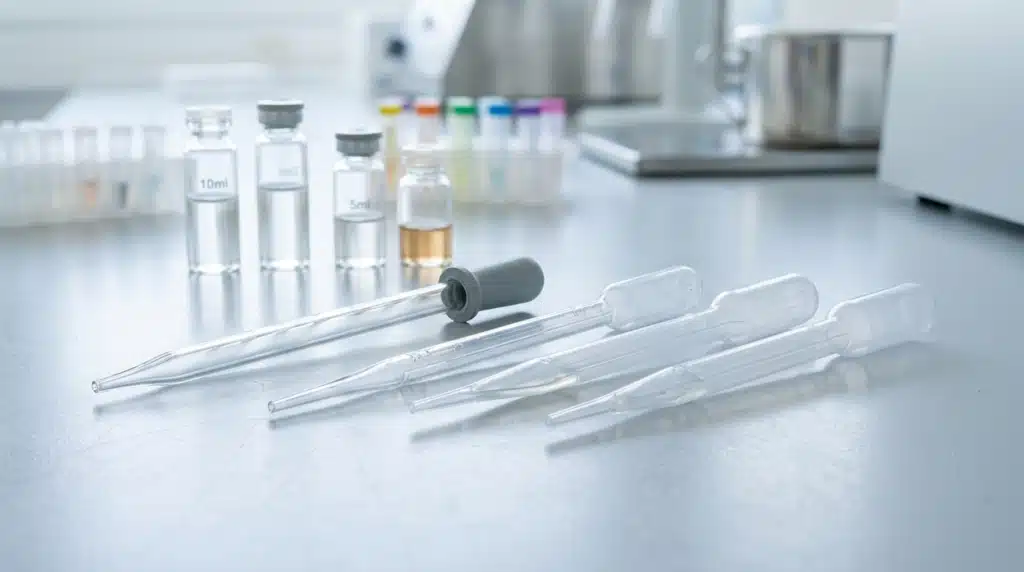
Both glass and plastic Pasteur pipettes are designed to transfer small quantities of liquid, dispense drops, and move samples between containers. Glass versions may be suitable for applications requiring verified chemical resistance or reusable equipment, while disposable plastic versions can simplify routine workflows and reduce glass-breakage hazards. However, neither material is universally superior. Glass can be attacked by particular chemicals, and plastic performance varies according to the polymer and product design.
The most appropriate choice depends on the liquid being handled, the sensitivity of the sample, the required level of contamination control, and whether reuse is permitted. It is also important to recognize that conventional Pasteur pipettes are generally transfer devices, not calibrated instruments for accurate volume measurement.
What Is a Pasteur Pipette, and What Is It Designed to Do?
A Pasteur pipette is a simple liquid-transfer device consisting of a narrow tube with a tapered tip. Depending on the design, it may be used with a compatible rubber bulb or another suitable aspiration device to draw liquid into the tube and release it into a receiving vessel.
Common applications include:
- Transferring small quantities of reagents between containers.
- Adding drops of a solution to a reaction mixture.
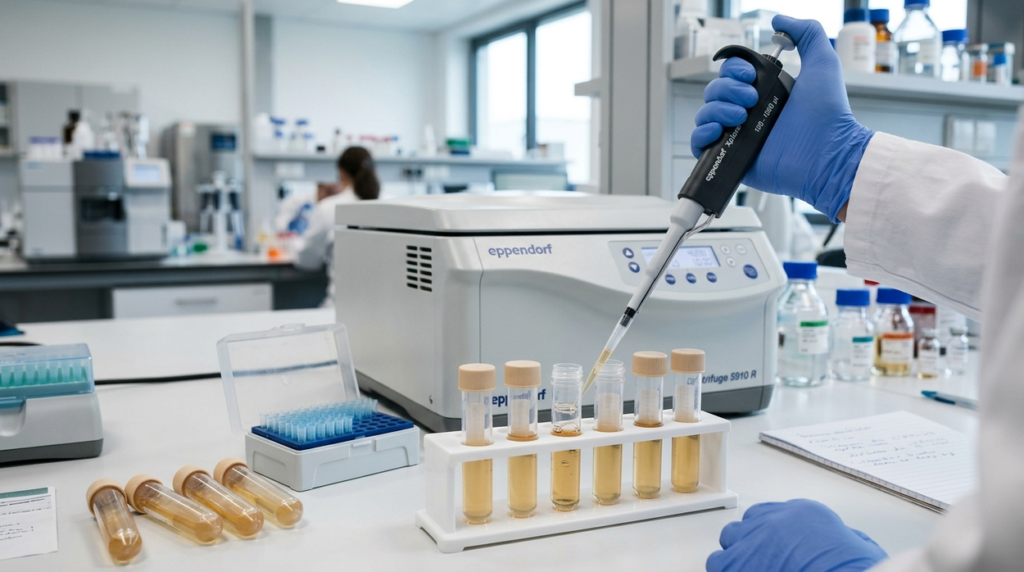
- Moving supernatants after centrifugation.
- Transferring samples during routine preparation and laboratory analysis.
- Handling liquids during qualitative experiments and preliminary research procedures.
The amount transferred depends on factors such as the pipette’s internal diameter, tip geometry, the liquid’s viscosity and surface tension, and the operator’s technique.
Pasteur pipettes versus calibrated transfer pipettes
A conventional Pasteur pipette is generally not calibrated for accurate quantitative delivery. Although an operator may estimate a volume from the amount drawn into the tube, this does not provide the measurement assurance required for many analytical methods.
Graduated pipettes, volumetric pipettes, and micropipettes serve different purposes. Depending on their design and calibration, they allow defined volumes to be measured or delivered with specified performance limits. For example, a calibrated micropipette is usually more appropriate than a Pasteur pipette when preparing a quantitative assay, dispensing a defined reagent volume, or preparing a standard solution.
Before selecting a transfer tool, laboratories should consult the manufacturer’s specifications and the method’s volume requirements. If accuracy and measurement uncertainty matter to the result, visual estimation with a conventional Pasteur pipette is not an adequate substitute for calibrated volumetric equipment.
Glass vs. Plastic Pasteur Pipettes: The Key Differences at a Glance
The following comparison summarizes typical differences between glass and plastic Pasteur pipettes. Actual performance depends on the specific product, its construction, and the conditions in which it is used.
| Comparison factor | Glass Pasteur pipette | Plastic Pasteur pipette |
| Material | Glass composition varies; borosilicate is used in some products | Often polystyrene or polyethylene, depending on design |
| Chemical compatibility | Resistant to many common reagents, but susceptible to certain chemicals | Varies considerably with polymer, solvent, concentration, and exposure |
| Breakage risk | Can fracture and produce sharp fragments | Avoids glass-fragment hazards but may crack or deform |
| Reusability | Possible when designed for reuse and suitable cleaning is established | Commonly disposable; reuse only if permitted by the manufacturer and validated procedure |
| Sterility | May be supplied sterile or processed using a compatible validated method | Available in sterile and nonsterile versions |
| Sample interaction | Often suitable for many routine transfers; surface effects still matter | Adsorption and extractables or leachables may affect sensitive applications |
| Heat resistance | Depends on glass type and thermal conditions | Depends on polymer and product design; many disposable versions have limited heat tolerance |
| Handling | Rigid, with a higher consequence of breakage | Lightweight and generally resistant to shattering |
| Disposal | Broken or contaminated glass requires appropriate waste handling | Waste route depends on biological or chemical contamination and local requirements |
| Cost | Includes purchase, cleaning, sterilization, inspection, and replacement | Includes purchase, packaging, storage, recurring consumption, and disposal |
These are general tendencies, not universal specifications. A manufacturer’s material declaration, instructions for use, compatibility information, and intended application should take precedence over assumptions based on the words glass or plastic.
Chemical Compatibility: Which Pipette Material Is Suitable for Your Reagents?
Chemical compatibility is one of the most important factors in the glass-versus-plastic decision. A pipette must withstand contact with the liquid without degrading, contaminating the sample, leaking, or compromising the transfer.
When glass is a practical choice for chemical handling
Glass is resistant to many common aqueous solutions and laboratory reagents. Certain glass compositions, particularly borosilicate glass, are designed to provide good chemical and thermal resistance for appropriate laboratory applications.
However, glass is not universally chemically inert. Hydrofluoric acid can attack glass, while strong alkaline solutions may degrade certain glass compositions, particularly under prolonged exposure or elevated temperatures. Glass types also differ in their chemical durability and resistance to thermal stress.
For this reason, a glass Pasteur pipette may be a practical choice when its exact composition is compatible with the reagent and the operating conditions. Laboratories should consider the chemical concentration, contact time, temperature, and any cleaning or sterilization cycles involved.
How plastic compatibility varies by polymer
Plastic Pasteur pipettes may be manufactured from polystyrene, polyethylene, or other polymers, depending on the intended application.
These materials do not have identical properties. A solvent that is tolerated by one polymer may cause another to swell, soften, crack, deform, or permit unwanted chemical permeation. Performance can also change with temperature, concentration, exposure duration, and mechanical stress.
The general label plastic therefore provides insufficient information for a compatibility decision. Even two products made from the same nominal polymer may differ in formulation, additives, construction, and manufacturing specifications.
For pharmaceutical and analytical laboratories, compatibility charts and technical data sheets from the actual manufacturer are the preferred starting points. If the liquid contains aggressive solvents, concentrated acids, strong bases, or an unfamiliar formulation, an alternative transfer device may be necessary when compatibility cannot be established.
A compatibility check before transferring an unfamiliar liquid
Use a consistent process before introducing a new pipette into a workflow:
- Identify the liquid’s chemical composition, concentration, and relevant hazards.
- Confirm the exact material of every liquid-contact component.
- Review manufacturer compatibility information for the intended temperature and exposure duration.
- Consider whether adsorption, extractables, leachables, or carryover could affect the experiment.
- Select an alternative device if compatibility or sample integrity remains uncertain.
This assessment should cover the entire contact system, not just the tube. Bulbs, connectors, seals, and other components can introduce additional compatibility concerns.
Sample Integrity, Contamination Control, and Sterility
In pharmaceutical QC, microbiology, molecular biology, and cell-based research, the transfer device is one part of a broader contamination-control system. Neither glass nor plastic automatically ensures contamination-free handling.
Does glass or plastic reduce contamination risk?
Reusable glass pipettes can support repeated use when cleaning, inspection, storage, and any required sterilization are appropriately controlled. However, every reuse cycle introduces additional handling and creates a need to establish that residues and contaminants have been removed.
Disposable plastic Pasteur pipettes can reduce cleaning-related carryover risks because a fresh device can be used for each sample. This advantage depends on following the intended single-use practice. Reusing a disposable pipette without authorization may undermine the contamination controls the product was selected to support.
🏢 Featured Laboratory Suppliers Directory Listing
Looking for verified and trusted laboratory suppliers partners related to this topic? Explore our comprehensive directory.
Explore Directory →Contamination can occur through residual droplets, splashes, contact with vessel rims, contaminated gloves, unsuitable storage, or contact with other surfaces. Good aseptic technique and compliance with laboratory procedures remain essential regardless of material.
Choosing sterile versus nonsterile Pasteur pipettes
Sterile Pasteur pipettes may be appropriate for procedures with defined sterility requirements, including certain microbiological and cell culture-related transfers. Nonsterile products may be sufficient for routine work where sterility is not required.
These terms should not be treated as interchangeable. A product labeled sterile should have appropriate supporting documentation, and its packaging must remain intact through storage and use. Sterility assurance depends on the relevant manufacturing or sterilization process, packaging, and storage conditions.
A sterile pipette also does not make the complete transfer process sterile. The operator, receiving vessel, work area, and handling procedure can all affect the outcome. Laboratories should follow the approved method and the product’s instructions for use rather than assuming that sterile labeling alone controls contamination.
Preventing sample carryover in pharmaceutical and biotechnology workflows
Cross-contamination is particularly important when transferring concentrated reagents, biological samples, assay controls, or materials that could interfere with downstream analysis.
Practical controls include:
- Using a new disposable pipette for each sample when required by the method.
- Applying validated cleaning procedures to reusable glass pipettes.
- Avoiding contact between the pipette tip and unrelated samples or surfaces.
- Separating incompatible materials or higher-risk samples where procedures require segregation.
- Documenting handling and cleaning requirements in the laboratory’s standard operating procedures (SOPs).
These practices are consistent with the broader principles described in the CDC’s biosafety guidance for microbiological and biomedical laboratories. The guidance addresses laboratory risk management broadly; it does not establish a universal preference for glass or plastic Pasteur pipettes.
Accuracy, Handling, and Performance in Everyday Laboratory Work
Why neither material guarantees accurate volume delivery
A glass Pasteur pipette is not automatically more precise than a plastic one. Transfer performance depends on the product’s dimensions, liquid properties, aspiration technique, and dispensing conditions.
Viscous liquids may move slowly or remain attached to the inner wall. Surface tension can affect droplet formation, while tip diameter influences how liquid enters and leaves the pipette. Small changes in technique can therefore produce differences in the amount transferred.
For quantitative assays, analytical standards, or pharmaceutical formulations requiring defined volumes, use an appropriate calibrated pipette or other validated volumetric device. Pasteur pipettes are better suited to transfers in which exact quantitative delivery is not the primary requirement.
Glass rigidity versus plastic flexibility
Glass pipettes retain their shape during normal handling, which can help with controlled positioning. Their rigidity, however, comes with a risk: accidental impact or excessive force may cause breakage.
Plastic pipettes are generally lightweight and less likely to shatter. Some designs are flexible, while others are relatively rigid. Their performance depends on the polymer, wall thickness, tip geometry, and manufacturing quality.
Neither material guarantees better dispensing control. The operator should assess the pipette’s construction and suitability for the task rather than relying on the material label alone.
Handling small, sensitive, or viscous samples
When working with small quantities of proteins, nucleic acids, or other sensitive biological materials, sample recovery may matter as much as the ability to transfer liquid.
Some samples can interact with surfaces through adsorption, leaving a portion of the material behind. Extractables or leachables from the transfer device may also affect sensitive assays, depending on the material and conditions. These concerns are particularly relevant when sample volumes are small or analytical concentrations are low.
Neither glass nor plastic is guaranteed to provide better recovery in every application. Consider low-binding or application-specific products when appropriate, and assess recovery under representative conditions before introducing a new device into a critical analytical workflow.
Safety and Waste Management: Breakage, Exposure, and Disposal
Glass breakage and sharps-related hazards
A broken glass Pasteur pipette can produce sharp fragments, release the sample, and expose personnel to chemical or biological hazards. Inspect reusable glassware before use and remove chipped, cracked, or otherwise damaged items from service.
Handle glass pipettes carefully during transfer, cleaning, and storage. Broken glass should be collected using appropriate tools rather than directly by hand, and it must be placed in a designated, puncture-resistant container. The CDC’s laboratory safety guidance describes precautions for broken glass and potentially infectious spills.
If the glass is contaminated with biological material, hazardous chemicals, or other regulated substances, follow the applicable spill-response and waste procedures.
Plastic pipettes and chemical-exposure risks
Plastic reduces the risk of shattering but does not eliminate laboratory hazards. An incompatible reagent may damage a plastic pipette, potentially causing leakage, deformation, or sample contamination. A damaged product should be removed from use rather than used for another transfer.
Appropriate personal protective equipment, safe aspiration practices, and chemical hazard controls remain necessary with either material.
Disposal depends on contamination, not just material
Used Pasteur pipettes should not automatically be placed in ordinary waste or recycling bins. Disposal depends on what the pipette has contacted and the requirements of the institution and jurisdiction.
- Biologically contaminated pipettes: Follow the laboratory’s approved biohazardous-waste or sharps procedure, as applicable.
- Chemically contaminated pipettes: Use the designated waste route based on the chemical’s hazards and relevant waste rules.
- Uncontaminated glass pipettes: Use the designated broken-glass or laboratory-glassware container when required.
- Uncontaminated plastic pipettes: Follow institutional procedures for laboratory plasticware; recycling is appropriate only where accepted and permitted.
The U.S. Environmental Protection Agency’s hazardous-waste resources provide information on hazardous-waste management in the United States. Requirements differ across jurisdictions, so international laboratories should follow their applicable local rules and institutional procedures.
Reuse, Sterilization, and the True Cost of Each Option
The purchase price of a Pasteur pipette is only one part of its cost. Reusable glass can involve cleaning, inspection, sterilization, storage, and replacement. Disposable plastic creates recurring purchasing and waste-management costs but may reduce the labor associated with reprocessing.
When reusable glass pipettes make operational sense
Reusable glass Pasteur pipettes may be suitable where the product is explicitly designed for reuse and the laboratory can establish effective cleaning and any required sterilization procedures.
A realistic assessment includes labor, water, detergents, equipment use, energy, inspection, breakage, and replacement. Cleaning effectiveness is particularly important when residues could interfere with subsequent samples or compromise a controlled laboratory process.
Sterilization alone does not establish that a previously used pipette is clean. Reuse must also be consistent with the manufacturer’s instructions and the laboratory’s approved procedures. A glass pipette should not be assumed reusable merely because it is made from glass.
When disposable plastic pipettes are more practical
Disposable plastic Pasteur pipettes may be useful in high-throughput workflows, teaching laboratories, and routine transfers where frequent cleaning would add unnecessary work.
🏢 Featured Laboratory Suppliers Directory Listing
Looking for verified and trusted laboratory suppliers partners related to this topic? Explore our comprehensive directory.
Explore Directory →Products supplied sterile and individually packaged can also simplify handling when a procedure requires those characteristics. However, laboratories should confirm sterile status, packaging format, intended use, and storage conditions before procurement.
Recurring supply costs, inventory space, availability, packaging waste, and disposal requirements should all be considered. A disposable product is not automatically the more economical option if its purchase cost is high or supply continuity is poor.
Comparing total cost per usable transfer
Laboratory procurement teams can compare options using a simple lifecycle-cost calculation:
Costperusabletransfer=TotallifecyclecostNumberofacceptabletransfers
Lifecycle cost may include:
- Initial purchase and replacement costs.
- Cleaning and sterilization labor.
- Water, detergents, energy, and equipment.
- Inspection and quality-control activities.
- Breakage, leakage, and rejected samples.
- Storage, packaging, and waste disposal.
For reusable glass, the number of acceptable transfers depends on the product’s suitability for reuse, its condition, and the effectiveness of the reprocessing procedure. For disposable plastic, each acceptable transfer generally requires another device when the procedure mandates single use.
A laboratory should calculate these costs using its own workload, labor rates, rejection rates, and waste requirements. No single material is consistently cheaper in every operating environment.
Which Pasteur Pipette Should You Choose for Your Laboratory Application?
The most useful way to choose between glass and plastic is to begin with the task, then identify the material and product characteristics needed to perform it safely.
Routine reagent transfers and general laboratory work
A disposable plastic Pasteur pipette may be convenient for transferring routine aqueous reagents, adding drops, or moving noncritical samples when the specific product is compatible with the liquid.
Glass may be preferable where verified chemical compatibility or another application requirement supports its use. In either case, the product must be suitable for the reagent and the intended conditions.
Microbiology, cell culture, and contamination-sensitive work
For contamination-sensitive transfers, focus first on sterility requirements, packaging integrity, single-use rules, and aseptic technique. A sterile disposable pipette may be appropriate where the approved procedure requires a new sterile transfer device for each sample.
Some procedures may permit reusable equipment under controlled reprocessing conditions, while others may require different transfer tools altogether. Neither glass nor plastic should be selected solely because of its material.
Pharmaceutical quality control and analytical laboratories
In pharmaceutical QC, consistency, documented procedures, and control of sample carryover are central considerations. Pasteur pipettes can be useful for noncritical transfers, but they should not replace calibrated equipment when a defined volume is essential to the analytical method.
Supplier specifications and lot identification may also matter when a consumable is used in a controlled workflow. The FDA’s guidance on pharmaceutical quality control laboratories emphasizes appropriate procedures, equipment, calibration, and method validation as elements of laboratory quality.
Where a transfer device affects a critical method, laboratories should assess the change according to their quality system. Formal qualification or validation should be determined by the process risk and applicable requirements, rather than assumed necessary for every pipette.
Organic solvents, corrosive reagents, and chemically sensitive samples
For aggressive solvents, strong acids, concentrated bases, or unfamiliar formulations, verify the exact glass composition or plastic polymer before use. If neither candidate has demonstrated compatibility, select another transfer device.
For sensitive analytical samples, also consider adsorption, extractables, leachables, and sample recovery. Material compatibility alone does not guarantee that the transferred sample will remain suitable for downstream analysis.
Teaching laboratories and high-throughput routine workflows
Disposable plastic pipettes can simplify classroom exercises and repetitive transfers by reducing cleaning requirements and glass-breakage hazards. Reusable glass may still be appropriate where its properties suit the experiment and cleaning can be performed safely and consistently.
High-throughput laboratories should also consider workflow speed, supply availability, waste volume, storage capacity, and the consequences of a failed transfer. These practical factors may influence the best choice as much as the initial material cost.
A Practical Purchasing Checklist for Laboratory Managers
Before ordering glass or plastic Pasteur pipettes, evaluate the actual product rather than relying on a general catalogue description.
Confirm the technical specifications
Use the following checklist when comparing suppliers:
- Exact glass composition or polymer type.
- Tip geometry and intended transfer application.
- Chemical compatibility information for the intended liquid.
- Sterile or nonsterile status.
- Single-use or reusable designation.
- Temperature and sterilization limitations.
- Packaging format and storage requirements.
- Lot identification, traceability, and relevant quality documentation.
Ask suppliers the right questions
Procurement and laboratory teams should ask:
🏢 Featured Laboratory Suppliers Directory Listing
Looking for verified and trusted laboratory suppliers partners related to this topic? Explore our comprehensive directory.
Explore Directory →- What exact material is used in every liquid-contact component?
- Can you provide compatibility data for our intended reagent and operating conditions?
- Is the product supplied sterile, and what documentation supports that designation?
- Is it designed for single use or for reuse under specified conditions?
- Are there restrictions on temperature, solvents, or sterilization?
- Can you provide the applicable product specification, lot identification, and quality documentation?
For pharmaceutical supply chains, these checks can support broader practices for supplier qualification and documentation in pharmaceutical supply chains. The level of documentation needed should reflect the product’s role, the risks involved, and the laboratory’s quality-system requirements.
Evaluate the product under actual laboratory conditions
Where a new pipette will be introduced into an important workflow, assess it using representative liquids and normal operating conditions before routine adoption.
Depending on the application, evaluation criteria may include leakage, transfer consistency, chemical resistance, sample recovery, and evidence of material interaction. Establish acceptance criteria before testing so that the decision is based on defined requirements rather than subjective impressions.
If the product change could affect a validated analytical method or a controlled pharmaceutical process, follow the relevant change-control and method-assessment procedures. Not every routine consumable change requires the same level of formal qualification; the approach should be proportionate to risk and applicable requirements.
Common Mistakes When Selecting Glass or Plastic Pasteur Pipettes
Several avoidable mistakes can increase costs or compromise laboratory results:
- Assuming glass is compatible with every chemical, including hydrofluoric acid and strong alkalis.
- Treating polystyrene, polyethylene, and other plastics as chemically equivalent.
- Assuming a disposable pipette is automatically sterile.
- Reusing a single-use product or reusing glass without an appropriate cleaning procedure.
- Using a Pasteur pipette when a method requires accurate quantitative delivery.
- Ignoring adsorption or extractables and leachables in sensitive analytical workflows.
- Comparing purchase prices without including cleaning, breakage, labor, and disposal.
- Buying without reviewing product specifications and manufacturer instructions.
The practical remedy is straightforward: match the product to the intended procedure and verify the characteristics that could affect safety, compatibility, or results.
How to Make the Final Selection: A Simple Decision Framework
Before choosing a glass or plastic Pasteur pipette, work through these questions in order.
- Does the method require accurate quantitative delivery? If yes, select an appropriate calibrated transfer device rather than relying on a conventional Pasteur pipette.
- Is the liquid compatible with the pipette material? Verify the exact product’s chemical-compatibility information.
- Does the procedure require a sterile, single-use device? Choose a product with suitable documented characteristics and follow the approved method.
- Is sample integrity sensitive to adsorption or material interaction? Assess sample recovery, extractables, leachables, and other relevant effects.
- Is reuse permitted and operationally justified? Compare validated cleaning requirements, handling risks, and lifecycle costs.
- Which product best meets the laboratory’s safety and quality requirements? Make the final decision using the actual workflow rather than a general preference for glass or plastic.
The guiding principle is to choose the product that meets the method’s technical, contamination-control, safety, and cost requirements.
Conclusion
The choice between a glass and plastic Pasteur pipette is a practical laboratory decision, not a contest between two materials. Glass may be appropriate when its verified chemical resistance, rigidity, or suitability for controlled reuse meets the method’s requirements. Plastic may be more convenient for routine transfers, single-use workflows, and applications where avoiding glass breakage is a priority.
Three principles should guide the selection. Compatibility comes first: verify the material against the liquid and operating conditions. Method requirements come second: consider sterility, contamination prevention, sample recovery, and quantitative accuracy. Lifecycle suitability comes third: account for cleaning, reuse, breakage, recurring purchases, and waste management.
For laboratory managers, researchers, and procurement teams, the best approach is to select a documented, application-appropriate product and follow the relevant SOPs and manufacturer instructions. When accurate volume measurement is required, use calibrated equipment designed for that purpose rather than relying on a conventional Pasteur pipette.
Frequently Asked Questions
1. Are glass Pasteur pipettes better than plastic ones?
Neither is universally better. Glass may suit applications requiring verified chemical resistance or controlled reuse, while disposable plastic can simplify routine transfers and reduce glass-breakage hazards. The right choice depends on the reagent, sample sensitivity, sterility requirements, and intended use.
2. Can plastic Pasteur pipettes be used with organic solvents?
Sometimes, but compatibility varies with the polymer, solvent, concentration, temperature, and exposure duration. Check the manufacturer’s chemical-compatibility data for the exact product before use. If compatibility is uncertain, choose a transfer device with documented suitability.
3. Can glass Pasteur pipettes be reused after sterilization?
Only when the product is designed for reuse and appropriate cleaning, inspection, and sterilization procedures can be followed. Sterilization alone does not establish that residues have been removed or that the pipette is suitable for another sample. Follow the manufacturer’s instructions and laboratory SOPs.
4. Are plastic Pasteur pipettes always sterile?
No. Plastic Pasteur pipettes are available in both sterile and nonsterile versions. Check the product labeling and supporting documentation, and ensure that packaging remains intact and storage conditions are appropriate. Sterile labeling does not eliminate the need for aseptic handling.
5. Can a Pasteur pipette accurately measure a specific liquid volume?
Conventional Pasteur pipettes are generally designed for liquid transfer rather than calibrated volumetric measurement. For assays, standard preparation, formulations, or other procedures requiring defined volumes, use an appropriate calibrated pipette or micropipette.