Human serum is one of the most widely studied biological matrices in biomedical and laboratory research. It contains a complex mixture of proteins, antibodies, complement components, metabolites, hormones, lipids and other circulating molecules that collectively reflect aspects of human physiology and disease biology.
That complexity is also what makes serum challenging. The composition of a serum sample can be influenced not only by the donor, but also by blood collection, clotting, processing, storage and freeze-thaw history. In biomarker discovery, proteomics, metabolomics and assay development, these variables can affect experimental results and their interpretation. Standardized collection and handling are therefore important parts of research design. PubMed Central (PMC)
For researchers using human serum samples, understanding what the matrix contains—and how it differs from plasma—is essential. This article examines human serum composition, major research applications, sample-quality considerations, selection criteria and the role of serum in increasingly sophisticated biological analyses.
What Is Human Serum and How Is It Different From Plasma?
How human serum is obtained from whole blood
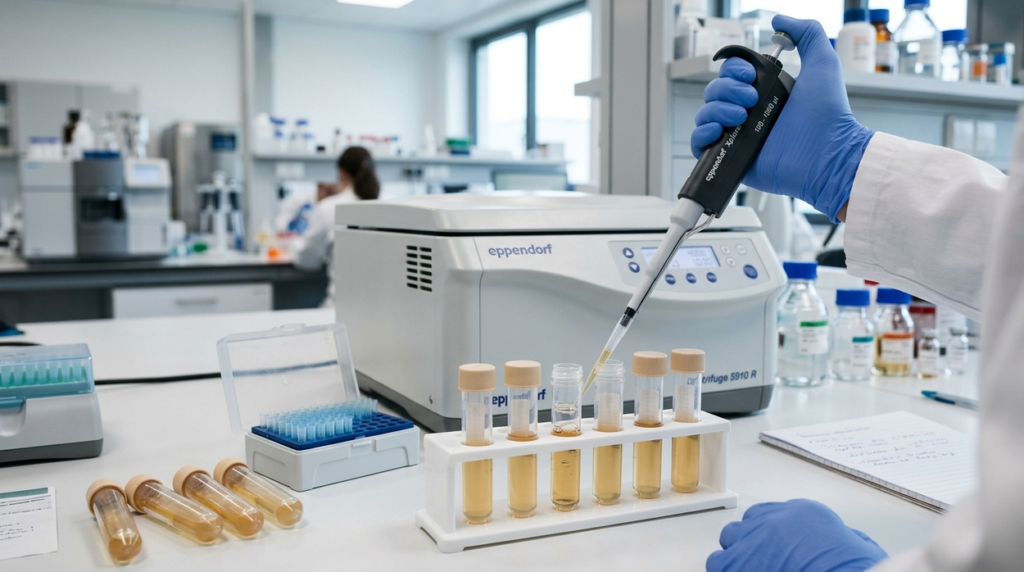
Human serum is the liquid fraction obtained after blood has been allowed to coagulate and the clot and cellular material have been separated, usually by centrifugation. It is therefore not simply “blood without cells.”
A simplified workflow is:
Blood collection → clot formation → centrifugation → separation of serum → aliquoting and storage
During coagulation, fibrin and other coagulation-related components participate in clot formation. This changes the composition of the remaining liquid fraction. Platelets and other cells can also release molecules during the clotting process, which is one reason serum should be regarded as a distinct biological matrix rather than an interchangeable version of plasma. PubMed Central (PMC)
Collection and processing conditions need to be standardized when samples will be compared. Research protocols have identified variables such as clotting time, processing temperature, collection-tube characteristics, hemolysis, storage and freeze-thaw cycles as potential sources of analytical variation. PubMed Central (PMC)
Recent blood-processing guidance also emphasizes that serum tubes should be allowed to clot according to the applicable collection system and protocol before centrifugation. Exact processing conditions should follow the validated laboratory procedure and manufacturer’s instructions rather than assuming that one universal protocol applies to every assay. PubMed Central (PMC)
Serum vs. plasma: the key compositional difference
The fundamental difference between serum and plasma is how they are obtained.
Plasma is separated from anticoagulated blood and therefore retains fibrinogen and other coagulation-related components. Serum is obtained after coagulation, so fibrinogen and many clotting components are removed or substantially reduced with the clot. NCBI
| Characteristic | Human Serum | Human Plasma |
| Starting material | Whole blood allowed to clot | Whole blood collected with anticoagulant |
| Fibrinogen | Largely removed with clot | Present |
| Anticoagulant | Not used for serum formation | EDTA, heparin, citrate or another validated anticoagulant may be used |
| Biological composition | Influenced by coagulation | Influenced by anticoagulant and plasma-processing conditions |
| Research use | Biomarkers, immunology, proteomics, metabolomics, assays | Biomarkers, proteomics, metabolomics, coagulation and other applications |
The distinction matters because coagulation itself can alter the concentrations of certain proteins and metabolites. Consequently, serum and plasma can produce different analytical profiles, particularly in high-resolution proteomic and metabolomic studies. PubMed Central (PMC)
The two matrices can be appropriate for overlapping applications, but they should not automatically be treated as interchangeable. Matrix selection should be based on the analytical method and research question.
What Does Human Serum Contain?
Water and dissolved biological molecules
Serum is predominantly an aqueous biological matrix containing a broad range of dissolved substances. These include proteins, electrolytes, amino acids, glucose, lipids, metabolites, hormones, signaling molecules and other circulating compounds.
Rather than thinking of human serum as a fixed list of ingredients, it is more useful to view it as a dynamic snapshot of circulating biology. Concentrations can change with physiological state, disease, medication exposure, nutrition, time of collection and other factors.
This complexity is one reason serum is valuable in translational research: researchers can measure multiple molecular classes from the same general biological matrix.
Albumin and carrier proteins
Albumin is one of the most abundant proteins in human serum. NCBI describes albumin as a major serum protein, with important roles in maintaining physiological functions and transporting a wide range of endogenous substances and xenobiotics. NCBI
For laboratory research, albumin is important for another reason: its high abundance can influence analytical measurements. In proteomic workflows, abundant proteins can dominate the detectable signal and make lower-abundance proteins more difficult to characterize.
Other carrier proteins, including transferrin and various globulins, contribute to the transport and distribution of molecules throughout the circulation.
Immunoglobulins and antibodies
Human serum contains several classes of immunoglobulins, including IgG, IgA, IgM, IgD and IgE.
These antibodies are central to adaptive immunity and make serum particularly useful for immunological research. Researchers can examine naturally occurring antibody responses, antibody levels, antigen-specific reactivity and disease-associated immune patterns.
However, naturally occurring antibodies in donor serum should not be confused with purified or specifically characterized antibody reagents. The concentration, specificity and biological history of serum immunoglobulins can vary between donors.
Complement proteins and innate immune components
The complement system represents another important component of serum. Complement proteins participate in innate immune defense and interact with other parts of the immune system.
NIH research describes complement as a serum-effective component of innate immunity while also highlighting its broader role in regulating immune-cell functions and inflammation. NHLBI, NIH
For research involving immune responses, inflammation or cell-based assays, complement activity can therefore be an important consideration. Whether complement should remain active or be controlled depends on the experimental objective.
Metabolites, hormones, lipids and other circulating factors
Proteins are only one part of human serum composition.
Serum also contains:
- Glucose and other carbohydrates
- Amino acids
- Fatty acids and other lipids
- Electrolytes
- Metabolic intermediates
- Steroid and peptide hormones
- Signaling molecules
- Drug-related compounds and metabolites
- Nucleic-acid-associated material and other circulating analytes
This broad molecular content explains why serum is useful in proteomics, metabolomics, biomarker research and systems biology.
Why Serum Composition Matters in Laboratory Research
Serum as a biologically representative research matrix
Researchers use human serum because it provides access to circulating biological information without requiring tissue sampling for every measurement.
A serum sample can contain signals associated with metabolism, immune activity, inflammation, exposure to compounds and physiological changes. This makes it particularly useful for translational studies attempting to connect molecular measurements with biological or clinical characteristics.
There is an important distinction, however, between using serum as a measurement specimen and using serum as an experimental biological reagent.
A researcher measuring a metabolite in serum is asking what is present in the biological sample. A researcher adding human serum to a cell culture system is introducing a complex mixture of proteins, lipids, hormones and other factors into the experimental environment. The latter application requires additional consideration of donor variability and matrix effects.
Natural biological variability between serum samples
Two human serum samples are not necessarily equivalent.
Composition can vary with factors such as:
- Age
- Biological sex
- Physiological condition
- Disease status
- Medication or treatment exposure
- Diet and fasting status
- Time of collection
- Other donor-specific characteristics
For biomarker studies, this variability can contain the biological signal researchers are trying to identify. At the same time, it can become a source of confounding if donor characteristics are not properly documented and considered.
🏢 Featured Laboratory Suppliers Directory Listing
Looking for verified and trusted laboratory suppliers partners related to this topic? Explore our comprehensive directory.
Explore Directory →Individual-donor samples can therefore be valuable when studying biological heterogeneity, while pooled serum may be useful when a more uniform research material is required.
Preanalytical variables can alter research results
The period between blood collection and analysis is often underestimated as a source of variation.
Important variables include:
- Collection tube and additives
- Clotting time
- Time to centrifugation
- Processing temperature
- Centrifugation conditions
- Hemolysis
- Storage temperature
- Aliquoting procedures
- Freeze-thaw cycles
- Transport conditions
A consensus SOP developed for serum and plasma biomarker research emphasized that small differences in specimen handling can affect analytical reliability and reproducibility. PubMed Central (PMC)
Metabolomics research similarly shows that fasting status, collection time, hemolysis, processing delays and repeated freeze-thaw cycles can affect measured metabolic profiles. PubMed
Major Applications of Human Serum in Laboratory Research
Biomarker discovery and validation
Human serum is extensively investigated for the identification of candidate biomarkers.
Researchers may analyze proteins, metabolites, antibodies or other molecular features to identify patterns associated with disease, treatment response or physiological states. Serum’s accessibility makes it attractive for studies seeking minimally invasive biological measurements.
However, finding a statistically different molecule is only the beginning. A candidate biomarker needs appropriate analytical validation and, where relevant, evaluation in independent populations before conclusions about clinical utility can be justified.
This distinction is particularly important because biological variation, sample handling and analytical batch effects can produce apparently meaningful differences that do not necessarily translate into robust biomarkers.
Immunology and inflammation research
Serum is widely used to study immune-related biology.
Researchers may investigate:
- Immunoglobulin profiles
- Antigen-specific antibodies
- Complement components
- Cytokines and inflammatory mediators
- Immune responses to infection or vaccination
- Autoimmune-associated molecular patterns
Such studies can help characterize biological responses in areas including infection, autoimmune disease and inflammatory disorders. Serum measurements, however, generally form one part of a broader research framework rather than independently establishing a clinical diagnosis.
Proteomics and protein profiling
Serum proteomics attempts to characterize protein abundance and, depending on the analytical platform, protein modifications and other molecular characteristics.
The challenge is that serum is a highly complex matrix. Highly abundant proteins such as albumin and immunoglobulins can dominate analytical measurements, potentially obscuring lower-abundance proteins.
Researchers may therefore use depletion, fractionation, enrichment or highly sensitive analytical technologies depending on the study design.
Importantly, the choice between serum and plasma can influence proteomic results because coagulation changes the molecular composition of serum. Reviews of serum/plasma proteomics have emphasized the importance of preanalytical control and matrix selection. PubMed
Metabolomics and systems biology
Serum is also a common matrix for metabolomics.
By measuring multiple circulating metabolites, researchers can investigate biochemical changes associated with disease, pharmacological exposure, nutrition or other physiological conditions.
The value of these studies depends heavily on consistent sample handling. Because metabolites can change during collection and processing, differences in fasting status, processing delay, temperature and freeze-thaw history can influence the resulting profile. PubMed
Drug development and pharmacological research
Human serum can contribute to several stages of pharmaceutical research, including pharmacokinetic and pharmacodynamic investigations, biomarker analysis and studies of circulating drug-related compounds.
Serum may also be used to investigate biological responses associated with drug exposure. In clinical-development programs, however, the appropriate matrix and analytical procedure depend on the specific assay and study objective.
For organizations coordinating complex clinical research workflows, sample collection, processing and documentation are important operational considerations alongside broader trial-management activities. This makes clinical-trial workflow and CRO selection relevant when serum-based sampling forms part of a larger clinical research program.
Diagnostic assay development and analytical validation
Human serum is frequently used during development and evaluation of assays designed to measure biological analytes in human specimens.
Researchers may need to understand:
- Matrix effects
- Interference
- Recovery
- Analytical specificity
- Precision
- Reference materials
- Sample stability
Serum is particularly relevant when an assay is intended to work with human blood-derived specimens. But the use of serum during research development does not, by itself, establish clinical validity or regulatory acceptance.
Diagnostic research is also evolving through new assay platforms and testing approaches. Work examining innovations in diagnostic testing can provide useful context for how biological matrices such as serum fit into broader diagnostic-development workflows.
Human Serum in Biomarker and Diagnostic Research
From candidate biomarker to validated analytical signal
A biomarker research program generally moves through several stages.
First, researchers identify candidate molecular differences. Next, they assess whether the analytical method can reliably measure those differences. Candidate signals are then evaluated in additional samples or independent cohorts.
The central distinction is between association and utility.
A molecule may be statistically associated with a disease state without providing sufficient specificity, sensitivity, reproducibility or clinical value for practical use.
Independent validation is therefore important, particularly when discovery studies involve relatively small or highly selected populations.
Why serum biomarkers can be difficult to interpret
Serum’s complexity creates several analytical challenges.
High-abundance proteins: Albumin and immunoglobulins can dominate proteomic measurements.
Biological variability: Differences between donors can create substantial variation in molecular profiles.
Preanalytical variation: Collection and processing differences can introduce systematic changes.
Batch effects: Samples analyzed at different times, using different reagent lots or different instrument conditions, may show technical differences unrelated to biology.
Low-abundance targets: Molecules present at very low concentrations can be difficult to distinguish from analytical noise or matrix effects.
These challenges do not reduce the value of serum. Instead, they reinforce the need for careful study design and appropriately controlled analytical workflows.
Serum as a reference and control material
Researchers may use pooled serum, characterized donor samples or other biological reference preparations depending on the purpose of the experiment.
Pooling can reduce some forms of individual-donor variation, but it also removes information about biological heterogeneity. A pooled sample therefore should not automatically be considered superior to individual samples.
For assays requiring formal standardization, characterized reference materials can play a different role from ordinary donor serum. WHO’s international biological reference standards are developed through collaborative studies to support consistent and comparable measurement across laboratories and analytical methods. World Health Organization
🏢 Featured Laboratory Suppliers Directory Listing
Looking for verified and trusted laboratory suppliers partners related to this topic? Explore our comprehensive directory.
Explore Directory →What Can Affect the Quality and Composition of a Human Serum Sample?
Donor-related variables
The first source of variation is the donor.
Researchers should consider whether samples are appropriately characterized with information such as age, biological sex, health status, disease status, medication exposure and relevant collection conditions.
The appropriate metadata depend on the scientific question. A metabolomics study may require information about fasting and collection time, while an immune-response study may place greater emphasis on infection, vaccination or treatment history.
Collection and clotting conditions
Serum formation depends on coagulation, making collection and clotting conditions particularly important.
The collection system should be appropriate for serum preparation, and the clot should be allowed to form according to the validated protocol. The EDRN consensus SOP, for example, discusses controlled clot formation followed by centrifugation and emphasizes documentation of processing variables. PubMed Central (PMC)
There is no universal processing recipe for every research application. Researchers should follow the validated protocol appropriate for their assay and specimen-collection system.
Hemolysis and other sample-quality problems
Hemolysis occurs when red blood cells are damaged and release intracellular contents into the surrounding serum.
This can alter the measured concentration of certain analytes and may interfere with some analytical methods. Lipemia, turbidity and other sample-quality problems can similarly complicate analysis.
Consequently, researchers should establish predefined sample-acceptance criteria rather than treating every serum tube as analytically equivalent.
Storage and freeze-thaw considerations
Once serum has been separated, storage conditions become part of the sample’s history.
Long-term storage temperature, time in storage, aliquot size and freeze-thaw exposure can all influence downstream measurements. Repeated freezing and thawing is particularly relevant when samples are repeatedly removed from storage for different experiments. PubMed Central (PMC)
Aliquoting serum into appropriately sized portions can reduce unnecessary freeze-thaw cycles. More importantly, the storage history should be documented so that researchers can distinguish biological differences from potential handling effects.
Choosing Human Serum for a Research Study
Individual-donor versus pooled human serum
The choice between individual and pooled serum should follow the experimental objective.
Individual-donor serum is appropriate when donor-to-donor variation is itself scientifically important. It can support subgroup analysis and studies of biological heterogeneity.
Pooled serum combines material from multiple donors and can reduce some individual-donor differences. This may be useful for certain cell-based experiments or applications requiring a relatively consistent biological reagent.
The trade-off is straightforward: pooling may improve uniformity while simultaneously obscuring individual biological variation.
What researchers should evaluate before purchasing or using serum
The phrase “human serum” alone is rarely a sufficiently detailed specification for a research program.
Before selecting a material, researchers should evaluate:
- Donor characteristics — Who contributed the samples?
- Number of donors — Is the material individual-donor or pooled?
- Pooling methodology — If pooled, how was the pool constructed?
- Collection and processing — How were samples collected, clotted, centrifuged and aliquoted?
- Storage history — What temperature and storage duration were used?
- Traceability — Can the sample or pool be linked to appropriate documentation?
- Testing and characterization — What analytical or screening information is available?
- Intended application — Is the serum suitable for proteomics, immunology, cell culture, assay development or another purpose?
- Sample history — How many freeze-thaw cycles or handling events have occurred?
These specifications can matter more than simply comparing price or available volume.
Match serum specifications to the experimental question
A useful procurement decision begins with the experiment rather than the product catalogue.
For example, a study investigating donor-specific immune responses may require individual samples with detailed donor metadata. A reproducibility-focused cell-based experiment may instead benefit from a carefully characterized pooled material.
Similarly, a proteomics study may have different requirements from an assay-development project.
The objective should therefore determine the serum specification—not the other way around.
Reproducibility and Quality Considerations in Serum-Based Research
Standardizing sample handling across a study
A serum-based study should establish consistent procedures for collection, processing, storage and analysis.
Where possible, researchers should maintain the same:
- Collection system
- Clotting protocol
- Processing timeline
- Centrifugation procedure
- Storage conditions
- Aliquoting approach
- Freeze-thaw policy
Standardization reduces the likelihood that technical variation will be mistaken for biological variation. PubMed Central (PMC)
Documenting serum characteristics
Sample documentation should extend beyond a sample ID.
Depending on the study, relevant records may include:
- Donor metadata
- Collection date and time
- Processing date and time
- Clotting conditions
- Centrifugation conditions
- Hemolysis assessment
- Storage temperature
- Number of freeze-thaw cycles
- Pool or lot identification
- Testing and characterization results
This information becomes particularly valuable when samples are analyzed months or years after collection.
Designing experiments around serum variability
Serum variability should be incorporated into experimental design rather than addressed only after unexpected results appear.
Appropriate controls, biological replicates and consistent sample processing can help separate biological effects from technical variation.
Where a new serum lot or donor population is introduced, pilot testing may also be useful before committing to a larger experiment—particularly for sensitive cell-based assays or analytical workflows.
Where Human Serum Is Most Valuable—and Where Its Limitations Matter
Situations where serum provides valuable biological information
Human serum can be particularly useful for:
- Biomarker discovery
- Immune-response studies
- Protein profiling
- Metabolomics
- Translational research
- Pharmacological investigations
- Assay development involving human biological matrices
Its major strength is the breadth of biological information contained within a readily accessible fluid matrix.
🏢 Featured Laboratory Suppliers Directory Listing
Looking for verified and trusted laboratory suppliers partners related to this topic? Explore our comprehensive directory.
Explore Directory →Situations requiring careful interpretation
Serum requires additional consideration when:
- Complement activity affects the experiment
- Coagulation-associated changes influence the analyte of interest
- Donor populations are highly heterogeneous
- The target biomarker occurs at very low abundance
- Sample handling differs substantially between study groups
- A defined or chemically controlled experimental medium would be more appropriate
The correct response is not necessarily to avoid serum. Instead, researchers should identify which characteristics of serum could influence the specific experiment.
Why serum is not a universal substitute for plasma or defined experimental media
There is no general rule that serum is “better” than plasma.
The two matrices are generated differently and have different compositions. Plasma may be preferable when retaining coagulation-related components is important, while serum may be appropriate for assays validated around the post-coagulation matrix.
Likewise, human serum is fundamentally different from a chemically defined culture medium. Serum introduces biological complexity, whereas defined media can provide tighter control over experimental composition.
Matrix selection should therefore follow the research question, analytical method and intended interpretation.
What the Future of Human Serum Research May Look Like
Multi-omics analysis of circulating biomarkers
Advances in proteomics, metabolomics and other molecular profiling technologies are making it increasingly practical to study multiple molecular layers from biological samples.
Rather than examining a single analyte, researchers can investigate interconnected patterns involving proteins, metabolites and other circulating signals.
The challenge will be converting increasingly detailed molecular profiles into reproducible and biologically interpretable findings.
More standardized biological reference materials
As laboratory assays become more sensitive and complex, comparable reference materials remain important.
WHO’s current biological-standardization framework emphasizes characterization, collaborative evaluation and reference materials that support consistent measurement across laboratories. Its 2026 recommendations further update the framework for international biological reference standards. World Health Organization
This broader movement toward standardization is relevant to serum-based research because reproducibility depends not only on sophisticated instruments, but also on well-characterized biological inputs.
Greater emphasis on preanalytical metadata
Future serum research is also likely to place greater emphasis on sample provenance and handling information.
A high-quality serum dataset may increasingly include detailed information about collection, processing, storage and donor characteristics alongside molecular measurements.
That information can help researchers identify technical sources of variation, improve cross-study comparisons and strengthen confidence in biomarker findings.
Conclusion
Human serum is valuable in laboratory research precisely because it is complex. It contains a broad mixture of proteins, antibodies, complement components, metabolites, hormones, lipids and other circulating molecules that can provide a window into human biology.
That complexity also creates methodological challenges. Serum is not interchangeable with plasma, and differences introduced during coagulation can influence molecular measurements. Likewise, donor characteristics, collection conditions, processing delays, hemolysis, storage and freeze-thaw history can all affect downstream research results. PubMed Central (PMC)
For researchers and laboratory teams, the practical takeaway is to select serum according to the scientific question, not simply the generic label “human serum.” Donor characteristics, pooling strategy, processing history, storage conditions, testing and intended application should all be considered before a sample is introduced into a study.
As proteomics, metabolomics and multi-omics approaches continue to develop, well-characterized serum samples are likely to remain important research materials. The strongest serum-based studies will be those that treat sample quality and provenance as integral parts of experimental design rather than as secondary laboratory details.
FAQs
1. What is human serum?
Human serum is the liquid fraction remaining after whole blood has coagulated and the resulting clot and cellular material have been separated, typically by centrifugation. Because coagulation changes the composition of the sample, serum has molecular characteristics that distinguish it from plasma.
2. What is the difference between human serum and plasma?
Plasma is obtained from anticoagulated blood and retains fibrinogen and other coagulation-related components. Serum is obtained after blood coagulation, so fibrinogen and many clotting components are removed with the clot. The distinction can affect proteomic, metabolomic and other analytical measurements.
3. What are the main components of human serum?
Major components include albumin and other proteins, globulins, immunoglobulins, complement proteins, electrolytes, metabolites, hormones, lipids and other circulating molecules. The relative concentrations vary according to donor characteristics and physiological and preanalytical conditions.
4. What is human serum used for in laboratory research?
Human serum is used in biomarker discovery, immunology, inflammation research, proteomics, metabolomics, pharmacological studies and diagnostic assay development. Its suitability depends on the research question, analytical method and sample characteristics.
5. What factors can affect the quality of human serum samples?
Important factors include donor characteristics, collection conditions, clotting time, processing delay, centrifugation, hemolysis, storage temperature, transport conditions and freeze-thaw history. Standardized handling is particularly important for biomarker, proteomic and metabolomic studies.