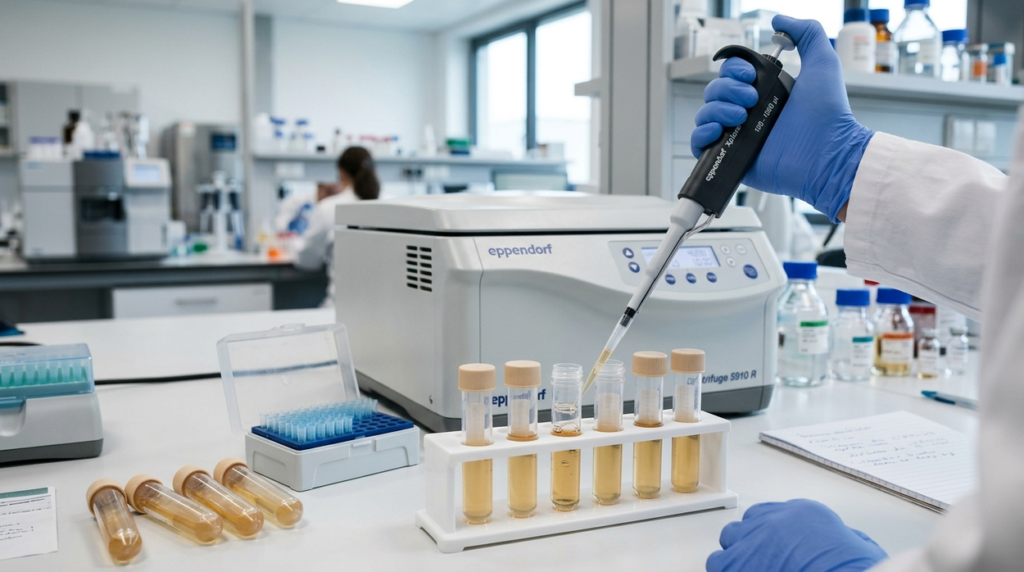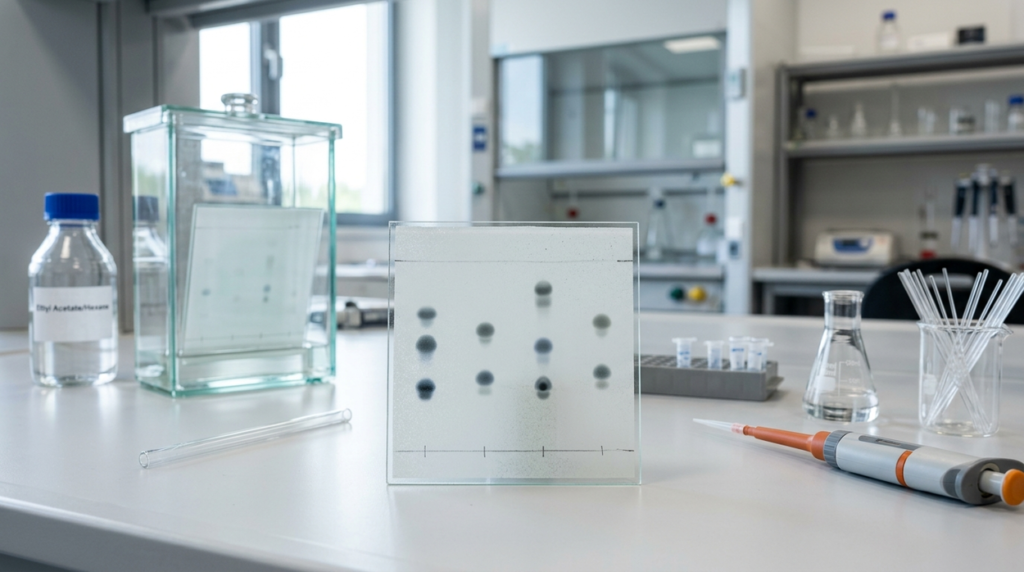
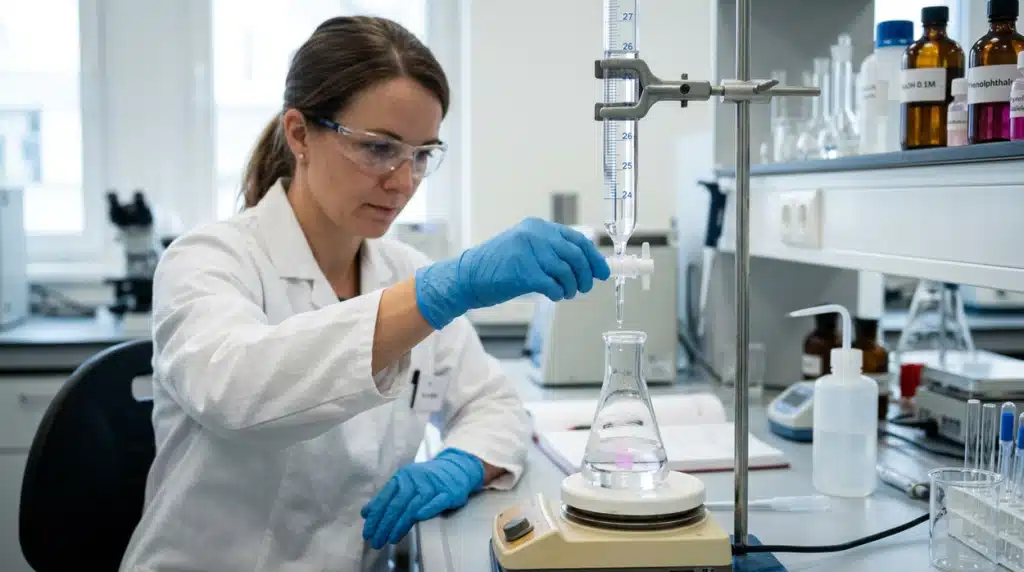
Determining nitrogen content accurately is an important task in analytical chemistry, particularly in food testing, feed analysis, agricultural laboratories, and selected pharmaceutical and biotechnology applications. The Kjeldahl method remains a widely established approach for this purpose because it converts recoverable nitrogen in a sample into a measurable chemical form.
The method follows three connected stages: digestion, distillation, and titration. During digestion, suitable nitrogen-containing compounds are converted into ammonium under strongly acidic conditions. Distillation then releases ammonia from the alkaline digest and transfers it into a receiving solution. Finally, titration quantifies the recovered ammonia, allowing the analyst to calculate the nitrogen content of the original sample.
Although these stages can be described separately, the final result depends on how well they work together. Incomplete digestion may prevent quantitative nitrogen recovery, inefficient distillation may allow ammonia to escape, and inaccurate titration can introduce errors into the calculation. Even a technically correct final calculation cannot compensate for nitrogen lost earlier in the workflow.
It is also important to distinguish nitrogen determination from protein measurement. The Kjeldahl method measures nitrogen recovered under specified analytical conditions; protein content is generally estimated by multiplying the nitrogen percentage by an appropriate conversion factor. That estimate may be affected by non-protein nitrogen and differences in protein composition.
Understanding the chemistry behind each stage helps laboratory professionals select appropriate methods, troubleshoot inconsistent results, evaluate analytical equipment, and interpret reported nitrogen or crude-protein values responsibly.
How the Kjeldahl Method Converts Nitrogen into a Measurable Result
The underlying principle of Kjeldahl nitrogen determination
The Kjeldahl method is a chemical analysis technique in which suitable nitrogen-containing compounds are digested in concentrated sulfuric acid, converted into an ammonium-containing digest, and subsequently measured through ammonia recovery and quantification.
In a conventional procedure, the digest is made strongly alkaline to release ammonia. The ammonia is distilled into a receiving solution and quantified by titration. The amount of ammonia recovered provides the basis for calculating the sample’s nitrogen content.
The method is described in ISO 1871:2009, Food and feed products—General guidelines for the determination of nitrogen by the Kjeldahl method. Its scope is specifically food and feed products, so other matrices may require a different applicable standard or a separately validated procedure.
Why the three stages must work together
The three stages form a continuous analytical sequence:
- Digestion: Converts suitable nitrogen compounds into ammonium under acidic conditions.
- Distillation: Releases ammonia under alkaline conditions and transfers it to a receiving solution.
- Titration: Quantifies the recovered ammonia so that nitrogen content can be calculated.
Each stage addresses a different analytical challenge. Digestion makes the relevant nitrogen measurable in a suitable chemical form. Distillation separates ammonia from much of the original sample matrix. Titration determines how much ammonia was recovered.
An error at any point can influence the final result. Incomplete digestion may cause low recovery; ammonia escaping during distillation can produce a similar bias; and an incorrectly standardized titrant can lead to an inaccurate nitrogen calculation.
Which forms of nitrogen does the Kjeldahl method measure?
The conventional Kjeldahl method does not necessarily measure every form of nitrogen in a sample. Its recovery depends on the chemical species present and the specific procedure used.
Many conventional procedures do not quantitatively include nitrate and nitrite nitrogen unless an appropriate additional treatment is incorporated. Certain nitrogen-containing functional groups and heterocyclic compounds may also be incompletely recovered under particular conditions.
Furthermore, Kjeldahl analysis does not inherently distinguish protein nitrogen from non-protein nitrogen. Free amino acids, ammonium compounds and other recoverable nitrogen-containing substances can contribute to the result.
Consequently, a laboratory should confirm that the selected method covers the relevant nitrogen species in its sample matrix. For example, ISO 5983-1 for animal feeding stuffs explicitly addresses both nitrogen determination and crude-protein calculation while noting limitations involving oxidized and certain heterocyclic forms of nitrogen.
Stage 1 — Digestion: Converting Sample Nitrogen into Ammonium
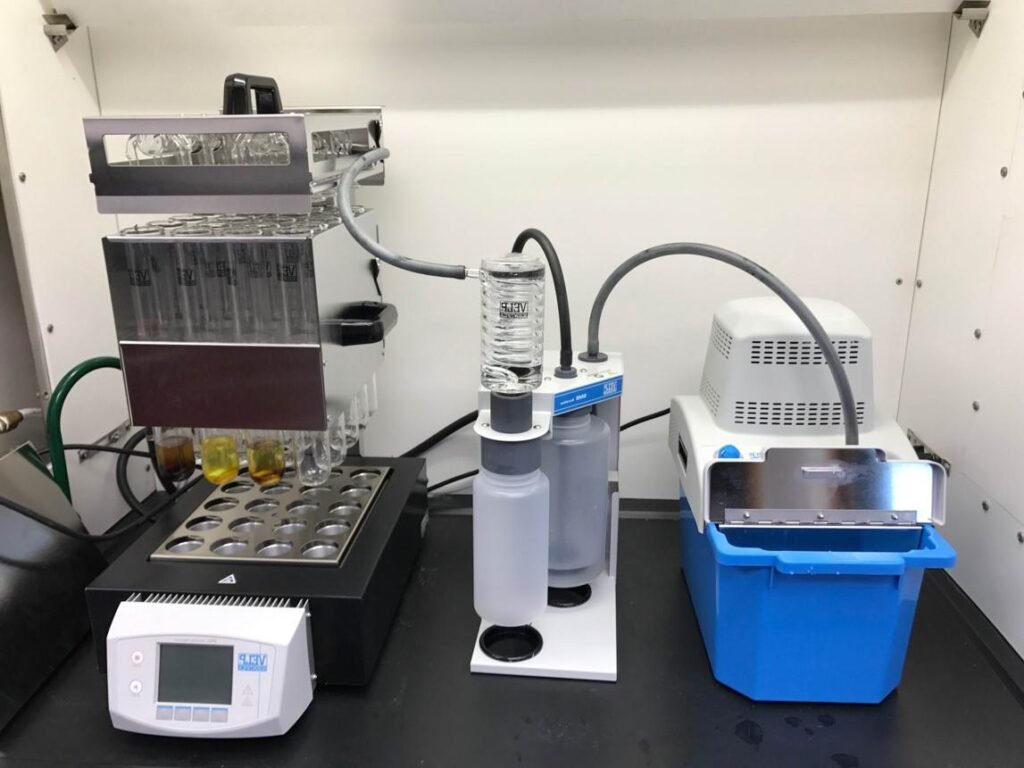
Image Source: labequip.com
Digestion is often the most chemically demanding stage of Kjeldahl analysis. Its purpose is to break down the sample matrix and convert recoverable nitrogen into an ammonium-containing digest that can subsequently release ammonia.
What happens chemically during Kjeldahl digestion?
A measured portion of the homogenized sample is treated with concentrated sulfuric acid and the reagents specified by the selected method. Heating promotes the decomposition of organic material, while the acidic environment supports the conversion of suitable organic nitrogen into ammonium.
In a conventional procedure, the nitrogen is retained predominantly in an ammonium-containing digest, commonly described as ammonium sulfate in the simplified reaction scheme.
The process also decomposes much of the sample’s organic matrix, making the nitrogen accessible to the subsequent distillation stage. However, it should not be assumed that every nitrogen atom is quantitatively converted into ammonium under all digestion conditions.
The appropriate sample mass, reagent quantities, heating programme and endpoint depend on the sample composition and validated analytical procedure.
The role of sulfuric acid, catalysts and digestion salts
Three reagent categories are particularly important.
- Sulfuric acid: Provides the strongly acidic environment needed for digestion and helps retain converted nitrogen in the digest.
- Catalysts: Copper-based and other method-specified catalytic systems can accelerate digestion. The appropriate catalyst depends on the selected procedure.
- Potassium sulfate or other specified salts: May raise the boiling temperature of the digestion mixture, supporting the required digestion conditions.
Mercury-based catalysts occur in some legacy methods but introduce significant toxicity and waste-management concerns. Where a laboratory uses such a procedure, catalyst handling and disposal must follow the applicable chemical safety and waste requirements.
Reagent substitutions should not be made casually. Changing catalyst composition or salt concentration can alter digestion performance, and any change must be evaluated against the method’s requirements.
Sample preparation and digestion conditions that influence recovery
Reliable digestion begins before heating. An unrepresentative sample can produce a precise-looking result that does not reflect the original material.
Important factors include:
- Sample homogeneity: Inconsistent particle size or composition can affect the amount of nitrogen entering each test portion.
- Sample mass: Excessive loading may cause foaming, prolonged digestion or incomplete decomposition.
- Matrix composition: Moisture, fat, carbohydrate content and other components influence digestion behaviour.
- Acid-to-sample ratio: Insufficient acid can compromise digestion and retention of nitrogen.
- Heating and digestion time: Conditions must be sufficient for the specified procedure without uncontrolled boiling or sample loss.
Some methods use a clear or pale digest as an operational indicator of digestion progress. However, appearance alone is not universal proof of complete nitrogen recovery. The endpoint should be determined according to the applicable method and equipment instructions.
Common digestion errors and their consequences
Incomplete digestion can lead to low or inconsistent nitrogen recovery. Sample loss through splashing, foaming or uncontrolled boiling can also bias the result. Contaminated reagents, unsuitable glassware or inconsistent sample preparation may produce elevated or variable blanks.
Digestion systems should therefore provide appropriate temperature control, compatible vessels and effective fume extraction. Analysts should follow approved procedures for handling concentrated acid, hot digestion mixtures and potentially hazardous catalyst residues.
The critical outcome of this stage is a digest suitable for quantitative ammonia release. If the nitrogen has not been adequately recovered here, the subsequent stages cannot reliably restore it.
Stage 2 — Distillation: Releasing Ammonia and Separating It from the Digest
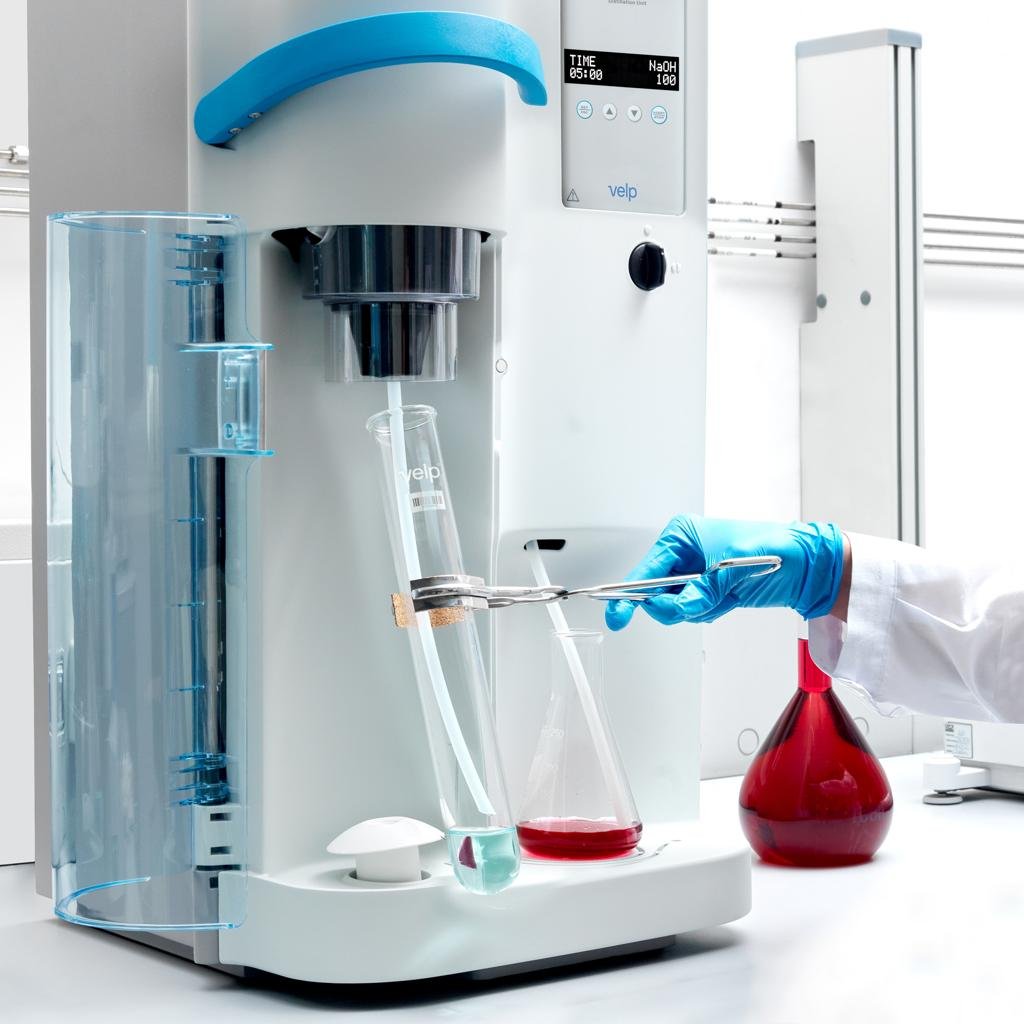
Image Source: velp.com
After digestion, nitrogen is present in a form that must be converted into ammonia before conventional titration can quantify it. Distillation performs this separation by changing the chemical conditions and transferring the released ammonia into a receiving solution.
🏢 Featured Laboratory Suppliers Directory Listing
Looking for verified and trusted laboratory suppliers partners related to this topic? Explore our comprehensive directory.
Explore Directory →Why the digest is made alkaline
Under acidic digestion conditions, the relevant nitrogen is retained largely as ammonium. After the digest has been handled and prepared as required by the method, a strong alkali—commonly sodium hydroxide—is added to establish alkaline conditions.
The equilibrium between ammonium and ammonia can be represented as:
NH4++OH–NH3+H2O
The resulting ammonia can be transferred out of the alkaline mixture. Heating or steam distillation facilitates that transfer, while the condenser cools the vapor stream so the ammonia can be collected in the receiving solution.
Alkalization must be sufficient, and the transfer conditions must be appropriate for the method. Incorrect reagent delivery or poor mixing can compromise recovery.
How the Kjeldahl distillation apparatus works
A conventional system typically contains several components, although instrument configurations vary.
- Distillation vessel: Holds the prepared digest.
- Alkali delivery system: Adds the specified base to release ammonia.
- Heating or steam-generation system: Provides the conditions needed to transfer ammonia.
- Condenser: Cools the vapor stream.
- Receiving flask: Contains the solution used to capture ammonia.
In conventional distillation, the sample mixture is heated to transfer ammonia into the vapor stream. Steam-distillation systems use generated steam to facilitate ammonia transfer. The two arrangements differ in their operating configuration, but both aim to achieve the recovery required by the applicable method.
Connections must be compatible and secure. Leaks can allow ammonia to escape before it reaches the receiver, resulting in a falsely low nitrogen value.
Capturing ammonia in the receiving solution
Two common approaches are used.
Boric acid absorption: Ammonia is captured in a boric acid receiving solution. The resulting solution is titrated using the prescribed standard acid, indicator or endpoint-detection system.
Known excess of standard acid: Ammonia is absorbed in a measured excess of standard acid. The acid remaining after absorption is determined by back-titration, and the difference is used to calculate the amount of ammonia captured.
These approaches are not interchangeable without corresponding changes to the calculation. The receiving solution, titrant concentration, reaction stoichiometry and endpoint criteria must match the selected procedure.
What determines efficient ammonia recovery?
Distillation performance depends on more than the temperature setting. Key factors include adequate alkalization, effective mixing, sufficient distillation or steam-transfer conditions, condenser performance, receiver positioning and the duration of the run.
An inadequate receiving solution or premature termination can leave some ammonia uncollected. Carryover from a previous sample may instead introduce a positive bias.
Routine maintenance, leak checks, appropriate cleaning and method-specific recovery checks help identify problems before they affect reported results.
Manual versus automated Kjeldahl distillation
Manual apparatus requires the analyst to manage more individual operations, including reagent addition, heating and timing. Automated systems may control reagent delivery, distillation conditions and, in integrated configurations, titration.
Automation can improve consistency and sample throughput, but it does not automatically establish analytical accuracy. Instrument settings, cleaning, maintenance and recovery performance still require verification.
The correct choice depends on the sample workload, required precision, available laboratory controls and compatibility with the validated procedure.
Stage 3 — Titration: Quantifying the Recovered Ammonia
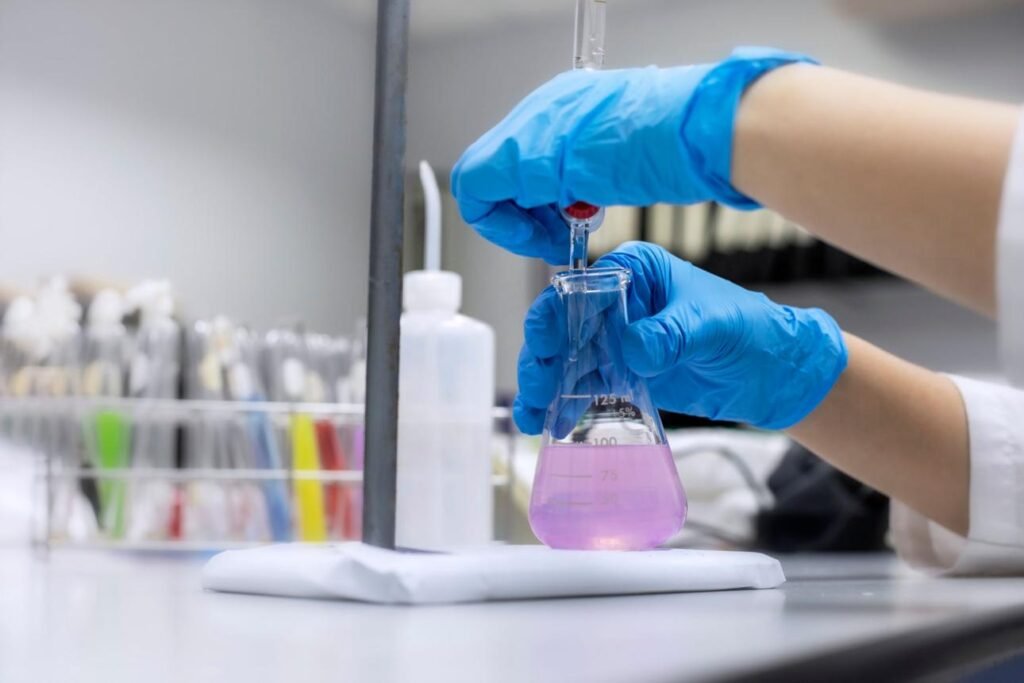
Titration converts the amount of ammonia collected during distillation into a quantitative measurement. Its accuracy depends on the titrant concentration, endpoint determination, blank correction and correct recording of the measured volumes.
How acid-base titration determines ammonia content
In a direct titration arrangement, the captured ammonia is quantified using a standardized acid titrant under the prescribed conditions. When the reaction stoichiometry is one mole of acid per mole of ammonia, the amount of acid consumed corresponds to the amount of ammonia measured.
In a back-titration arrangement, ammonia is captured in a known excess of standard acid. The remaining acid is titrated, and the difference between the initial and remaining acid quantities indicates how much acid reacted with ammonia.
The calculation must follow the actual analytical arrangement. A formula developed for direct titration of a boric acid receiving solution should not be applied unmodified to a back-titration procedure.
Choosing the titrant, indicator and endpoint
The titrant must have a known concentration. Standardization against a suitable reference substance or standard solution establishes the concentration used in calculations.
Indicators provide a visual endpoint when appropriate for the receiving solution and titration chemistry. Automated systems may instead use potentiometric or other instrumental endpoint detection.
Neither approach eliminates the need for correct settings and method verification. Visual endpoints may be affected by colour or subjective interpretation, while instrumental endpoints can be affected by electrode condition, calibration, response characteristics and unsuitable endpoint parameters.
Why blank correction matters
A reagent blank is processed according to the applicable procedure, using the prescribed reagents and analytical steps without the sample contribution. It helps estimate background arising from reagents, apparatus and the procedure itself.
For the direct-titration expression used below, the blank volume is subtracted from the sample titration volume. This correction is appropriate for the stated arrangement; other procedures may use a different calculation convention.
An unusually high or unstable blank may indicate contamination, reagent problems or inconsistent handling. Blank correction cannot compensate for every error—for example, ammonia lost during distillation or incomplete digestion.
Common titration errors and their effect
Frequent sources of error include:
- Incorrect or inadequately standardized titrant concentration.
- Endpoint overshoot or incorrect endpoint settings.
- Inaccurate burette readings or automated reagent delivery.
- Poorly maintained electrodes.
- Incorrect blank subtraction.
- Calculation, unit-conversion or transcription errors.
These problems can bias the nitrogen result even when digestion and ammonia recovery have performed satisfactorily. Reviewing the raw titration data, blank results and calculation records is therefore an important part of troubleshooting.
Turning the Three Stages into a Nitrogen or Protein Result
The Basic Kjeldahl Nitrogen Calculation
For a suitable direct acid-titration procedure in which the acid-ammonia stoichiometry is one-to-one, the nitrogen percentage can be calculated using the following equation:
% Nitrogen = [(Vs − Vb) × C × 14.007 × 100] / (1000 × m)
Where:
- Vs = Sample titration volume, in mL.
- Vb = Blank titration volume, in mL.
- C = Standardized acid concentration, in mol/L.
- 14.007 = Approximate molar mass of nitrogen, in g/mol.
- m = Original sample mass, in g.
The factor of 1,000 converts millilitres into litres, while the factor of 100 expresses the nitrogen mass as a percentage of the original sample mass.
This equation assumes a specified direct-titration arrangement, appropriate reaction stoichiometry, and consistent units. Back-titration, aliquot analysis, dilution, and other method-specific arrangements require corresponding adjustments to the calculation.
Worked Example: From Titration Volume to Nitrogen Percentage
Consider a hypothetical sample analyzed using the specified direct-titration procedure.
Experimental Measurements
| Measurement | Illustrative Value |
| Sample mass | 1.000 g |
| Sample titration volume | 20.00 mL |
| Blank titration volume | 0.20 mL |
| Standardized acid concentration | 0.1000 mol/L |
Step 1: Correct the Titration Volume for the Blank
Subtract the blank titration volume from the sample titration volume:
Corrected Titration Volume = Sample Titration Volume − Blank Titration Volume
V(corrected) = 20.00 − 0.20
V(corrected) = 19.80 mL
🏢 Featured Laboratory Suppliers Directory Listing
Looking for verified and trusted laboratory suppliers partners related to this topic? Explore our comprehensive directory.
Explore Directory →Step 2: Calculate the Nitrogen Percentage
Substitute the measured values into the nitrogen calculation equation:
% Nitrogen = (V × M × 14.007 × 100) / (1000 × W)
Where:
- V = Corrected titration volume (mL)
- M = Standardized acid concentration (mol/L)
- 14.007 = Atomic mass of nitrogen
- W = Sample mass (g)
- 1000 = Conversion factor from millilitres to litres
Substituting the values:
% Nitrogen = (19.80 × 0.1000 × 14.007 × 100) / (1000 × 1.000)
% Nitrogen = 2.773%
The calculated nitrogen content is approximately 2.77% by mass.
This is an illustrative teaching example and should not be considered a reference value for any particular material. Actual laboratory results must be supported by the applicable analytical method, appropriate quality-control procedures, and the laboratory’s reporting requirements.
Converting Nitrogen Percentage into Estimated Protein Content
Crude protein content is commonly estimated by multiplying the measured nitrogen percentage by an appropriate nitrogen-to-protein conversion factor:
% Crude Protein = % Nitrogen × F
Here, F represents the nitrogen-to-protein conversion factor specified for the material being analyzed and the applicable analytical method.
A conversion factor of 6.25 is commonly used in many food and animal feed applications. However, this factor is not universal, as different materials may require different conversion factors. For example, AOAC Official Method 954.01 for crude protein determination in animal feed and pet food specifies different factors for general feed applications and wheat grains.
Using 6.25 solely to illustrate the calculation:
2.773 × 6.25 = 17.33%
Therefore, the estimated crude protein content is approximately 17.33%, based on the assumed conversion factor of 6.25.
Technical Note: Crude protein is an estimate based on total nitrogen content. It does not necessarily represent the actual protein content because non-protein nitrogen may also contribute to the measured nitrogen value.
This does not mean the sample contains exactly 17.33% intact protein. Non-protein nitrogen may contribute to the measurement, and the nitrogen fraction of proteins varies with their amino acid composition. Laboratories should therefore use the conversion factor required by the relevant standard, specification or validated method—not automatically apply a food-specific factor to pharmaceutical raw materials, biologics or other matrices.
Reporting the result on the correct sample basis
Nitrogen results may be reported on an as-received basis, dry-matter basis or another prescribed basis. These are not equivalent.
When a dry-matter result is required, moisture content must be determined and applied using the appropriate calculation. Reports should also specify units, sample preparation, method identification, relevant conversion factors and any applicable dilution corrections.
Rounding should occur according to the method’s reporting requirements rather than at intermediate calculation steps. Replicate results, quality-control outcomes and documented deviations help establish whether the reported value is analytically defensible.
Where Kjeldahl Analysis Fits in Pharmaceutical, Biotechnology and Laboratory Operations
Food, feed and agricultural testing
Kjeldahl analysis has an established role in determining nitrogen and estimating crude protein in suitable food, feed and agricultural materials. Laboratories use matrix-specific procedures to account for differences in composition, digestion behaviour and reporting conventions.
The method is especially useful when the required result is a conventional nitrogen measurement or a standardized crude-protein estimate. Its limitations must still be considered when a sample contains significant non-protein nitrogen or nitrogen species that the selected procedure does not recover quantitatively.
Pharmaceutical and biotechnology applications
In pharmaceutical and biotechnology laboratories, Kjeldahl analysis may support selected research or material-characterization activities when nitrogen content is a relevant analytical attribute.
Potential applications include characterizing suitable nitrogen-containing raw materials, assessing appropriate organic materials and supporting research investigations where the method’s measurement scope fits the question.
However, Kjeldahl nitrogen determination is not a universal substitute for pharmaceutical identity, purity, potency or product-specific quality testing. It does not independently establish protein identity, amino acid sequence, molecular integrity or biological activity.
Before adopting the method for a new matrix, the laboratory should establish that the procedure is suitable for the intended purpose and verify or validate its performance as appropriate.
Kjeldahl analysis versus alternative methods
Different analytical techniques answer different questions.
| Method | Main measurement objective | Important consideration |
| Kjeldahl | Nitrogen recoverable under the selected digestion procedure | Does not necessarily include all nitrogen species or distinguish protein from non-protein nitrogen |
| Dumas combustion | Nitrogen determination through combustion and subsequent gas measurement | Often supports rapid throughput, but measures nitrogen according to its own method scope |
| UV or colorimetric protein assay | Protein estimation using a particular optical or chemical response | Results can depend on protein composition, calibration and matrix interference |
| Amino acid analysis | Amino acid composition, which can support protein or peptide characterization | Requires suitable hydrolysis, separation and analytical interpretation |
These techniques should not be treated as automatically interchangeable. Selection depends on the measurand, matrix, required specificity, method performance and applicable specification.
Quality-Control Checks That Protect the Entire Workflow
Verify the method before analysing routine samples
The method must be suitable for the sample matrix and intended analytical use. Depending on the application, verification or validation may address accuracy, precision, working range, selectivity, robustness and recovery.
A method established for a food matrix should not automatically be assumed suitable for a pharmaceutical intermediate or biological sample. Changes to sample preparation, reagents, equipment or calculation conventions may affect performance.
Use blanks, reference materials and recovery checks
Reliable quality control evaluates the whole workflow rather than relying on a single check.
- Reagent blanks help identify background nitrogen or procedural contamination.
- Certified reference materials, where suitable materials are available, help assess measurement accuracy and traceability.
- Spike-recovery studies can help evaluate recovery in an appropriate matrix, although their interpretation depends on the added compound and the method.
- Replicate analyses assess repeatability and reveal inconsistencies in sample preparation or measurement.
- Control charts can support ongoing monitoring when justified by the laboratory’s testing volume and quality system.
The National Institute of Standards and Technology (NIST) provides information about Standard Reference Materials. A reference material should be selected only when its certified properties and matrix are appropriate for the intended assessment.
Troubleshooting unexpected results
An unexpected result should trigger a structured investigation rather than an immediate assumption that a particular instrument or stage has failed.
| Observed problem | Initial areas to investigate |
| Unexpectedly low nitrogen | Sample representativeness, digestion completeness, ammonia loss, distillation recovery and calculations |
| Unexpectedly high nitrogen | Contamination, blank contribution, sample identity, reagent purity and endpoint errors |
| Poor repeatability | Homogenization, weighing, reagent delivery, heating consistency and analyst technique |
| Unstable blank values | Reagent quality, glassware cleaning, carryover and procedural contamination |
These are diagnostic starting points, not definitive explanations. Corrective action should be based on documented investigation and followed by suitable verification.
🏢 Featured Laboratory Suppliers Directory Listing
Looking for verified and trusted laboratory suppliers partners related to this topic? Explore our comprehensive directory.
Explore Directory →Document analytical conditions and instrument performance
Traceable records should include sample identification and preparation, method version, reagent identity and standardization, instrument identification, maintenance status, raw titration data, blank values, calculations and final results.
Where acceptance criteria are not met, the laboratory should document the investigation and its disposition. Such records support reproducibility and quality-system oversight without implying that every Kjeldahl procedure is automatically a regulated pharmaceutical release test.
Safety and Waste Management Across the Three Stages
Kjeldahl analysis involves hazards beyond routine low-risk wet chemistry. Concentrated sulfuric acid, strong alkalis, hot digestion mixtures and potentially hazardous fumes require appropriate engineering controls and trained operators.
Digestion should be conducted using compatible vessels and suitable fume extraction. Reagent addition, heating and cooling must follow the approved procedure and equipment instructions. Chemical-resistant personal protective equipment should be selected through the laboratory’s risk assessment, and the relevant safety data sheets should be available.
Catalyst selection also affects waste handling. Mercury-containing or other hazardous-metal catalysts require particular care, and acidic digests, alkaline solutions and contaminated residues must be segregated and disposed of according to their composition and local requirements.
For US laboratories, OSHA’s laboratory safety resources provide relevant occupational safety guidance. Applicable waste requirements should also be checked with the appropriate environmental authority. Enclosed digestion equipment, maintained extraction systems and automated reagent delivery can reduce particular exposures, but do not replace risk assessment, training or safe operating procedures.
Choosing and Maintaining Equipment for Reliable Kjeldahl Analysis
Equipment should be selected according to the method, sample characteristics and expected workload—not advertised speed alone.
Digestion blocks, flasks and fume extraction
Evaluate digestion systems for sample capacity, temperature uniformity, compatibility with the specified vessels, heating control, fume extraction and condensate management. Cleaning requirements and the ability to handle the laboratory’s sample matrix are also important.
A system that accommodates more samples per run is not necessarily the best choice if it cannot maintain the required conditions or provide suitable extraction.
Distillation and titration systems
Standalone distillation units, integrated Kjeldahl analyzers and systems incorporating automated titration differ in reagent delivery, ammonia recovery, endpoint detection, data handling and maintenance requirements.
Automation may reduce manual handling and improve process consistency, but the laboratory must still demonstrate that the system meets the method’s performance requirements.
Questions to ask before purchasing a system
- Is the system compatible with the laboratory’s validated method and sample matrix?
- Can recovery and precision be demonstrated with appropriate test materials?
- Which calibration, verification, cleaning and maintenance activities are required?
- Which steps are automated, and which remain manual?
- Can raw data, calculations and quality-control results be documented and retrieved?
- Are training, technical support, spare parts and waste-handling requirements understood?
A practical equipment assessment should consider the complete workflow, including digestion, ammonia transfer, titration and result reporting.
Understanding the Method’s Limitations Before Interpreting Results
Nitrogen content is not the same as protein concentration
Kjeldahl analysis measures nitrogen under defined method conditions. Converting that result into estimated protein content introduces an additional assumption about the relationship between nitrogen and protein.
Non-protein nitrogen can inflate a crude-protein estimate, while an inappropriate conversion factor can produce a misleading value. When the distinction matters, nitrogen should be reported separately or supplemented with a more suitable protein-specific method.
Sample matrices may require method-specific modifications
Solubility, matrix composition and the types of nitrogen compounds present can affect digestion and recovery. A procedure that performs well with one material may not be suitable for another.
Any modification to sample preparation, reagent composition or analytical conditions should be evaluated for its effect on recovery, precision and accuracy before routine implementation.
When another technique may be more appropriate
If the analytical objective is to determine the identity or composition of a protein, quantify a particular protein, or assess a biologic’s structural integrity, another technique may be needed. Protein-specific assays, amino acid analysis or other validated analytical methods may provide information that nitrogen determination alone cannot.
The right method is the one that measures the intended attribute with suitable performance—not necessarily the one that produces the fastest result.
Conclusion
The reliability of the Kjeldahl method depends on the combined performance of digestion, distillation and titration. Digestion must convert the relevant nitrogen into a recoverable form, distillation must transfer and capture ammonia efficiently, and titration must quantify that ammonia accurately. No single stage can compensate for a failure in another.
For laboratory professionals, three practical principles matter most: choose a method appropriate to the sample matrix, use suitable quality controls and documented calculations, and distinguish measured nitrogen from estimated protein content.
Understanding the chemistry behind each stage makes it easier to investigate inconsistent results, assess laboratory equipment and select an analytical approach that supports the intended research or quality decision.
Frequently Asked Questions
1. What are the three main stages of the Kjeldahl method?
The three stages are digestion, distillation and titration. Digestion converts suitable nitrogen compounds into an ammonium-containing digest, distillation releases and captures ammonia, and titration quantifies the recovered ammonia to calculate nitrogen content.
2. Why is sulfuric acid used in Kjeldahl digestion?
Concentrated sulfuric acid provides the strongly acidic environment needed to decompose the sample matrix and convert recoverable organic nitrogen into ammonium under suitable conditions. Catalysts and digestion salts may be added according to the specified method.
3. How is protein content calculated from Kjeldahl nitrogen?
Estimated crude protein is calculated by multiplying the nitrogen percentage by an appropriate nitrogen-to-protein conversion factor. The factor varies by material and analytical convention, so laboratories should follow the applicable standard or validated method.
4. What are the main sources of error in Kjeldahl analysis?
Common errors include incomplete digestion, sample loss during heating, ammonia loss during distillation, contaminated reagents, inaccurate titration, incorrect blank correction and calculation mistakes. Quality controls across all three stages help identify these problems.