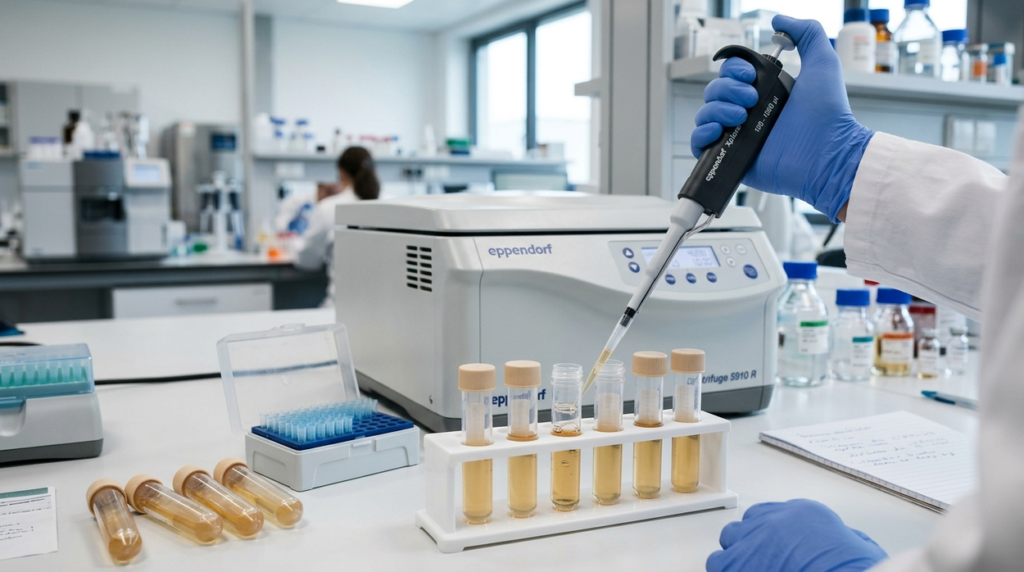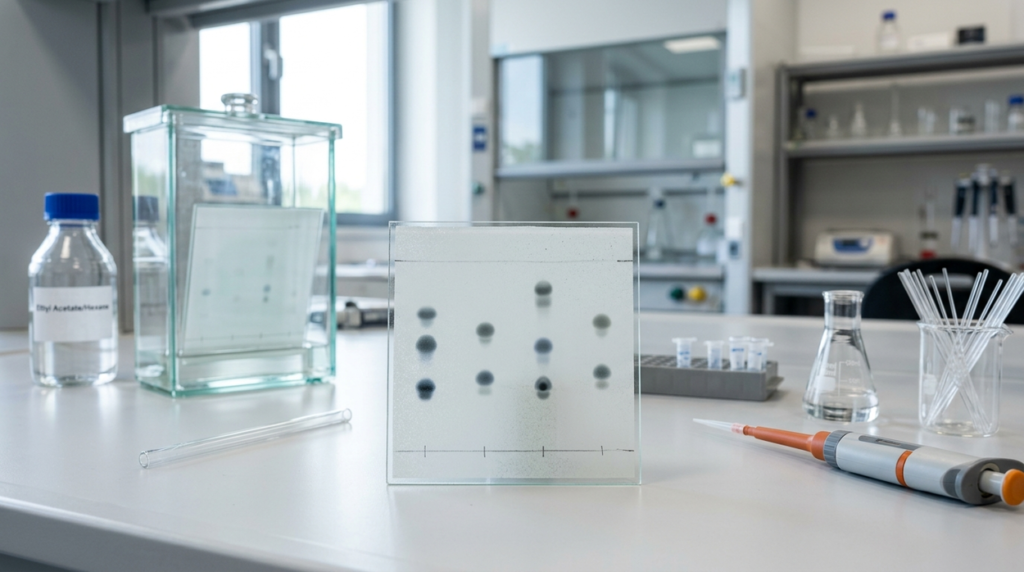
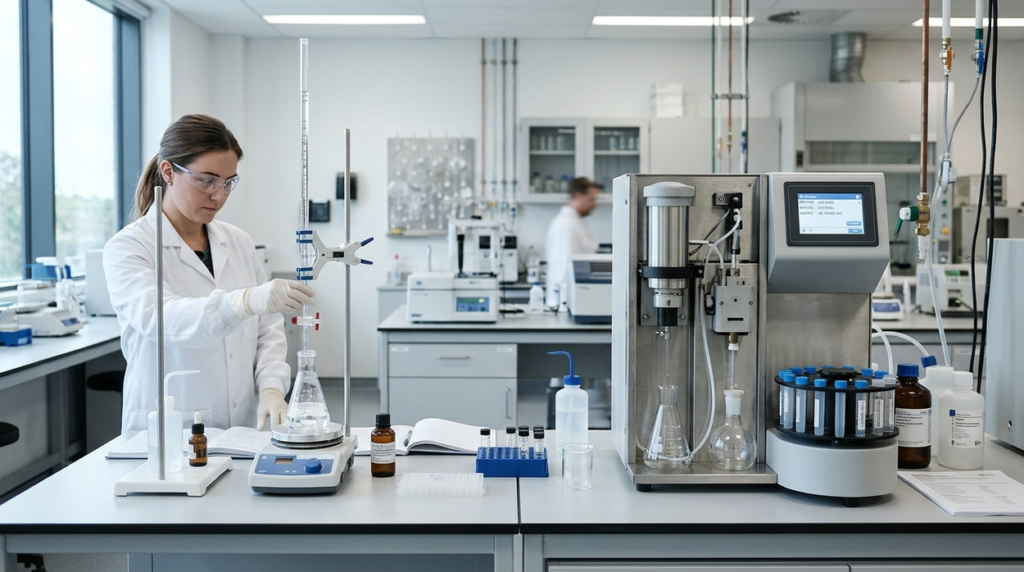
Nitrogen determination is an important analytical task in food testing, agricultural laboratories, pharmaceutical quality control, and biotechnology research. Measuring nitrogen can help characterize raw materials, assess nutritional composition, and support selected manufacturing and process-control activities. However, obtaining a reliable result requires more than following a laboratory procedure: analysts must understand which nitrogen compounds the method measures, how efficiently nitrogen is recovered, and whether the result supports the intended analytical conclusion.
The Kjeldahl method is a classical wet-chemistry technique used to determine nitrogen in suitable sample matrices. It involves digesting a prepared sample with concentrated sulfuric acid, converting recoverable nitrogen into ammonium, releasing ammonia under alkaline conditions, and quantifying the ammonia through a suitable analytical procedure.
One distinction is particularly important: the Kjeldahl method measures nitrogen, not protein directly. Protein content is commonly estimated by multiplying the measured nitrogen concentration by a conversion factor. This estimate can be affected by non-protein nitrogen compounds, the nitrogen composition of the sample, and the suitability of the selected method.
For laboratory professionals, understanding the Kjeldahl method’s principle, procedure, advantages, limitations, and quality-control requirements is essential for selecting an appropriate analytical technique. This guide explains the chemistry, laboratory workflow, calculation, safety considerations, and circumstances in which an alternative method may be more suitable.
What Is the Kjeldahl Method, and What Does It Actually Measure?
The basic principle behind Kjeldahl nitrogen analysis
Developed by Danish chemist Johan Kjeldahl in the nineteenth century, the method remains widely used because its fundamental chemistry can be implemented through established, standardized procedures.
The analytical process generally consists of five stages:
- Digestion: The sample is heated with concentrated sulfuric acid and, where specified, a suitable catalyst.
- Nitrogen conversion: Recoverable nitrogen in the sample is converted into ammonium under the prescribed digestion conditions.
- Alkalization: A strong alkali is added to convert ammonium ions into ammonia.
- Distillation and capture: The liberated ammonia is transferred into a receiving solution.
- Quantification: The captured ammonia is measured by titration or another validated detection approach.
The quantity of nitrogen is calculated from the analytical response, sample mass, and applicable method parameters.
The exact digestion conditions, catalysts, sample loading, receiving solution, and endpoint-detection procedure depend on the sample matrix and the applicable analytical standard. For example, ISO 1871:2009 provides general guidelines for Kjeldahl nitrogen determination in food and feed products containing compounds suitable for direct determination by this method. Its scope does not include nitrogen from nitrates and nitrites.
Total Nitrogen, Organic Nitrogen, and Protein Are Not Interchangeable
Nitrogen analysis and protein estimation serve different analytical purposes and should not be considered equivalent.
- Nitrogen Concentration: Represents the amount of nitrogen measured in a sample under the specified analytical conditions.
- Protein Estimation: Calculates an estimated protein value from the measured nitrogen concentration using an assumed nitrogen-to-protein conversion factor.
- Total Nitrogen: Refers to a broader measurement that depends on the analytical procedure and the types of nitrogen compounds recovered by the method.
Not all nitrogen present in a sample originates from proteins. Free amino acids, ammonium compounds, urea, and other nitrogen-containing substances may also contribute to the measured result, depending on the analytical method. Furthermore, conventional Kjeldahl procedures do not necessarily recover every nitrogen species quantitatively.
The commonly used protein conversion factor of 6.25 is based on the assumption that proteins contain approximately 16% nitrogen by mass. The estimated protein content can therefore be calculated using the following equation:
Estimated Protein (%) = Nitrogen (%) × 6.25
This conversion factor is convenient for many food and feed applications, but it is not universally applicable. Protein composition varies among food materials, feed ingredients, and other biological matrices. Therefore, some applications require material-specific nitrogen-to-protein conversion factors.
For example, a sample containing substantial amounts of non-protein nitrogen may produce a nitrogen-derived protein estimate that exceeds its actual protein content. Consequently, results should be reported and interpreted according to the purpose of the analysis rather than automatically treating nitrogen multiplied by 6.25 as a direct measurement of protein.
How the Kjeldahl Reaction Works: From Digestion to Nitrogen Quantification
Acid digestion and sample decomposition
During digestion, concentrated sulfuric acid decomposes the sample’s organic matrix under controlled heating. Recoverable nitrogen is converted into ammonium in the resulting acidic digest.
The digestion system may include a catalyst to improve reaction efficiency or support the selected procedure. The required temperature, digestion duration, acid quantity, and catalyst composition depend on the validated method and sample characteristics.
Three factors are particularly important:
- Sample homogeneity: Uneven distribution of nitrogen-containing material can produce inconsistent results between portions of the same sample.
- Sample loading: Excessive loading may compromise digestion efficiency or exceed the capacity of the digestion vessel.
- Digestion completeness: Insufficient digestion can result in incomplete nitrogen recovery and negatively biased results.
A visually clear digest may indicate that decomposition has progressed, but appearance alone does not prove quantitative recovery.
Alkalization and ammonia liberation
After digestion and appropriate cooling or preparation, the acidic mixture is made strongly alkaline according to the specified procedure. This shifts the ammonium–ammonia equilibrium toward ammonia, which can be separated from the liquid mixture.
The reaction can be represented as:
NH4++OH–NH3+H2O
Because neutralization can release substantial heat, the order of addition, cooling, dilution, and handling must follow the validated procedure and equipment instructions.
Distillation and ammonia capture
The liberated ammonia is transferred from the digestion mixture, commonly through steam distillation, into a suitable receiving solution. The receiving medium retains the ammonia so that its quantity can subsequently be determined.
Leaks, inadequate distillation, incomplete transfer, or unsuitable operating conditions can reduce ammonia recovery. These problems may produce low results even when the digestion stage was satisfactory.
Titration, endpoint detection, and nitrogen calculation
In a common workflow, the captured ammonia is quantified by titration using a standardized acid solution. Depending on the procedure, other receiving-solution and endpoint-detection arrangements may be used.
The measured titration response is corrected using a reagent blank where required. The corrected quantity is then related to the original sample mass to calculate nitrogen concentration.
This calculation depends on the actual titration chemistry, the stoichiometric relationship between the titrant and ammonia, and any dilution or aliquot factors specified in the method.
Step-by-Step Kjeldahl Laboratory Procedure
The Kjeldahl method is a widely used analytical technique for determining the nitrogen content of organic samples. The procedure generally involves sample preparation, acid digestion, ammonia liberation, distillation, titration, and calculation. The exact operating conditions, reagent concentrations, and equipment settings should follow the validated laboratory method being used.
Step 1: Sample Preparation and Homogenization
Prepare a representative sample before analysis. Solid samples should be finely ground or homogenized to ensure uniform composition. Liquid samples should be mixed thoroughly before taking an aliquot.
Accurate sample preparation is essential because non-uniform samples can produce inconsistent nitrogen measurements.
Step 2: Sample Weighing and Digestion Setup
Accurately weigh the required quantity of the homogenized sample using an analytical balance. Transfer the sample into a suitable Kjeldahl digestion tube or flask.
Add the appropriate digestion reagent and catalyst mixture according to the validated analytical procedure. The reagent system typically includes concentrated sulfuric acid and a suitable catalyst to support the digestion process.
Step 3: Acid Digestion
Heat the prepared sample under controlled conditions in a Kjeldahl digestion unit. During digestion, organic nitrogen compounds are converted into ammonium ions in the acidic solution.
Continue digestion according to the validated method until the sample is adequately decomposed and the digest reaches the required endpoint.
Allow the digestion mixture to cool before proceeding to the next stage.
Step 4: Cooling and Digest Preparation
After digestion, allow the flask or digestion tube to cool sufficiently. Carefully prepare the digest for distillation using the procedure specified by the analytical method.
The digest must be handled carefully because it contains strongly acidic chemicals. Follow appropriate laboratory safety procedures when handling the solution.
Step 5: Ammonia Liberation and Distillation
Add an appropriate alkaline solution to the prepared digest to convert ammonium ions into ammonia gas.
🏢 Featured Laboratory Suppliers Directory Listing
Looking for verified and trusted laboratory suppliers partners related to this topic? Explore our comprehensive directory.
Explore Directory →The liberated ammonia is then separated from the digestion mixture through distillation and collected in a suitable receiving solution, commonly containing boric acid.
The receiving solution captures the ammonia for subsequent quantitative determination.
Step 6: Quantification of Collected Ammonia
Determine the amount of ammonia collected using the titration procedure specified by the analytical method.
In a typical direct acid-titration arrangement, the collected ammonia is titrated with a standardized acid solution. A reagent blank should also be analyzed to account for background contributions from reagents and the analytical procedure.
Record the sample and blank titration volumes accurately.
Step 7: Nitrogen Calculation and Reporting
Calculate the nitrogen content using the appropriate equation for the titration arrangement and analytical method.
For a direct acid-titration arrangement, the percentage of nitrogen can be calculated using the following equation:
% Nitrogen = [(Vs − Vb) × C × 14.007 × 100] / (1000 × m)
Where:
- Vs = Volume of standard acid used for the sample titration (mL)
- Vb = Volume of standard acid used for the blank titration (mL)
- C = Concentration of the standard acid (mol/L)
- 14.007 = Atomic mass of nitrogen (g/mol)
- m = Sample mass (g)
Worked Example: Nitrogen Content Calculation
Consider the following analytical measurements:
| Parameter | Value |
| Sample titration volume (Vs) | 12.40 mL |
| Blank titration volume (Vb) | 0.20 mL |
| Standard acid concentration (C) | 0.1000 mol/L |
| Sample mass (m) | 0.5000 g |
| Atomic mass of nitrogen | 14.007 g/mol |
Substituting these values into the equation:
% Nitrogen = [(12.40 − 0.20) × 0.1000 × 14.007 × 100] / (1000 × 0.5000)
% Nitrogen = 3.4177%
Therefore, the nitrogen content of the sample is approximately 3.42%.
Estimating Protein Content
For samples in which nitrogen is used as an indirect measure of protein, the protein content can be estimated by multiplying the measured nitrogen percentage by an appropriate nitrogen-to-protein conversion factor.
% Protein = % Nitrogen × F
Where:
- % Protein = Estimated protein content
- % Nitrogen = Measured nitrogen percentage
- F = Nitrogen-to-protein conversion factor
A factor of 6.25 is commonly used for many food and biological materials. However, the appropriate conversion factor depends on the sample type because the nitrogen content of proteins varies. Use a sample-specific factor when one is established.
Important Technical Note
The nitrogen calculation shown above applies to a specified direct acid-titration arrangement. Other Kjeldahl procedures may use different receiving solutions, back-titration approaches, reagent concentrations, or calculation factors. Always verify the equation, titration stoichiometry, blank correction, and operating conditions against the validated analytical method before reporting results.
Accurate sample preparation, controlled digestion, effective ammonia recovery, standardized titration, and correct calculations are essential for obtaining reliable Kjeldahl nitrogen measurements.
Equipment, Reagents, and Laboratory Infrastructure Required
Essential Kjeldahl apparatus
A conventional Kjeldahl laboratory typically requires:
- Digestion block or heating system: Provides controlled heating during acid digestion.
- Compatible digestion tubes or flasks: Contain the sample and digestion reagents.
- Distillation apparatus: Separates ammonia from the digest; steam-distillation systems are common.
- Titration equipment: Includes suitable burettes, volumetric glassware, or automated endpoint-detection systems.
- Analytical balance and preparation equipment: Support accurate weighing and representative sample preparation.
- Fume hood or suitable exhaust ventilation: Controls exposure to hazardous fumes generated during digestion and subsequent handling.
Automated Kjeldahl analyzers can combine digestion, distillation, and titration to improve throughput and standardize repetitive operations. However, automation does not remove the need for calibration, maintenance, method validation, quality controls, or trained operators.
Common reagents and their analytical functions
| Reagent category | Analytical function |
| Concentrated sulfuric acid | Decomposes the sample matrix during digestion. |
| Suitable digestion catalyst | Supports the digestion process where required by the method. |
| Strong alkali | Liberates ammonia from ammonium in the digest. |
| Receiving solution | Captures the distilled ammonia. |
| Standardized titrant | Quantifies ammonia through the specified titration chemistry. |
Catalyst selection should account for analytical performance, sample compatibility, and waste-management requirements. Mercury-containing catalysts present significant environmental and hazardous-waste concerns. Copper-based alternatives are used in many procedures, but their suitability must be established for the intended method.
Before implementation, consult the relevant method documentation, chemical safety data sheets, and equipment instructions for reagent compatibility, handling, and disposal.
What Makes the Kjeldahl Method Useful in Quality-Control Laboratories?
Established chemistry and recognized analytical procedures
One of the principal advantages of the Kjeldahl method is its long history and inclusion in recognized analytical procedures for specified materials. Established methods provide a documented basis for sample preparation, digestion, nitrogen determination, calculations, and quality control.
For example, ISO 5983-1 specifies a Kjeldahl procedure for nitrogen determination and crude-protein calculation in animal feeding stuffs. Its defined scope and exclusions illustrate why laboratories must select the appropriate standard rather than assume that one procedure applies universally.
Recognition within a particular standard does not mean the method is automatically appropriate for every pharmaceutical ingredient, biologic, food, or industrial sample.
Broad applicability to suitable nitrogen-containing samples
The method can be useful for selected food and feed materials, agricultural products, and other organic matrices covered by appropriate procedures.
In pharmaceutical and biotechnology settings, potential applications include characterization of suitable nitrogen-containing raw materials, excipients, fermentation media, or process materials where nitrogen concentration is a meaningful analytical property.
Its suitability depends on the sample composition, required measurement, and method scope. It should not be assumed to be a routine release test for every active pharmaceutical ingredient or biopharmaceutical product.
Quantitative measurement and reproducibility under controlled conditions
Kjeldahl analysis can provide reproducible results when sampling, digestion, ammonia recovery, titration, and calculations are properly controlled.
Reagent blanks help identify background contributions. Replicate samples help assess precision, while suitable reference materials or control samples help evaluate performance against known or established values.
These measures support confidence in the result, but they do not guarantee accuracy automatically. Recovery, precision, and other relevant performance characteristics must be demonstrated for the specific analytical procedure.
Availability of manual and automated workflows
Manual systems can be suitable for laboratories with moderate sample volumes and established wet-chemistry expertise. Automated systems may improve throughput, reduce repetitive handling, and standardize operating steps.
The choice involves trade-offs. Automated systems generally require greater equipment investment and preventive maintenance, while manual procedures may demand more analyst time and hands-on handling. Neither approach removes the need for appropriate ventilation, quality controls, and waste management.
Where the Kjeldahl Method Falls Short
It does not directly measure protein identity or purity
Nitrogen concentration cannot establish a protein’s identity, amino acid composition, molecular integrity, or biological activity.
For biopharmaceutical products, these questions may require protein-specific characterization, chromatographic techniques, mass spectrometry, electrophoretic methods, or biological assays, depending on the analytical objective.
Kjeldahl analysis may contribute useful compositional information, but it cannot replace product-specific characterization when the latter is required.
Some nitrogen compounds may not be quantitatively recovered
Conventional Kjeldahl methods do not recover all nitrogen species equally. Nitrates and nitrites generally require specific consideration or a modified procedure if their nitrogen is intended to be included. Certain heterocyclic or oxidized nitrogen compounds may also fall outside a method’s scope.
Consequently, the reported result should reflect the nitrogen measurable under the selected procedure rather than being described unconditionally as complete total nitrogen.
Digestion can be slow and chemically demanding
The method requires controlled heating, digestion reagents, cooling, and subsequent ammonia separation. These steps can constrain throughput and increase consumable costs, particularly when sample numbers are high.
Digestion capacity, heating time, cooling requirements, and equipment availability should therefore be considered during laboratory planning.
Corrosive reagents, fumes, and hazardous waste require careful control
Concentrated sulfuric acid, strong alkalis, heated digestion mixtures, and ammonia present serious chemical exposure and burn hazards. Catalyst-containing waste introduces additional disposal considerations, particularly when hazardous metals are involved.
🏢 Featured Laboratory Suppliers Directory Listing
Looking for verified and trusted laboratory suppliers partners related to this topic? Explore our comprehensive directory.
Explore Directory →Effective ventilation, compatible apparatus, suitable personal protective equipment, training, documented spill procedures, and compliant waste segregation are essential. The method should be implemented only under approved laboratory risk assessments and chemical safety procedures.
Results depend on the conversion factor when protein is estimated
Applying an inappropriate nitrogen-to-protein conversion factor can introduce systematic bias into estimated protein content.
Where the analytical objective is nitrogen determination, reporting measured nitrogen separately may be more appropriate than presenting a derived protein value. If protein estimation is required, the conversion factor should be justified for the material and method.
Common Sources of Error and How to Recognize Them
Analytical errors may arise during sampling, digestion, distillation, titration, or data processing. Understanding the likely source helps the laboratory investigate results systematically.
| Potential problem | Possible effect | Investigation direction |
| Incomplete digestion | Low or variable nitrogen recovery | Review digestion conditions, sample loading, and method suitability. |
| Non-representative sample | Poor repeatability between replicates | Review sampling and homogenization. |
| Ammonia loss or incomplete transfer | Low results | Check apparatus integrity, connections, and operating sequence. |
| Incorrect titrant concentration | Systematic calculation bias | Verify titrant standardization and preparation records. |
| Incorrect blank correction | Positive or negative bias | Investigate blank handling and reagent contamination. |
| Endpoint detection error | Inaccurate or inconsistent titration | Review endpoint criteria and detection-system performance. |
| Unsuitable protein conversion factor | Biased estimated protein content | Confirm the factor’s applicability to the material. |
Distinguishing systematic error from random variation
Systematic error introduces a consistent bias. Examples include an incorrectly standardized titrant, incomplete nitrogen recovery under consistently unsuitable digestion conditions, or a persistent calculation error.
Random variation produces differences between repeated measurements. It may arise from sample heterogeneity, weighing variability, or inconsistent endpoint identification.
Replicate results, blank values, reference materials, and control-chart trends can help distinguish these patterns. A persistent shift in a control result may indicate a method or equipment problem, while excessive variation between replicates may point toward sampling or procedural inconsistency.
What to investigate when results fall outside acceptance criteria
When a result fails an established acceptance criterion, the laboratory should follow its approved investigation procedure rather than repeatedly testing until a passing value appears.
A structured investigation should:
- Verify calculations, units, sample mass, dilution factors, and reporting basis.
- Review blank, reference-material, control-sample, and replicate results.
- Check reagent condition, titrant standardization, and instrument maintenance.
- Examine digestion and distillation records for deviations.
- Document the evidence, assess the potential impact, and implement corrective action where justified.
This approach supports traceability and protects the integrity of the analytical record.
Kjeldahl vs. Dumas and Other Nitrogen or Protein Measurement Methods
Selecting an analytical method requires more than comparing speed or equipment costs. The laboratory must determine which property needs to be measured and whether the candidate methods recover the relevant analytes adequately.
Kjeldahl vs. the Dumas combustion method
The Dumas method determines nitrogen through high-temperature combustion, followed by conversion or conditioning of combustion products and measurement of nitrogen-containing gases using an appropriate detection system.
The Kjeldahl method instead relies on chemical digestion, ammonia liberation, separation, and quantitative determination.
| Comparison factor | Kjeldahl method | Dumas method |
| Analytical principle | Wet-chemical digestion and ammonia determination | High-temperature combustion and gas analysis |
| Reagents | Digestion acid, alkali, and other method-specific solutions | Combustion-related gases and instrument-specific consumables |
| Workflow | Multiple preparation and chemical-processing stages | Often rapid, automated sample processing |
| Waste considerations | Acidic and alkaline waste; catalyst-specific waste | Combustion-related residues and instrument consumables |
| Equipment | Digestion and distillation systems, plus titration equipment | Combustion analyzer and gas-detection system |
| Nitrogen recovery | Depends on the procedure and compounds measured | Depends on combustion conditions and detection system |
| Practical considerations | Established wet-chemistry procedures and chemical handling | Instrument investment, maintenance, and combustion-system requirements |
Dumas analysis can offer higher throughput and avoid the large quantities of digestion acid used in conventional Kjeldahl workflows. However, it requires suitable instrumentation and its own performance controls.
The results from the two methods should not automatically be considered equivalent. Differences can arise from nitrogen species included, matrix behavior, sample preparation, and method-specific recovery. Equivalence should be demonstrated for the intended application.
Kjeldahl vs. direct protein assays
Direct protein assays address protein concentration through a different measurement principle. Depending on the sample and objective, options include UV absorbance, colorimetric assays, amino acid analysis, or other validated protein-specific approaches.
These methods have their own limitations. UV measurements may be affected by other absorbing compounds, while colorimetric assays can respond differently to different proteins or experience matrix interference. Amino acid analysis can provide more composition-specific information but may require specialized instrumentation and sample preparation.
Where the objective is protein concentration rather than nitrogen content, a suitable validated protein assay may provide a more relevant measurement. The method should be chosen according to the sample, the required specificity, and the intended use of the result.
Selecting a method based on the analytical objective
Before choosing a technique, consider:
- Is the required result nitrogen concentration, estimated protein content, or the concentration of a specific protein?
- Which nitrogen species must be included?
- Does an established method cover the sample matrix?
- What sensitivity, precision, working range, and throughput are required?
- Are the necessary equipment, trained personnel, safety controls, and waste-management facilities available?
- Does a product specification, applicable pharmacopoeial method, or contractual requirement prescribe the analytical procedure?
A regulatory or contractual method requirement takes precedence over convenience alone. If a different technique is proposed, the laboratory should establish its suitability and address any required equivalence or change-control considerations.
Applying Kjeldahl Analysis in Pharmaceutical and Biotech Laboratories
Raw-material and excipient characterization
Nitrogen determination may support the characterization of selected nitrogen-containing raw materials or excipients when nitrogen content is relevant to the material’s specification.
The method should be selected only after confirming that the matrix and relevant nitrogen compounds are compatible with its measurement scope. A nitrogen result should not be interpreted as proof of chemical identity or purity unless that conclusion is supported by additional appropriate testing.
Bioprocess and fermentation-related sample analysis
Selected fermentation media, process materials, and biomass-related samples may be analyzed for nitrogen where it provides useful compositional information.
However, nitrogen concentration alone cannot establish cell viability, protein expression, product yield, or biological potency. These parameters require separate measurements suited to the relevant process or product attribute.
When analytical testing is being transferred between development and manufacturing, laboratories should consider sample comparability, method performance, equipment capability, and documented procedures. These issues also arise during CDMO scale-up and technology transfer, where consistent analytical measurements help support informed process decisions.
Pharmaceutical quality control and method suitability
A pharmaceutical QC laboratory should first establish why nitrogen needs to be measured and how the result will be used.
The assessment should consider:
- Alignment with the material specification and test purpose.
- Applicability of an established or compendial method, where relevant.
- Method verification or validation according to the applicable quality framework.
- Documented acceptance criteria and suitable quality-control materials.
- Clear separation between measured nitrogen and derived protein estimates.
Kjeldahl analysis should not be assumed to be a universal pharmaceutical release test. The appropriate method depends on the material, the required quality attribute, and the applicable specification.
Contract laboratories and analytical service selection
Organizations outsourcing nitrogen analysis should ask prospective laboratories about the method’s scope, matrix suitability, reporting units, turnaround time, equipment capability, and quality-system controls.
They should also confirm whether the laboratory reports nitrogen or estimated protein, which conversion factor is used if applicable, and how deviations or results outside acceptance criteria are handled.
Where accreditation is relevant, verify that the specific test and method fall within the laboratory’s accredited scope. General accreditation alone does not establish that every test offered by a laboratory is accredited.
Quality Assurance, Method Validation, and Result Reporting
Verification and validation of the analytical procedure
Verification and validation serve related but distinct purposes.
Verification establishes that an existing, suitable procedure performs as expected under the laboratory’s actual conditions. Validation provides documented evidence that a new, modified, or otherwise applicable analytical procedure is fit for its intended purpose.
The appropriate approach depends on the method, its intended use, and the applicable quality framework. For pharmaceutical analytical procedures, the ICH Q2(R2) guideline on validation of analytical procedures provides guidance on relevant performance characteristics, including accuracy, precision, specificity, range, and robustness. The ICH Q14 guideline on analytical procedure development addresses science- and risk-based development and lifecycle management.
For a Kjeldahl procedure, relevant performance evaluations may include:
- Accuracy or recovery: Whether the method produces results consistent with suitable reference values or recovery expectations.
- Precision: Whether repeated measurements produce sufficiently consistent results.
- Specificity and matrix effects: Whether the method measures the intended nitrogen fraction without unacceptable interference.
- Working and reportable range: Whether the procedure performs adequately across the intended measurement range.
- Robustness: Whether reasonable variations within the defined operating conditions affect performance acceptably.
The required characteristics and acceptance criteria should be justified for the intended analytical use rather than applied as an identical checklist to every method.
Quality controls during routine testing
Routine analysis should incorporate the controls required by the procedure, which may include reagent blanks, replicate samples, reference materials, and control samples.
🏢 Featured Laboratory Suppliers Directory Listing
Looking for verified and trusted laboratory suppliers partners related to this topic? Explore our comprehensive directory.
Explore Directory →Acceptance criteria should be established before routine testing. If a control fails, analysts should investigate the cause and determine whether the associated results remain valid. A sample result should not be accepted simply because its numerical value appears plausible.
What a complete Kjeldahl report should contain
A technically useful report should identify:
- Sample identification and matrix.
- Analytical method and any relevant deviations.
- Measured nitrogen result, units, and reporting basis.
- Whether protein content is measured directly or estimated from nitrogen.
- The conversion factor and its justification, if protein is calculated.
- Relevant replicate results or measurement uncertainty information, where required.
- Quality-control status and any qualifications affecting interpretation.
Clear reporting helps users compare results, assess suitability against specifications, and understand the limits of the measurement.
Safe and Sustainable Kjeldahl Laboratory Operations
Managing acid digestion and ammonia-related hazards
Kjeldahl analysis requires careful control of concentrated acids, strong alkalis, hot digestion mixtures, and ammonia. These substances can cause serious burns, inhalation exposure, or other injuries if handled improperly.
Laboratories should implement suitable engineering controls, compatible equipment, approved personal protective equipment, staff training, and documented emergency procedures. Ventilation must be appropriate for the specific equipment and chemical operations.
Chemical safety data sheets and equipment manufacturers’ instructions should guide the local risk assessment. A procedure should not be introduced merely because the equipment is available.
Managing catalyst use and chemical waste
Catalyst selection should account for analytical recovery, method compatibility, environmental impact, and disposal requirements.
Mercury-containing catalysts require particular attention because of mercury’s hazardous properties and environmental persistence. Alternative catalyst systems may reduce certain hazards, but they still require appropriate handling and waste management.
Acidic digestion waste, alkaline solutions, and catalyst-containing waste should be segregated and disposed of under applicable local requirements. Laboratories should never assume that neutralization alone makes every waste stream suitable for ordinary disposal.
Improving throughput without compromising analytical integrity
Laboratories can improve efficiency by using appropriate sample batching, automated equipment where justified, preventive maintenance, standardized records, and planned management of reagents and waste.
However, throughput improvements must preserve the validated operating conditions, digestion completeness, recovery performance, and required quality controls. A faster procedure is useful only when it continues to produce results fit for the intended purpose.
A Practical Framework for Deciding Whether to Use the Kjeldahl Method
The best method is the one that measures the required property reliably within the laboratory’s technical, safety, and quality-system constraints.
When Kjeldahl is a reasonable choice
The method may be appropriate when:
- A recognized procedure covers the sample matrix and intended nitrogen measurement.
- The laboratory needs an established wet-chemistry approach with demonstrated performance.
- The reporting basis and any protein conversion factor are clearly defined.
- Suitable digestion, distillation, titration, ventilation, and waste-management facilities are available.
- The required sensitivity, precision, and throughput fall within the method’s demonstrated capabilities.
When another method deserves consideration
An alternative deserves evaluation when the target is a specific protein rather than nitrogen, the sample contains nitrogen compounds outside the selected method’s scope, or throughput requirements favor a different validated technique.
Other reasons include inadequate sensitivity, unacceptable matrix interference, excessive chemical-waste burdens, or insufficient laboratory infrastructure.
Questions to resolve before method implementation
Before introducing Kjeldahl analysis, laboratory managers and analysts should establish:
- What must be measured: nitrogen, estimated protein, or a specific protein?
- Is an applicable recognized or compendial method available for the sample?
- Which nitrogen compounds are included in the measurement?
- What performance criteria must be demonstrated?
- Are the equipment, trained personnel, reference materials, safety controls, and waste-management procedures available?
- How will results, deviations, uncertainty, and corrective actions be documented?
Answering these questions before implementation can prevent unsuitable method selection and reduce the risk of generating results that cannot support the intended decision.
Conclusion
The Kjeldahl method remains a valuable analytical technique for nitrogen determination in suitable sample matrices. Its established chemistry, documented procedures, and availability in manual and automated formats make it useful for selected food, feed, agricultural, pharmaceutical, and biotechnology applications.
Its reliability, however, depends on understanding what the method measures. Nitrogen determination is not automatically equivalent to direct protein measurement, and conventional procedures do not recover every nitrogen species quantitatively. Protein estimates also depend on selecting an appropriate conversion factor.
For dependable results, laboratories must control representative sampling, digestion completeness, ammonia recovery, titration, calculations, and quality-control checks. They must also maintain appropriate chemical safety and waste-management practices.
For pharmaceutical and biotechnology laboratories, the practical priority is to select a procedure that matches the analytical objective, demonstrate its suitability under the applicable quality framework, and report its results transparently. Analytical confidence comes from a suitable method operating under controlled conditions—not simply from following a familiar laboratory procedure.
FAQs
1. What is the Kjeldahl method used for?
The Kjeldahl method determines nitrogen in suitable samples. It is commonly used in food, feed, and agricultural testing and may support selected raw-material and process-material analyses. Nitrogen results are also used to estimate crude protein when an appropriate conversion factor is available.
2. What are the main steps of the Kjeldahl method?
The main stages are sample preparation, sulfuric acid digestion, alkalization to release ammonia, distillation and ammonia capture, quantitative determination, and nitrogen calculation. Blank corrections and appropriate quality controls help establish result reliability.
3. What are the main disadvantages of the Kjeldahl method?
The principal limitations include lengthy digestion, corrosive reagents, hazardous fumes, chemical-waste requirements, and the need for suitable equipment and trained personnel. Some nitrogen compounds may not be quantitatively recovered, and the method does not directly identify or quantify specific proteins.
4. Why is 6.25 used to calculate protein from nitrogen?
The factor 6.25 assumes that protein contains approximately 16% nitrogen by mass. Multiplying nitrogen content by 6.25 gives an estimated protein value under that assumption. Because nitrogen composition varies among materials and non-protein nitrogen can contribute to the result, a different factor may be more appropriate for some applications.
5. What is the difference between the Kjeldahl and Dumas methods?
Kjeldahl analysis uses chemical digestion followed by ammonia separation and quantification. Dumas analysis uses high-temperature combustion and measurement of nitrogen-containing gases. Dumas can offer higher throughput and lower digestion-acid consumption, while Kjeldahl is supported by established wet-chemistry procedures. The methods should not be assumed equivalent without evidence for the relevant sample matrix and analytical purpose.