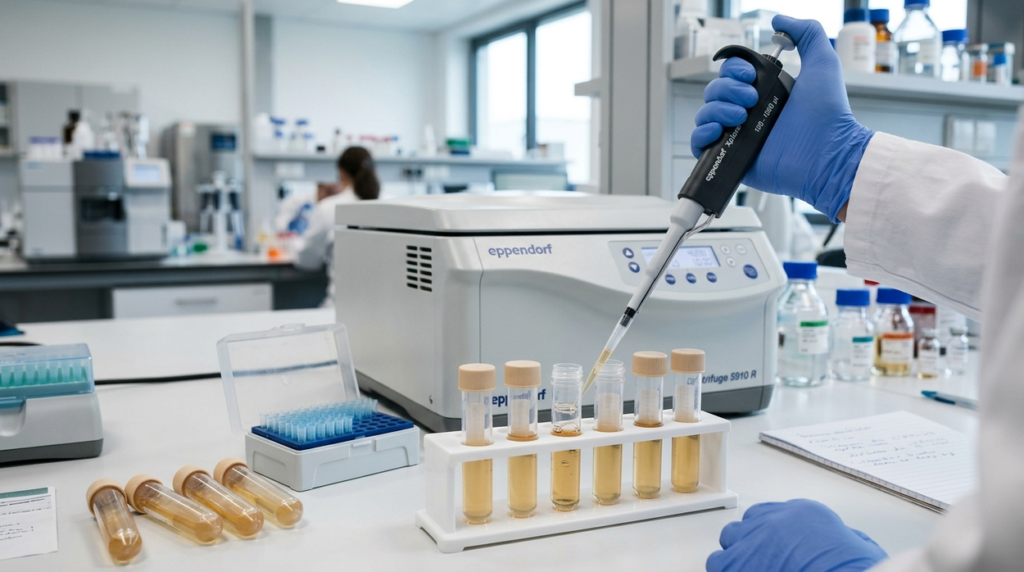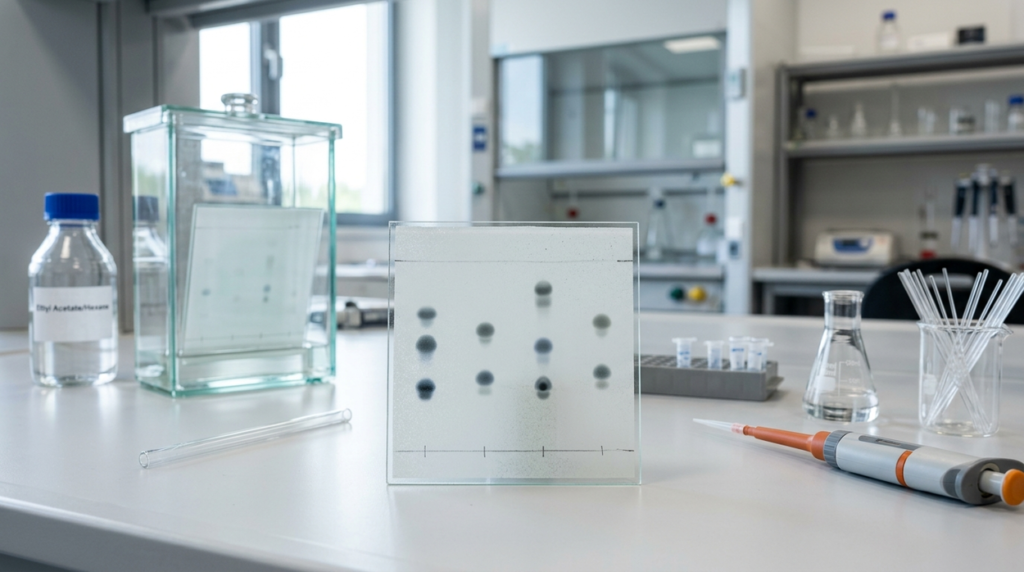

Separating a crystalline product from its mother liquor is a routine but important task in chemical and pharmaceutical research. If the separation is too slow, fine particles escape into the filtrate, or excessive liquid remains trapped in the recovered solid, the results may be affected. The choice of filtration equipment can influence product recovery, processing time, washing efficiency, and the reliability of subsequent measurements.
A Büchner funnel is a laboratory instrument designed for vacuum-assisted solid–liquid separation. It typically consists of a wide funnel with a flat, perforated support plate, a circular piece of filter paper, and a connection to a receiving flask. When the flask is connected to a suitable vacuum source, the pressure difference across the filter medium drives liquid through the paper while the suspended solid remains on its surface.
The technique is especially useful when the retained solid is the desired product, such as a precipitate or crystalline compound. It is widely used in chemistry teaching laboratories, research laboratories, and pharmaceutical process-development work. University laboratory guidance describes vacuum filtration as a practical way to recover solid products more quickly than gravity filtration in appropriate applications.
However, applying a vacuum does not automatically produce a clean, dry, or pure product. Reliable results depend on selecting the right filter paper, assembling a leak-free apparatus, controlling the filtration conditions, and handling the sample carefully.
This guide explains the Büchner funnel’s working principle, its components, the correct vacuum filtration procedure, equipment selection, common problems, and its appropriate role in pharmaceutical and biotechnology laboratories.
What Is a Büchner Funnel, and What Makes It Different From a Standard Funnel?
Structure and design
A conventional Büchner funnel generally has four main features:
- Upper chamber: A wide, cylindrical or slightly tapered section that holds the suspension during filtration.
- Perforated support plate: A flat base containing holes that allow liquid to pass through while supporting the filter paper.
- Outlet stem: The lower section that directs the filtrate into the receiving flask.
- Adapter or sealing ring: A compatible rubber or elastomer component that helps secure the funnel and limit air leakage at the flask opening.
Traditional Büchner funnels are commonly made from porcelain or plastic, although other materials and designs are available. The material should be selected according to the solvent, sample, cleaning requirements, and intended use.
A conventional perforated-plate model requires a separate filter-paper disk. Other filtration designs use an integrated porous frit instead, so the appropriate filter medium depends on the instrument’s construction.
Büchner funnel versus an ordinary laboratory funnel
An ordinary laboratory funnel usually has a conical shape and is often used with folded filter paper for gravity filtration. Liquid moves through the paper under the force of gravity.
A Büchner funnel has a flat filtration surface and is generally used with vacuum assistance. The larger available surface can accommodate a useful amount of precipitate or crystals, making the design convenient for laboratory-scale solid recovery.
Neither instrument is universally better. The choice depends on which fraction is required:
- If the solid is the desired product, vacuum filtration with a Büchner funnel is often convenient.
- If the liquid filtrate is the desired product and the solid is unwanted, gravity filtration may be appropriate, depending on the particles and required clarity.
- If very fine particles must be removed from a liquid, a different filter medium or filtration system may be necessary.
The Michigan State University explains this distinction in its Cooperative Organic Chemistry Student Laboratory Manual. The intended product, rather than the equipment alone, should guide the selection.
The Working Principle of a Büchner Funnel: How Vacuum Pulls Liquid Through a Filter
Pressure difference drives filtration
Vacuum filtration works by reducing the pressure inside the receiving flask. The pressure above the suspension is higher than the pressure below the filter medium, creating a pressure differential that drives liquid through the filter paper and the perforations in the funnel.
The vacuum does not selectively pull the solid onto the paper. Instead, the filter medium retains particles according to its retention characteristics while liquid passes through its pores. The effectiveness of this separation depends on the particle-size distribution, the filter-paper grade, and the physical properties of the suspension.
The basic arrangement and operating principle are described in the University of York’s laboratory filtration guidance.
The role of filter paper and the filter cake
Before filtration begins, a correctly sized circular filter-paper disk is placed flat over the perforated plate. The paper is wetted with a small amount of a compatible solvent, and the vacuum is applied according to the laboratory procedure. This helps the paper seat against the support surface and reduces the risk of material bypassing its edges.
Once the suspension enters the funnel:
- Liquid passes through the filter paper.
- The perforated plate supports the paper under the pressure differential.
- Suspended particles accumulate on the paper.
- The accumulated material forms a filter cake, which can provide additional particle retention as filtration continues.
The cake is not always beneficial to flow. A thick cake, fine particles, or compressible solids can increase resistance and slow the process. An incorrectly sized or damaged paper may allow particles to bypass the filtration barrier.
Why vacuum filtration can be faster than gravity filtration
The pressure differential can accelerate liquid movement compared with gravity alone, but filtration speed depends on several interacting factors:
- Filter-paper permeability: More permeable media may allow faster flow but may not retain fine particles adequately.
- Particle size: Fine particles can block pores or create a dense filtration layer.
- Liquid viscosity: More viscous liquids generally pass through the same filter medium more slowly.
- Solids concentration: High solids loading can produce a thick cake that resists flow.
- Cake compressibility: Some solids compact under pressure, reducing the cake’s permeability.
- Apparatus integrity: Leaks, poorly fitted adapters, or weak vacuum performance can reduce the effective pressure difference.
Increasing the vacuum is not a universal solution. Excessive suction can increase solvent evaporation, encourage boiling under unsuitable conditions, or compact a compressible cake without materially improving flow. The appropriate operating conditions depend on the sample and the equipment’s rated limits.
Components of a Complete Büchner Vacuum Filtration Setup
A complete Büchner funnel apparatus includes more than the funnel itself. Each component contributes to filtration performance, sample containment, or operator safety.
Funnel, filter paper, and adapter
The filter-paper disk must cover the perforations without extending substantially up the funnel walls. Paper that is too small can leave gaps; paper that is too large may fold against the sides and prevent an even seal.
The adapter or sealing ring secures the funnel to the flask and helps prevent air leakage. It should fit the funnel and flask neck correctly and be compatible with the chemicals used.
Filter paper should be chosen according to particle retention, permeability, chemical compatibility, and the intended recovery of the solid or liquid.
Büchner flask and vacuum tubing
The receiving vessel is typically a thick-walled, side-arm vacuum flask designed to withstand reduced pressure. The filtrate collects inside it, while the side arm connects to the vacuum source through suitable tubing.
An ordinary thin-walled conical flask should not be assumed to be safe under vacuum. Before use, inspect the flask for cracks, chips, scratches, and other damage that may compromise its integrity.
Secure the flask with suitable support, and position the tubing so that its weight or movement cannot destabilize the apparatus.
Vacuum source and protective equipment
A suitable laboratory vacuum line or vacuum pump can provide the required reduced pressure. Depending on the setup and materials involved, additional components may include a vacuum regulator, a protective trap, and backflow protection.
A trap between the receiving flask and the vacuum source helps prevent collected liquid from entering the tubing or pump. This is particularly important when foaming, splashing, or overfilling is possible.
Select tubing, seals, and protective components that are compatible with the solvents and vapours involved. Follow the laboratory’s approved procedure and the manufacturer’s instructions for assembling, operating, and releasing the vacuum.
How to Set Up and Use a Büchner Funnel Step by Step
The following procedure provides a general laboratory workflow. The exact filter medium, solvent, vacuum conditions, washing method, and drying requirements should follow the experiment-specific method or approved standard operating procedure.
🏢 Featured Laboratory Suppliers Directory Listing
Looking for verified and trusted laboratory suppliers partners related to this topic? Explore our comprehensive directory.
Explore Directory →Step 1: Inspect the apparatus and confirm compatibility
Check the funnel, filter flask, adapter, tubing, vacuum source, and any protective trap before assembly. Inspect glassware for damage and confirm that all components are suitable for the expected vacuum conditions.
Verify that the funnel, filter paper, seals, and tubing are compatible with the sample and solvent. Determine whether the operation requires a fume hood, additional containment, specific personal protective equipment, or dedicated waste collection.
Step 2: Select and fit the filter paper
Choose a filter-paper grade that retains the target particles while providing an acceptable flow rate. Position a circular disk over the entire perforated surface without folding it or allowing substantial overlap up the funnel wall.
Finer filter paper may improve particle retention, but it can also slow filtration. Where quantitative recovery matters, check the manufacturer’s retention specifications and whether the paper contributes measurable extractables or other interferences to the intended analysis.
Step 3: Assemble the apparatus and establish a seal
Fit the adapter or sealing ring securely into the flask neck. Position the funnel, connect the vacuum tubing to the flask’s side arm, and check the connections.
Secure the flask using an appropriate support arrangement. Keep the apparatus stable, with the tubing routed to avoid pulling the flask sideways or placing stress on the glassware.
Step 4: Wet the filter paper and check its seating
Apply a small amount of a compatible solvent to the paper, then apply vacuum gradually as directed by the laboratory procedure. Confirm that the paper lies flat against the perforated plate.
The wetting liquid should not react with the sample, introduce an unacceptable contaminant, or dissolve an excessive amount of the desired product. A poor seal should be corrected before transferring the sample.
Step 5: Transfer the suspension carefully
Pour the suspension steadily into the funnel, keeping the liquid level below the rim. Avoid splashing and do not overload the filtration surface.
If particles have settled in the original vessel, gently resuspend them before transfer when the sample can tolerate this handling. For quantitative recovery, rinse the original vessel with small, controlled portions of a compatible solvent and transfer the rinses to the funnel.
Step 6: Wash the retained solid when necessary
Washing the filter cake can remove soluble impurities and residual mother liquor. The wash liquid must remove unwanted material without excessively dissolving, degrading, or altering the target product.
Use controlled portions rather than assuming that a large volume will produce a cleaner solid. Where appropriate, allow each portion to pass through the cake before adding the next. Collect wash filtrates separately if required for impurity analysis, product recovery, or waste segregation.
The correct solvent and wash volume depend on the material’s solubility, the impurity profile, and the method’s acceptance criteria.
Step 7: Drain excess liquid and recover the solid
Once the liquid has passed through, continue suction for the period specified by the procedure to remove some of the remaining liquid from the filter cake.
This step can reduce residual solvent, but it does not establish that the material is completely dry. Transfer the solid carefully to a suitable receiving vessel and dry it under the specified conditions.
When accurate mass, residual-solvent limits, or product stability matter, use the appropriate analytical or gravimetric endpoint rather than relying on visual appearance alone.
Step 8: Release the vacuum and clean the apparatus
Release the vacuum using the approved system procedure before dismantling the apparatus. Prevent backflow from the vacuum line, then disconnect the tubing and remove the funnel and adapter carefully.
Dispose of filtrate, wash liquids, and used filter paper according to the applicable waste procedure. Clean reusable components using a method suitable for the chemicals and the required cleanliness level. Inspect the equipment after cleaning and record relevant observations, including unusual filtration times, unexpected colour changes, or material losses.
The Southern Illinois University Edwardsville laboratory guide to vacuum filtration provides additional guidance on equipment assembly, paper selection, sample transfer, washing, troubleshooting, and safety.
Where Büchner Funnels Are Used in Pharmaceutical and Biotechnology Laboratories
Collecting precipitates and crystals during research
In chemical synthesis and research laboratories, a Büchner funnel is commonly used to collect precipitated compounds and crystals after a reaction or crystallization step. The solid remains on the filter paper while the liquid mother liquor passes into the receiving flask.
The recovered solid may subsequently be washed, dried, weighed, and analysed. Filtration supports this workflow, but it does not establish the compound’s identity, chemical purity, or suitability for a particular application. Those properties require appropriate analytical methods.
API process development and laboratory-scale isolation
During active pharmaceutical ingredient (API) research and process development, vacuum filtration can help researchers evaluate the recovery of solid intermediates or products. Observations about filtration time, cake formation, washing behaviour, and residual moisture can inform decisions about crystallization conditions and downstream processing.
For example, a process-development team may compare how different crystallization conditions affect particle characteristics and the ease of solid recovery. The Büchner funnel can provide useful preliminary evidence, although results from small laboratory batches do not automatically predict performance at production scale.
Commercial manufacturing may require purpose-designed filter dryers, nutsche filters, centrifuges, or other equipment selected according to process requirements, containment needs, cleaning requirements, and material properties.
Biotechnology and biochemical research
Büchner funnels can be useful for selected applications involving recoverable precipitates, insoluble preparations, or other solid materials generated during biochemical research.
They are not suitable for every biological sample. Fragile biomolecules, cell suspensions, sterile preparations, and pressure-sensitive materials may require alternative separation methods. Membrane filtration, centrifugation, depth filtration, or other techniques may be more appropriate, depending on the biological material and the intended result.
Quality-control and teaching laboratories
In teaching laboratories, Büchner filtration demonstrates the relationship between pressure differential, filter-media properties, and solid recovery. In research and quality-control laboratories, it may support preparative work or sample handling when the method is appropriate.
However, a clear filtrate obtained using a Büchner funnel should not be assumed to meet an analytical specification or a microbiological requirement. Methods used for regulated testing must be appropriate to their intended purpose and controlled as required.
Choosing the Right Filter Paper, Funnel Size, and Vacuum Conditions
Match filter-paper retention to particle size
Filter paper involves a trade-off between particle retention and liquid flow. A grade that works well for large crystals may allow fine particles to pass through, while a finer grade may clog rapidly when used with a suspension containing very small particles.
Qualitative filter papers are commonly used for general separations where the retained material will be recovered or examined. Quantitative grades may be appropriate when ash content or other paper properties matter to a subsequent gravimetric analysis.
Nominal pore-size specifications and particle-retention ratings are not necessarily interchangeable. Consult the manufacturer’s documentation rather than selecting paper by appearance or relying on a single pore-size number.
Select the funnel diameter and filtration capacity
The funnel’s diameter determines the available filtration area, but it does not determine practical capacity by itself.
A larger funnel may be appropriate for a greater quantity of solids. However, a thick filter cake can still slow filtration, even when the funnel has a large surface area. An undersized funnel may overflow or produce an unnecessarily deep cake, while an oversized funnel can make small quantities of material harder to transfer and recover efficiently.
Consider the expected solids loading, liquid volume, particle characteristics, and acceptable processing time when selecting a funnel.
Choose suitable vacuum conditions
There is no single vacuum level that is appropriate for every Büchner filtration procedure. The required pressure differential depends on the filter medium, liquid viscosity, cake resistance, sample sensitivity, and apparatus ratings.
🏢 Featured Laboratory Suppliers Directory Listing
Looking for verified and trusted laboratory suppliers partners related to this topic? Explore our comprehensive directory.
Explore Directory →Use controlled vacuum conditions specified by the method or equipment documentation. Avoid unnecessary suction, particularly with volatile solvents, compressible solids, or samples that may foam or degrade.
If the filtration is slow, first investigate the paper, cake, connections, and vacuum system rather than automatically increasing the vacuum.
When is a filter aid appropriate?
Filter aids, such as diatomaceous earth, can improve filtration for some suspensions by creating a more permeable filtration layer. Their suitability depends on the material and the purpose of the separation.
They may contaminate the recovered solid, introduce additional particles, or complicate downstream processing. In pharmaceutical research, the use of a filter aid should therefore be justified by the method and its compatibility with subsequent analytical or processing steps.
Büchner Funnel vs Hirsch Funnel vs Sintered-Glass Funnel
These three filtration options serve related purposes, but differ in their filtration surface, sample capacity, and cleaning requirements.
| Feature | Büchner funnel | Hirsch funnel | Sintered-glass funnel |
| Filtration surface | Perforated plate covered with filter paper | Usually a smaller perforated plate covered with filter paper | Integrated porous glass frit |
| Typical use | General laboratory-scale solid recovery | Small quantities of solid | Filtration using a selected frit porosity |
| Filter medium | Replaceable paper | Replaceable paper | Porous glass |
| Main selection factor | Solids loading and sample volume | Small sample quantity | Required porosity and chemical compatibility |
| Cleaning | Clean funnel and replace paper | Clean funnel and replace paper | Clean frit thoroughly without damaging or clogging it |
| Main limitation | Paper fit and cake resistance | Limited filtration area | Frit clogging and potentially difficult cleaning |
When a Büchner funnel is the better choice
Choose a Büchner funnel when the sample contains enough recoverable solid to justify its filtration area and a replaceable filter-paper disk is convenient. It is a practical option for routine laboratory-scale precipitate and crystal recovery.
When a Hirsch funnel is more practical
A Hirsch funnel is generally smaller and better suited to recovering relatively small quantities of material. Its smaller filtration area can make sample handling more convenient when a standard Büchner funnel would be unnecessarily large.
When a sintered-glass funnel may be preferable
A sintered-glass funnel incorporates a porous glass disc rather than relying on a separate paper disk. It can be useful when the available frit porosity suits the material and a reusable filtration surface is desirable.
The disadvantages include potential frit clogging, more demanding cleaning, and the possibility of carryover between samples if the frit is not cleaned adequately. Confirm the frit’s chemical compatibility and follow the manufacturer’s cleaning instructions.
The University of York’s filtration guidance discusses the selection of gravity, vacuum, and sintered filtration methods according to the desired fraction and the characteristics of the mixture.
Choosing between gravity and vacuum filtration
The key question is whether the solid or liquid is the intended product.
Gravity filtration is often suitable when removing unwanted solids from a solution and retaining the filtrate. Vacuum filtration with a Büchner funnel is often convenient when the solid is the desired product and faster separation is beneficial.
Vacuum filtration can also be used with other filter designs when the filtrate is the target, but the system must be suitable for that purpose. Volatile solvents, fine particles, and specific sample requirements may favour a different approach.
Troubleshooting Büchner Filtration: Common Problems and Their Causes
A filtration problem rarely has only one possible cause. Check the apparatus and the sample systematically before changing operating conditions.
| Problem | Possible causes | Practical response |
| Filtration is unusually slow or stops | Clogged paper, thick cake, viscous liquid, inadequate vacuum, or a leak | Inspect the cake and paper, check tubing and seals, and reassess the filter grade |
| Solid appears in the filtrate | Paper is too coarse, damaged, incorrectly sized, or poorly seated | Check the paper’s fit and retention properties; repeat filtration with a suitable medium if necessary |
| Vacuum appears weak | Loose tubing, poor adapter seal, damaged connection, or vacuum-source fault | Check connections systematically and inspect components |
| Filter cake remains wet | Thick cake, retained mother liquor, low permeability, or liquid held within particles | Assess the washing and drainage method; use a suitable separate drying procedure |
| Product recovery is lower than expected | Transfer losses, excessive dissolution during washing, particle passage, or material left in the original vessel | Review transfer and wash steps, inspect the filtrate, and perform a mass balance where appropriate |
| Liquid enters vacuum tubing | Overfilled flask, splashing, absent or unsuitable trap, or backflow | Stop the procedure safely, isolate the affected system according to local procedures, and inspect it before reuse |
Filtration is unusually slow
First check whether the filter paper has become clogged or whether a thick cake is restricting liquid flow. Fine particles and compressible solids can create substantial resistance even when the vacuum source is working correctly.
Next, check the adapter, tubing, flask connections, and vacuum source for leaks or faults. Also confirm that the receiving flask is not approaching its safe working capacity.
Changing to a more permeable paper may help, but only if the alternative still retains the required particles. A filter aid may be suitable for some suspensions, subject to sample compatibility.
Solid particles appear in the filtrate
Inspect the paper for tears, gaps, and incorrect positioning. A paper disk that does not cover the perforations properly can allow material to bypass the filter medium.
If the paper is intact and correctly seated, the particles may be too small for the selected grade. Choose a suitable finer medium or investigate another separation technique. Simply increasing the vacuum will not correct an inappropriate retention rating.
The vacuum seal is weak or the filter cake remains wet
A weak seal can result from a poorly fitted adapter, loose tubing, or an unsuitable connection. Check the apparatus according to the equipment manufacturer’s instructions.
If the cake remains wet despite adequate drainage, consider its thickness, the amount of retained mother liquor, the properties of the solid, and the filter medium’s permeability. Additional suction may provide diminishing returns, and a separate drying step may be required.
Product recovery is lower than expected
Potential losses include material left in the original vessel, product dissolved in the wash liquid, and fine particles passing through the filter. Losses can also occur during transfers between vessels.
Where practical, examine the filtrate and wash liquids, use controlled rinsing, and compare the initial material with the recovered product. A simple mass balance can help distinguish transfer losses from losses caused by solubility or filtration performance.
Liquid enters the vacuum tubing or pump
Liquid carryover can contaminate the vacuum system and damage equipment. Common causes include overfilling, splashing, an unsuitable receiving-flask arrangement, or missing protective components.
Stop the operation using the laboratory’s approved procedure. Do not continue using a potentially contaminated vacuum line or pump until the affected components have been inspected and cleared for reuse.
Safety, Sample Integrity, and Good Laboratory Practice
Preventing breakage and implosion
Reduced pressure creates mechanical stress on glassware. Use only vessels rated for the intended vacuum conditions, inspect them before use, secure the apparatus, and follow the manufacturer’s pressure limits. Never assume that an ordinary laboratory flask is vacuum-rated simply because it is made of glass.
Wear appropriate eye protection, a laboratory coat, and chemically compatible gloves. Use additional protective measures when the material or procedure presents specific hazards.
Managing chemical exposure and solvent vapours
Vacuum can increase solvent evaporation and may cause volatile liquids to boil under conditions where they would not boil at atmospheric pressure. Apply appropriate containment and ventilation, especially when working with hazardous or volatile solvents.
Confirm that the vacuum pump, tubing, seals, and trap are suitable for the vapours involved. Dispose of solvents and contaminated materials according to the laboratory’s chemical-waste procedures.
🏢 Featured Laboratory Suppliers Directory Listing
Looking for verified and trusted laboratory suppliers partners related to this topic? Explore our comprehensive directory.
Explore Directory →Preventing contamination and cross-contamination
Clean equipment, appropriate filter-paper handling, and correct sample identification are essential when comparing experiments or preparing materials for further analysis. Reusable funnels and receiving vessels should be cleaned according to a procedure appropriate to the sample and the required cleanliness level.
In pharmaceutical environments, cleaning requirements depend on intended use and contamination risk. The FDA’s guidance on current good manufacturing practice requirements for equipment discusses equipment suitability, cleaning, maintenance, and contamination control.
Understanding the limits of Büchner filtration in GMP environments
Using a Büchner funnel for a research experiment is not equivalent to establishing a qualified pharmaceutical manufacturing process. When filtration forms part of a regulated manufacturing operation, equipment suitability, material compatibility, cleaning, contamination control, traceability, and process controls must be considered according to the applicable requirements and intended use.
The FDA’s Q7 Good Manufacturing Practice guidance for active pharmaceutical ingredients addresses equipment design, cleaning, maintenance, and the importance of using production equipment within its qualified operating range.
A Büchner funnel can contribute useful laboratory-scale process-development data, but its use does not itself demonstrate GMP compliance or establish that a filtration method is suitable for commercial production.
What a Büchner Funnel Can—and Cannot—Tell You About Filtration Quality
Visual clarity is not verified purity
A clear-looking filtrate does not prove that all fine particles have been removed. Nor does a visually clean solid establish chemical purity, identity, sterility, or suitability for a downstream process.
The filtration method should be evaluated against the actual objective. If purity, particle content, or microbiological quality affects the intended use, apply suitable analytical testing or validated methods rather than relying on appearance.
A standard Büchner funnel is not, by itself, a validated sterilizing-filtration system. Sterile pharmaceutical filtration requires appropriate sterilizing-grade filters and a process designed and controlled for the relevant product and requirements.
Assessing recovery, washing effectiveness, and residual moisture
Depending on the experiment, useful measurements may include:
- Mass of the recovered solid and overall material recovery.
- Filtration time and consistency between repeated runs.
- Residual solvent or moisture after the specified drying procedure.
- Evidence of product loss during transfer or washing.
- Impurity removal, where suitable analytical measurements are available.
These measurements help distinguish efficient liquid removal from successful product recovery. The best results depend on the purpose of the experiment and the quality attributes that matter to subsequent work.
When laboratory filtration results are insufficient for scale-up
Filtration performance can change substantially when moving from a small batch to a larger process. Relevant factors include filter area, solids loading, cake thickness, particle-size distribution, cake compressibility, liquid viscosity, and available pressure differential.
A laboratory experiment can provide useful preliminary information about filtration behaviour and washing requirements. However, equipment sizing and production-scale process design require representative experimental data and appropriate engineering assessment.
A laboratory-scale filtration time should not simply be multiplied by a batch-size factor to predict commercial performance. Process-development teams need to understand how the filtration medium and cake resistance behave under the intended operating conditions.
Frequently Asked Questions About Büchner Funnels
What is the main purpose of a Büchner funnel?
A Büchner funnel is used for vacuum-assisted filtration, most commonly to separate suspended solids from a liquid and recover the retained solid. It is particularly useful for collecting precipitates and crystals during laboratory experiments.
Why is filter paper wetted before vacuum filtration?
Wetting the paper with a compatible solvent helps it sit flat against the perforated support plate. This reduces the risk of liquid and particles bypassing the paper’s edges and helps establish an effective filtration barrier.
Can a Büchner funnel be used without filter paper?
A traditional Büchner funnel with a perforated plate normally requires a suitable filter-paper disk. A funnel designed with an integrated porous frit works differently and may not require separate paper.
Is a Büchner funnel suitable for sterile pharmaceutical filtration?
Not as a standalone sterilizing-filtration system. A conventional Büchner funnel is intended primarily for laboratory solid–liquid separation. Sterile pharmaceutical filtration requires an appropriate sterilizing-grade filter and a process suitable for the product and applicable requirements.
What is the difference between a Büchner funnel and a Hirsch funnel?
Both are used for vacuum filtration with filter paper. A Büchner funnel generally has a larger filtration surface and suits routine laboratory-scale solid recovery, while a Hirsch funnel is usually smaller and more convenient for relatively small sample quantities.
Conclusion
Reliable Büchner filtration depends on more than applying a vacuum. The filter-paper grade, funnel size, pressure differential, apparatus seal, solids loading, and washing procedure all influence how effectively a suspension separates and how much material is recovered.
For pharmaceutical and biotechnology laboratories, the technique is valuable for precipitate collection, crystal recovery, research workflows, and early-stage process development. Its limitations are equally important: visual clarity does not establish purity, continued suction does not guarantee complete dryness, and laboratory results do not automatically translate to manufacturing scale.
The practical starting point is to match the filtration equipment and operating method to the material being separated, the fraction that must be recovered, and the quality requirements of the next step.