
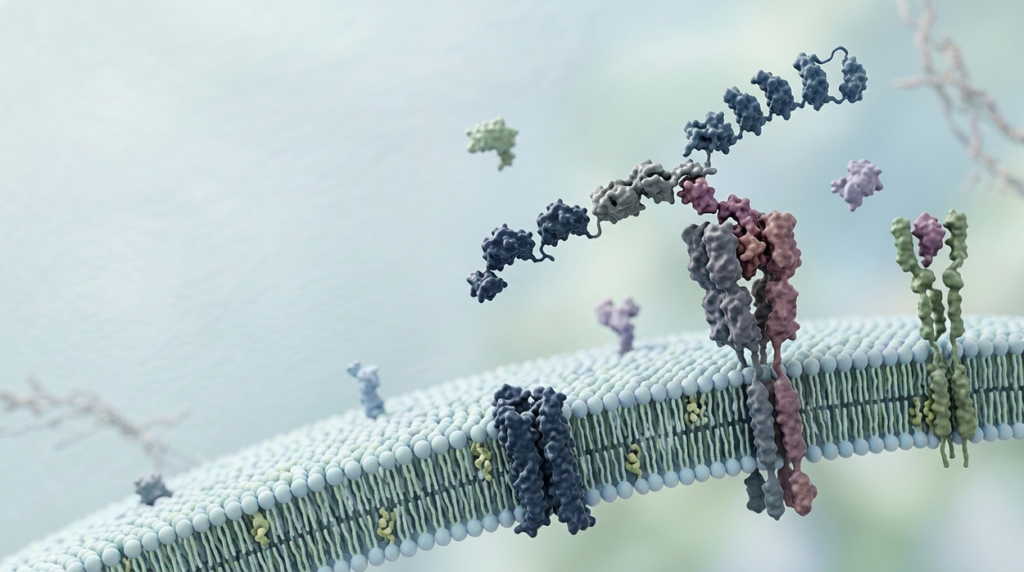
SCUBE3 is a member of the SCUBE protein family, a group of extracellular and cell-surface-associated proteins involved in cell-to-cell signaling and tissue biology. The name SCUBE refers to Signal peptide-CUB-EGF-like domain-containing proteins, reflecting a characteristic modular protein architecture that helps place these molecules at the interface between cells and their surrounding environment. SCUBE3 has attracted attention across developmental biology, vascular research, tissue remodeling, fibrosis and cancer biology.
The interest in SCUBE3 comes from more than its expression in particular tissues or diseases. Experimental studies indicate that the protein can participate in signaling by interacting with growth-factor receptor systems, including pathways associated with transforming growth factor beta (TGF-β), bone morphogenetic proteins (BMPs) and fibroblast growth factor (FGF). However, the biological effect of SCUBE3 depends strongly on the tissue and experimental context. Some findings are based on cellular or animal models, while others have emerged from human genetic or tumor studies.
This distinction is important. SCUBE3 is an active subject of biomedical research, but that does not mean it is already a validated clinical biomarker or approved therapeutic target. Understanding its molecular structure, signaling relationships and disease-associated functions can instead help researchers determine which observations are sufficiently reproducible and mechanistically supported to justify further translational investigation.
What Is SCUBE3?
Understanding the SCUBE Protein Family
The SCUBE family consists of three conserved vertebrate proteins: SCUBE1, SCUBE2 and SCUBE3. Early work describing the family identified proteins with an N-terminal signal peptide, multiple epidermal growth factor (EGF)-like repeats, a spacer region and a C-terminal CUB domain. A later review of the SCUBE family describes these proteins as modular extracellular molecules that can exist in soluble and membrane-associated forms and can function as co-receptors in several signaling systems.
The domain organization is biologically relevant because protein domains frequently determine where a molecule is located, which proteins it can interact with and how it responds to extracellular conditions. EGF-like domains, for example, occur in many proteins involved in cell communication, while the CUB domain is found in a range of extracellular proteins involved in developmental and signaling processes.
SCUBE3 shares the broad architecture of the family but has distinct biological activities. SCUBE1 and SCUBE2 have been investigated extensively in vascular and signaling biology, while SCUBE3 has received particular attention in developmental processes, bone biology, cancer and growth-factor signaling.
The SCUBE3 Gene and Protein
The human SCUBE3 gene is a protein-coding gene designated by NCBI Gene ID 222663. Its official name is signal peptide, CUB domain and EGF like domain containing 3. Current NCBI annotation identifies reviewed human transcripts and multiple protein isoforms.
Researchers can use the SCUBE3 gene record in NCBI to verify gene nomenclature, reference transcripts, protein products and conserved-domain information. The annotated protein contains a signal peptide and extracellular structural elements including EGF-like and CUB domains.
The signal peptide is particularly important because it directs newly synthesized protein into the secretory pathway. This is consistent with experimental observations showing that SCUBE3 can be secreted and can also associate with the cell surface. Early biochemical research found that recombinant human SCUBE3 was secreted as a glycoprotein and could form oligomers associated with the cell surface.
It is useful to distinguish three different levels of biological information when discussing SCUBE3:
- Gene expression: where and when SCUBE3 RNA is produced.
- Protein production: whether the SCUBE3 protein is produced, secreted or retained at the cell surface.
- Biological activity: whether the protein actually alters signaling or cellular behavior in a particular context.
A change at the RNA level therefore does not automatically establish a functional role for the protein.
Why SCUBE3 Is of Interest to Biomedical Researchers
Extracellular proteins can influence biological processes without entering the nucleus or directly changing DNA. By interacting with receptors, co-receptors, extracellular matrix components or other signaling molecules, they can alter how cells respond to growth factors and environmental signals.
SCUBE3 is particularly interesting because experimental studies have connected it with several signaling systems. Research has identified roles for SCUBE3 in BMP signaling, FGF signaling and TGF-β-related signaling, although the specific mechanism differs between biological settings.
This makes SCUBE3 a useful research subject for understanding how extracellular signaling is integrated. At the same time, an association between SCUBE3 and a disease phenotype does not by itself establish that SCUBE3 causes the disease or that blocking or increasing its activity would benefit patients.
How SCUBE3 Functions in Cellular Signaling
SCUBE3 as an Extracellular Signaling Molecule
SCUBE3 can function outside the cell, where its modular structure allows it to participate in protein-protein interactions. Experimental evidence indicates that SCUBE proteins can exist in soluble forms as well as membrane-associated forms, and the membrane-associated proteins can act as co-receptors that modify signaling through growth-factor receptors.
This type of biology is important because a co-receptor does not necessarily behave like a conventional signaling receptor. Instead, it can influence how efficiently another ligand engages its receptor complex, alter receptor localization or help organize signaling components at the cell surface.
SCUBE3 can also undergo proteolytic processing. In an early lung-cancer study, researchers reported that secreted SCUBE3 was cleaved by matrix metalloproteinases, generating fragments containing different portions of the protein. The C-terminal CUB-containing fragment was capable of interacting with the TGF-β type II receptor in that experimental system.
These observations illustrate why SCUBE3 function cannot be inferred solely from its gene expression. Protein processing, cellular localization and receptor availability may all influence the resulting biological effect.
Interaction With Developmental Signaling Pathways
One of the clearest examples of SCUBE3 biology comes from developmental signaling. A human genetic study identified biallelic loss-of-function variants in SCUBE3 in individuals with a recognizable developmental disorder involving growth, skeletal and craniofacial abnormalities. Functional experiments connected these variants with defective BMP signaling. The study further demonstrated that SCUBE3 can function as a co-receptor for BMP2 and BMP4 and can facilitate interactions between BMPs and their receptor complexes.
This provides an important mechanistic link between SCUBE3 and BMP signaling, a pathway involved in bone formation, skeletal development, differentiation and tissue patterning.
SCUBE3 has also been studied in muscle development. In zebrafish and cellular models, researchers found that SCUBE3 can act as a co-receptor that enhances FGF8 signaling during fast muscle differentiation. Knockdown experiments reduced signaling and affected expression of myogenic markers.
These findings show that SCUBE3 can participate in different growth-factor pathways depending on the biological system. They should not be interpreted as evidence that SCUBE3 has one universal signaling function in every tissue.
Why Context Matters in SCUBE3 Signaling
Signaling molecules rarely operate in isolation. The effect of SCUBE3 can depend on which receptors are expressed, which ligands are available, the differentiation state of the cell and the composition of the extracellular environment.
This helps explain why SCUBE3 research produces findings across apparently different areas of biology. In one context, SCUBE3 may contribute to developmental signaling; in another, it may influence tissue remodeling or tumor-associated signaling.
The distinction between direct and indirect mechanisms is equally important. A correlation between SCUBE3 expression and activation of a pathway may identify a useful research hypothesis, but direct interaction studies, loss-of-function experiments and rescue experiments provide stronger mechanistic evidence.
SCUBE3 in Development and Tissue Biology
Roles in Tissue Development
Developmental research has provided some of the strongest evidence that SCUBE3 is biologically active rather than simply a passive expression marker.
SCUBE3 has been detected in developing tissues, including structures associated with the nervous system, axial skeleton and limbs. Experimental studies have investigated its involvement in cell differentiation and growth-factor signaling during development.
The human loss-of-function study is particularly informative because it connects genetic disruption of SCUBE3 with abnormalities in growth, skeletal development, craniofacial morphology and dental development. Functional experiments and mouse models supported a relationship between SCUBE3 deficiency and impaired BMP-mediated chondrogenesis and osteogenesis.
At the same time, developmental findings can vary between species. For example, targeted loss of Scube3 in mice did not produce an obvious embryonic-lethal phenotype, despite expression in several developing tissues. Researchers interpreted this as evidence that SCUBE3 may be dispensable for some aspects of mouse embryonic development or may have overlapping functions with other SCUBE proteins.
🏢 Featured Research Institutes Directory Listing
Looking for verified and trusted research institutes partners related to this topic? Explore our comprehensive directory.
Explore Directory →Such differences reinforce the importance of model selection when interpreting SCUBE3 research.
Vascular and Endothelial Biology
The SCUBE family was originally identified in association with vascular endothelial cells, and endothelial biology remains an important part of SCUBE research. Early characterization of SCUBE3 reported expression in osteoblasts as well as lower expression in human umbilical vein endothelial cells and heart tissue.
The broader SCUBE literature indicates that SCUBE proteins can participate in vascular signaling, although SCUBE1 and SCUBE2 have particularly well-characterized roles in endothelial systems.
For SCUBE3 specifically, vascular relevance also appears in cancer models. Studies of non-small-cell lung cancer have linked SCUBE3 activity with angiogenesis-related processes and vascular permeability in experimental tumors.
These observations are useful for understanding the interaction between signaling, tissue remodeling and vascular behavior, but they do not establish SCUBE3 as a clinical vascular biomarker.
Tissue Remodeling and Extracellular Signaling
Tissue remodeling requires coordinated communication between epithelial cells, fibroblasts, endothelial cells, immune cells and the extracellular matrix. Growth-factor signaling regulates many of these interactions.
Because SCUBE3 can modify signaling through extracellular growth-factor pathways, researchers have investigated whether it participates in remodeling processes. The biological distinction between normal remodeling and pathological remodeling is important. Development, wound repair and tissue regeneration require controlled extracellular matrix turnover, whereas persistent signaling can contribute to fibrosis or tumor-associated remodeling.
SCUBE3 research therefore sits at an intersection between normal tissue biology and disease mechanisms rather than belonging exclusively to one disease category.
What Research Says About SCUBE3 and Fibrosis
SCUBE3 and Fibrotic Signaling
Fibrosis occurs when tissue repair becomes dysregulated and excessive extracellular matrix accumulates, potentially disrupting normal tissue architecture. TGF-β signaling is a central regulator of fibroblast activation and extracellular matrix production in many fibrotic conditions.
The connection between SCUBE3 and TGF-β signaling is particularly relevant because experimental work has shown that SCUBE3 can interact with the TGF-β receptor system. In lung cancer models, SCUBE3 acted as an endogenous ligand for TGF-β receptor II and activated downstream Smad2/3 signaling.
This does not mean that SCUBE3 is established as a universal driver of human fibrosis. Rather, it provides a mechanistic reason for investigating whether SCUBE3-dependent signaling contributes to pathological remodeling in particular tissues or diseases.
Evidence From Experimental Models
SCUBE3-related fibrosis questions need to be interpreted according to the experimental model used. Cell culture systems can help establish whether SCUBE3 changes fibroblast behavior or activates signaling pathways. Animal models can provide information about tissue-level responses, but they do not reproduce every feature of human disease.
Human genetic evidence adds another dimension. The discovery of disease-causing SCUBE3 variants demonstrates that loss of SCUBE3 function can affect developmental biology in humans, but that is different from showing that increased SCUBE3 activity causes a common fibrotic disorder.
Consequently, researchers studying SCUBE3 fibrosis need to distinguish expression changes, pathway activation, causal perturbation and clinically relevant disease outcomes.
Could SCUBE3 Become a Therapeutic Research Target?
The extracellular nature of SCUBE3 makes it experimentally interesting for therapeutic research because extracellular proteins can, in principle, be approached using antibodies or other biologic strategies.
However, moving from biological association to therapeutic target requires substantially more evidence. Researchers would need to establish that SCUBE3 plays a reproducible causal role in a defined disease, that modulating it produces a beneficial effect, and that the intervention does not disrupt essential physiological signaling.
For fibrosis research, this distinction is particularly important because pathways such as TGF-β also participate in normal tissue maintenance and repair. A useful intervention would therefore need an appropriate therapeutic window rather than simply suppressing an entire signaling system.
SCUBE3 in Cancer Research
SCUBE3 Expression and Tumor Biology
SCUBE3 has been investigated in several cancer settings, with some of the most detailed mechanistic work involving lung cancer.
A study of 119 non-small-cell lung cancer specimens reported elevated SCUBE3 expression in tumor tissue and an association between higher expression and lymph-node involvement and advanced tumor stage. The same study associated SCUBE3 expression with markers of epithelial-mesenchymal transition (EMT).
These findings are important but should be interpreted as disease-specific evidence. An association between high protein expression and advanced disease does not establish that SCUBE3 is responsible for tumor progression.
Mechanistic studies provide additional evidence. In lung-cancer models, SCUBE3 activated TGF-β receptor signaling and promoted cellular mobility and invasion, while reducing SCUBE3 expression suppressed tumorigenesis and metastasis in experimental systems.
Tumor Microenvironment and Tissue Remodeling
The tumor microenvironment contains cancer cells alongside fibroblasts, endothelial cells, immune cells and extracellular matrix components. Communication between these compartments can influence tumor growth, invasion, angiogenesis and treatment response.
SCUBE3 is relevant to this research framework because it can operate extracellularly and influence signaling pathways involved in cell migration and tissue remodeling. In lung-cancer models, SCUBE3 activity was associated with angiogenesis-related genes and changes in vascular permeability.
More recent preclinical research has also investigated antibody-mediated targeting of secreted SCUBE3. A 2025 study reported that neutralizing SCUBE3 affected oncogenic signaling and immune-related mechanisms in several preclinical cancer models. These findings represent experimental evidence for a potential intervention strategy, not an approved SCUBE3-directed cancer therapy.
What Remains Unclear
SCUBE3 should not be treated as a uniform cancer target across all malignancies. Cancer biology is highly context dependent, and a pathway that contributes to tumor progression in one cancer type may behave differently elsewhere.
Published studies have examined SCUBE3 expression, signaling and genetic relationships across multiple cancers, but the evidence varies in depth and mechanism.
For this reason, researchers need to ask several separate questions: Is SCUBE3 consistently altered in a specific tumor type? Is the alteration functionally important? Does manipulating SCUBE3 change tumor behavior? Can the effect be reproduced in clinically relevant models? And can SCUBE3 be targeted without disrupting normal biological functions?
SCUBE3 and Its Potential Relevance to Drug Discovery
From Biological Mechanism to Drug Target
A protein becomes a serious drug-target candidate only after a chain of evidence has been established. Researchers generally need to connect the molecular target to disease biology, demonstrate causality through perturbation experiments, reproduce the findings and establish that modulation produces a therapeutically useful effect.
SCUBE3 currently illustrates why these stages should not be collapsed into one. There is substantial experimental evidence that SCUBE3 participates in extracellular signaling, including BMP, FGF and TGF-β-related mechanisms. Yet the evidence is not equivalent across all disease areas.
For drug-discovery teams, this means the relevant question is not simply whether SCUBE3 is associated with disease, but whether a defined SCUBE3-dependent mechanism can be reproducibly manipulated to alter a clinically relevant phenotype.
Possible Research Strategies
Several experimental approaches can be used to investigate SCUBE3 biology:
- Antibody-based modulation: Because SCUBE3 is an extracellular protein, antibodies can be investigated to determine whether blocking specific protein interactions alters signaling.
- Ligand-receptor interaction studies: Biochemical and cellular assays can identify direct binding relationships and determine which protein domains are required.
- Genetic knockdown or knockout: RNA interference, CRISPR-based approaches and other loss-of-function methods can test whether SCUBE3 is necessary for a phenotype.
- Overexpression and rescue experiments: Increasing SCUBE3 or restoring it after genetic depletion can help distinguish causal effects from secondary changes.
- Biomarker investigations: Researchers can determine whether SCUBE3 expression or protein abundance correlates reproducibly with a defined biological or clinical phenotype.
These approaches should be regarded as research strategies rather than evidence of an established SCUBE3 therapy.
As drug-discovery teams increasingly combine functional genomics, proteomics and computational methods, AI-driven approaches to drug discovery can also help researchers prioritize molecular relationships and generate hypotheses. Such computational approaches, however, still require experimental validation before a predicted interaction or target relationship can be treated as biologically established.
Biomarker Versus Therapeutic Target
A biomarker and a therapeutic target answer different questions.
🏢 Featured Research Institutes Directory Listing
Looking for verified and trusted research institutes partners related to this topic? Explore our comprehensive directory.
Explore Directory →A biomarker might indicate disease state, prognosis, treatment response or biological activity. A therapeutic target, by contrast, must have evidence that changing its activity can alter disease in a beneficial way.
SCUBE3 research includes observations relevant to both concepts, but neither should be assumed solely from expression data. A useful biomarker would require reproducible performance in appropriately designed human cohorts, including measures such as sensitivity, specificity and clinical relevance.
Therapeutic validation requires an additional layer of evidence: causal biology, target accessibility, appropriate intervention, pharmacological modulation and acceptable safety.
How Researchers Study SCUBE3
Gene and Protein Expression Analysis
Researchers use several complementary methods to investigate SCUBE3:
RNA expression analysis can determine whether SCUBE3 transcription changes between tissues, cell states or disease conditions. qPCR can provide targeted measurement, while RNA sequencing can place SCUBE3 within a broader transcriptional program.
Immunohistochemistry can show where SCUBE3 protein is located within tissue architecture, which may be particularly useful when cellular localization matters.
Western blotting and protein assays can help determine whether changes in RNA correspond to changes in protein abundance.
No single method provides a complete picture. RNA abundance does not necessarily predict protein concentration, and protein abundance does not automatically demonstrate signaling activity.
Cell-Based Functional Studies
Functional experiments are essential for moving beyond correlation.
Researchers can reduce SCUBE3 expression using knockdown approaches or eliminate it using genome-editing techniques. Conversely, SCUBE3 can be overexpressed or added as recombinant protein. Rescue experiments can then determine whether restoring SCUBE3 reverses a phenotype caused by its depletion.
Downstream signaling can be examined by measuring receptor activation, phosphorylation of signaling proteins, transcriptional changes or cellular behaviors such as migration, differentiation and proliferation.
The strength of this approach lies in its ability to connect molecular manipulation with biological consequence.
Animal and Translational Models
Animal models can reveal how SCUBE3 affects tissue-level processes that cannot be fully reproduced in cultured cells. Mouse and zebrafish studies have contributed to understanding SCUBE3 in development, muscle biology, cancer and other areas.
However, animal models have limitations. Genetic background, tissue architecture, immune responses and disease progression can differ from humans. Even a reproducible phenotype in mice therefore requires additional validation before conclusions about human disease can be made.
For translational research, human tissue studies, patient-derived models and independent cohorts can help bridge this gap.
Key Research Questions Still Surrounding SCUBE3
Which SCUBE3 Interactions Are Most Biologically Important?
SCUBE3 has been linked to several receptor systems and signaling pathways. A major research challenge is determining which interactions are direct, which are context dependent and which are secondary effects of broader signaling changes.
The identification of SCUBE3 as a BMP2/BMP4 co-receptor and as a TGF-β receptor ligand in specific experimental settings provides mechanistic evidence, but these mechanisms should not automatically be generalized to every tissue.
How Tissue-Specific Is SCUBE3 Activity?
SCUBE3’s biological role appears to vary by tissue and developmental state. Its involvement in skeletal development, muscle differentiation and cancer illustrates this context dependence.
Researchers therefore need to understand which cell types produce SCUBE3, which cells respond to it and how extracellular processing changes its activity.
This is particularly relevant for therapeutic development because a protein involved in normal development or tissue maintenance may have functions that should not be broadly suppressed.
Can Experimental Findings Be Translated Into Human Medicine?
Translation remains one of the central questions for SCUBE3 research.
Human genetic evidence already demonstrates that damaging SCUBE3 variants can cause a recognizable developmental phenotype, providing a direct connection between the gene and human biology.
For disease-specific applications such as cancer or fibrosis, however, additional evidence is required. Researchers need reproducible observations in human samples, mechanistic validation, appropriate disease models and eventually well-designed clinical studies.
A promising laboratory result is therefore an important starting point, not a substitute for clinical validation.
What SCUBE3 Research Could Mean for the Biopharma Industry
Opportunities for Early-Stage R&D
For biotechnology companies and academic-industry collaborations, SCUBE3 represents the type of extracellular signaling biology that can be explored through target-validation programs.
Potential research activities include identifying disease-specific mechanisms, developing functional assays, characterizing protein interactions and determining whether SCUBE3 modulation changes relevant phenotypes.
The most useful opportunities are likely to emerge where molecular evidence, disease biology and tractable experimental models overlap.
Implications for Drug-Discovery Platforms
Modern drug-discovery platforms provide several ways to investigate SCUBE3:
🏢 Featured Research Institutes Directory Listing
Looking for verified and trusted research institutes partners related to this topic? Explore our comprehensive directory.
Explore Directory →- Omics: Transcriptomic and proteomic datasets can identify expression patterns and pathway relationships.
- Functional genomics: CRISPR-based screening can test whether SCUBE3 contributes causally to a phenotype.
- Proteomics: Protein-interaction studies can help identify binding partners and signaling complexes.
- High-content screening: Automated cellular imaging can measure phenotypes following SCUBE3 perturbation.
- Computational biology: Network analysis and machine-learning approaches can prioritize hypotheses for experimental testing.
These approaches can accelerate hypothesis generation, but computational predictions remain dependent on the quality of the underlying data and require laboratory validation.
What Biopharma Teams Should Evaluate Before Pursuing the Target
Before investing heavily in a SCUBE3-directed program, research teams would need to examine several dimensions of evidence:
- Mechanistic evidence — Is there a direct and reproducible molecular mechanism?
- Disease relevance — Is SCUBE3 causally involved in the disease rather than simply associated with it?
- Reproducibility — Are findings consistent across independent laboratories and models?
- Human relevance — Do human tissue, genetic or clinical data support the proposed mechanism?
- Target accessibility — Can SCUBE3 or its relevant interaction be modulated effectively?
- Biomarker strategy — Can target engagement or biological response be measured?
- Safety considerations — Could altering SCUBE3 disrupt normal developmental, vascular or tissue functions?
- Assay quality — Are validated assays and relevant disease models available?
This framework is more useful than treating a single publication or expression dataset as proof of therapeutic potential.
Where the SCUBE3 Evidence Base Stands Today
The SCUBE3 literature contains several different levels of evidence, and they should not be treated as equivalent.
At the molecular level, SCUBE3 is a well-defined protein-coding gene whose product contains characteristic extracellular domains and can exist in secreted and membrane-associated forms.
At the mechanistic level, experimental studies provide evidence for SCUBE3 participation in growth-factor signaling. Its role as a BMP2/BMP4 co-receptor is supported by human genetic, cellular and mouse-model data, while other studies have connected it with FGF signaling during muscle development and TGF-β signaling in lung-cancer models.
At the disease level, the evidence is more heterogeneous. Human genetic findings establish a relationship between loss of SCUBE3 function and a developmental disorder, while cancer studies have identified expression and mechanistic associations in particular tumor types.
Therapeutic evidence remains primarily preclinical. Recent work investigating SCUBE3-targeting antibodies in cancer models illustrates how the field is moving from mechanism toward intervention research, but such experimental findings should not be confused with an approved clinical treatment.
The evidence base is therefore best understood as application-specific. Strong mechanistic evidence in one biological context does not automatically establish the same role in fibrosis, cancer, vascular disease or other conditions.
Conclusion
SCUBE3 is an extracellular signaling protein whose biological significance extends across developmental biology, tissue signaling, growth-factor regulation and disease research. Its modular structure—including EGF-like domains and a C-terminal CUB domain—helps explain why researchers have investigated it as a mediator of interactions between cells and their extracellular environment.
Research has connected SCUBE3 with several important signaling systems. Evidence involving BMP2/BMP4 signaling has established a role in human developmental biology, while experimental studies have linked SCUBE3 to FGF signaling during muscle development and TGF-β-related signaling in lung-cancer models.
Fibrosis and cancer research provide additional reasons to investigate SCUBE3, particularly because extracellular signaling, tissue remodeling and growth-factor activity are central to these disease processes. Yet the evidence varies substantially by disease and experimental model.
For biomedical and biopharmaceutical researchers, the key issue is therefore not simply whether SCUBE3 is associated with a particular condition. The more important questions concern mechanism, tissue specificity, reproducibility, target accessibility and human relevance.
SCUBE3 remains a research subject whose significance depends on continued mechanistic and translational investigation. Better-defined molecular interactions, stronger disease models and human-relevant validation will be essential for determining which aspects of SCUBE3 biology can ultimately support biomarker development or therapeutic research.
FAQs
1. What is SCUBE3?
SCUBE3 is a protein-coding gene that produces a member of the SCUBE family of extracellular and cell-surface-associated signaling proteins. The protein contains a signal peptide, EGF-like domains and a C-terminal CUB domain. Research has linked SCUBE3 with several growth-factor signaling pathways and developmental processes.
2. What does SCUBE3 do in the body?
SCUBE3 has been studied in extracellular signaling, tissue development, cell differentiation and tissue remodeling. Experimental evidence indicates that it can function as a co-receptor or signaling ligand in specific biological contexts, including BMP and FGF-related pathways. Its effects depend on the tissue and cellular environment.
3. Why are researchers studying SCUBE3 in fibrosis?
Researchers are interested in SCUBE3 partly because of its relationship with TGF-β-related signaling and extracellular tissue remodeling. Because TGF-β is an important regulator of fibrotic responses, SCUBE3-related signaling provides a mechanistic question for investigation. However, this does not establish SCUBE3 as a clinically validated fibrosis target.
4. Is SCUBE3 a cancer target?
SCUBE3 has been investigated in cancer biology, particularly in lung cancer, where experimental studies have connected it with TGF-β signaling, EMT, invasion and metastasis. More recent preclinical studies have also examined SCUBE3-targeting antibodies. These findings remain context-specific and predominantly preclinical rather than evidence of an approved cancer therapy.
5. Could SCUBE3 be useful for drug development?
SCUBE3 can be investigated as a research target because it is an extracellular signaling protein with experimentally demonstrated biological interactions. Whether it can become a validated therapeutic target depends on additional evidence demonstrating causal disease involvement, reproducible target modulation, efficacy in relevant models and an acceptable safety profile.