Human semen is more than a vehicle for spermatozoa. It is a biologically complex specimen containing sperm cells within a molecularly active fluid known as seminal plasma. That fluid contains proteins, peptides, enzymes, lipids, carbohydrates, ions, hormones, metabolites and nucleic-acid-associated material, making the complete ejaculate relevant to a broad range of biomedical research questions.
This distinction matters because semen, spermatozoa and seminal plasma are not interchangeable research materials. A study examining sperm DNA integrity has different specimen requirements from one investigating seminal-plasma proteins or extracellular vesicles. Likewise, whole-semen measurements preserve biological context but can introduce cellular and fluid components that complicate some molecular assays.
Human semen research therefore extends well beyond conventional fertility testing. Researchers use semen and its separated fractions to investigate reproductive biology, male reproductive disorders, biomarker candidates, molecular signaling, reproductive toxicology and increasingly sophisticated omics-based approaches. The quality of these studies, however, depends heavily on standardized collection, processing, storage, analytical methods and participant metadata.
What Exactly Is Human Semen?
Semen, spermatozoa and seminal plasma are different research materials
Semen is the complete ejaculate. It contains spermatozoa together with the surrounding seminal plasma and other cellular or particulate material.
Spermatozoa are the mature male reproductive cells. They contribute the paternal genome and possess specialized structures that allow them to move through the reproductive tract and participate in fertilization.
Seminal plasma is the largely non-cellular fluid component surrounding the spermatozoa. It is produced through contributions from the testes, epididymis and accessory reproductive glands. Research reviews describe seminal plasma as a heterogeneous biological fluid containing proteins, nucleic acids, metabolites, ions and other molecular components rather than simply an inert transport medium.
For researchers, the distinction determines what biological question can be answered. Whole semen may be appropriate when the interaction between sperm and their surrounding environment is important. Isolated spermatozoa are more appropriate for sperm-specific endpoints, while seminal plasma can provide a useful matrix for investigating secreted proteins, metabolites, extracellular vesicles and cell-free nucleic acids.
Where the components of semen originate
The final ejaculate represents a mixture of secretions originating from multiple parts of the male reproductive system. These include the testes and epididymis as well as accessory glands such as the seminal vesicles, prostate and bulbourethral glands.
The contribution of these anatomical sources is important when interpreting molecular measurements. A protein, metabolite or nucleic acid detected in seminal plasma may reflect activity from one or several reproductive tissues rather than a single biological process.
Research reviews have emphasized that the heterogeneous origin of seminal plasma contributes to its complex molecular composition.
For standardized laboratory terminology, collection and examination principles, researchers can refer to the WHO Laboratory Manual for the Examination and Processing of Human Semen, Sixth Edition, which provides evidence-based procedures for semen examination and processing in both clinical and research settings.
The Major Components of Human Semen
Spermatozoa and other cellular material
Spermatozoa are the most recognizable cellular component of semen, but from a research perspective their importance extends beyond simple cell counting.
Conventional semen analysis can characterize several major sperm parameters:
- Sperm concentration
- Motility
- Morphology
- Vitality
- Semen volume
These measurements provide important phenotypic information. However, they do not describe the complete molecular state of the specimen.
Depending on collection quality and the research protocol, semen may also contain other cells or cellular debris. This becomes particularly important in molecular studies because unintended cellular material can alter measurements of RNA, DNA, proteins or other analytes.
For this reason, researchers should define the required specimen fraction before beginning downstream analysis.
Seminal plasma and its biochemical constituents
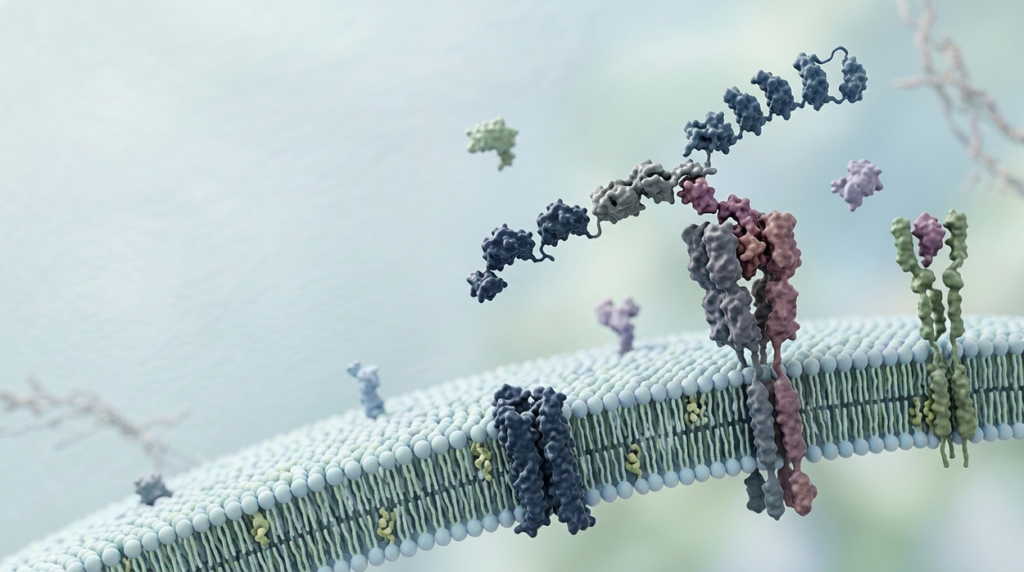
Seminal plasma provides the biochemical environment surrounding spermatozoa. Its composition includes multiple molecular classes, including proteins and enzymes, cytokines and peptides, carbohydrates, lipids, ions, hormones and small-molecule metabolites. Cell-free DNA and RNA species have also been reported, including RNA associated with extracellular vesicles.
The composition should not be treated as a fixed universal formula. Concentrations and molecular profiles can vary between individuals and may also be influenced by biological state, collection conditions, disease status and analytical methodology.
This variability is one reason seminal plasma has attracted interest as a research matrix. Rather than providing a single measurement, it can contain multiple molecular signals that potentially reflect reproductive physiology or pathological processes.
Nucleic acids and extracellular vesicles
Seminal plasma contains reported forms of cell-free nucleic acids, including DNA, microRNAs and long non-coding RNAs. Extracellular vesicles are also an area of active research because they can carry molecular cargo and participate in cell-to-cell communication.
These features have made extracellular-vesicle analysis and RNA profiling increasingly relevant to reproductive biology.
However, an important distinction is necessary: finding a molecular signature in seminal plasma does not automatically establish it as a clinically useful biomarker. Discovery studies identify candidates; subsequent studies must determine reproducibility, biological relevance, analytical performance and clinical utility.
Proteins, enzymes, cytokines and signaling molecules
The seminal-plasma proteome is particularly important in biomedical research because it contains proteins originating from several reproductive tissues.
Proteomic studies have investigated proteins associated with sperm function, reproductive physiology and male infertility. Reviews of seminal-plasma proteomics describe the specimen as a potentially informative source for investigating fertility-associated molecular patterns.
Modern studies may use discovery proteomics to identify candidate proteins or targeted approaches to measure predefined analytes. The analytical challenge is separating genuine biological differences from technical variation, sample handling effects and differences between study populations.
Consequently, a protein identified in one cohort should generally be regarded as a research finding until independently validated.
Why Seminal Plasma Matters in Biomedical Research
Studying sperm function and reproductive biology
Seminal plasma can influence the biological environment in which spermatozoa function. Research literature describes interactions involving sperm maturation, sperm function and molecular signaling within the reproductive tract.
This creates an important research distinction. A study of spermatozoa alone may answer questions about the cell itself, while a study including seminal plasma may provide additional information about the biochemical environment surrounding that cell.
Researchers can therefore compare whole semen, washed sperm or isolated seminal plasma depending on the biological hypothesis.
Investigating male reproductive disorders
Alterations in seminal-plasma proteins, metabolites and RNA profiles have been investigated in connection with male reproductive disorders.
This area is particularly interesting because conventional semen parameters do not capture every molecular process involved in reproductive function. A participant can have measurable differences in molecular composition even when conventional parameters provide only part of the biological picture.
Recent reviews continue to examine emerging seminal-plasma markers for male infertility and related reproductive conditions.
Nevertheless, candidate biomarker research should not be confused with clinical diagnosis. A reproducible research association still requires validation in appropriately designed cohorts before it can support routine clinical decision-making.
🏢 Featured Research Institutes Directory Listing
Looking for verified and trusted research institutes partners related to this topic? Explore our comprehensive directory.
Explore Directory →Biomarker discovery and molecular profiling
Semen research increasingly incorporates multiple omics disciplines, including:
- Proteomics for protein and peptide profiling
- Metabolomics for small-molecule characterization
- Lipidomics for lipid-related molecular patterns
- Transcriptomics and RNA profiling for RNA signatures
- Extracellular-vesicle analysis for vesicle-associated molecular cargo
The attraction of these approaches is their ability to move beyond one or two conventional parameters and examine broader molecular patterns.
For example, a research team may compare seminal-plasma metabolite profiles between study groups, investigate differential protein expression, or examine RNA signatures associated with a defined reproductive phenotype.
Recent work continues to explore molecular determinants in both seminal plasma and spermatozoa using metabolomic approaches, illustrating how research is moving toward broader molecular characterization.
What Researchers Can Learn From Different Semen Fractions
Whole semen
Whole semen preserves the biological context of spermatozoa and seminal plasma together.
This can be valuable when researchers want to examine the specimen as it exists at collection or investigate interactions between cellular and fluid components.
The disadvantage is analytical complexity. Cellular material, proteins, metabolites and extracellular particles are all present simultaneously. For some assays, this makes interpretation more difficult and increases the need for carefully defined analytical procedures.
Isolated spermatozoa
Sperm-focused research may examine:
- DNA integrity
- Motility
- Morphology
- Cellular metabolism
- Oxidative stress
- Sperm-associated proteins
- Sperm-associated RNA
Such analyses require appropriate separation and quality-control procedures because contamination from seminal plasma or other cellular material can influence results.
The separation procedure itself can also affect the biological material being studied. Researchers therefore need to document how sperm were isolated, washed or otherwise processed.
Seminal plasma
Seminal plasma is particularly useful when the research question concerns secreted molecular components.
Researchers may investigate proteins, metabolites, lipids, cell-free nucleic acids or extracellular vesicles. Removing spermatozoa and cellular debris may be necessary for certain assays, although the appropriate processing method depends on the research endpoint.
This is where specimen preparation becomes part of the scientific design rather than a routine laboratory step.
Collection and Pre-Analytical Variables Can Change Research Results
Standardizing collection conditions
Semen is a variable biological specimen, and collection conditions can influence subsequent measurements.
The WHO sixth edition provides standardized guidance for semen examination and processing, with the broader objective of improving analytical quality and comparability between laboratories.
Relevant variables include:
- Ejaculatory abstinence interval
- Complete collection of the ejaculate
- Collection container
- Time from collection to processing
- Sample identification and traceability
- Transport conditions
- Use of appropriate collection procedures
The WHO methodology commonly uses a 2–7 day abstinence interval for standard semen examination, while also emphasizing controlled timing and standardized handling.
For research studies, the key principle is consistency. If participants are collected under substantially different conditions, biological and pre-analytical variability can become difficult to separate.
Processing and fractionation
Processing should be designed around the intended analytical endpoint.
A protocol designed for conventional semen analysis may not be identical to one designed to isolate seminal plasma for proteomics or extracellular-vesicle research.
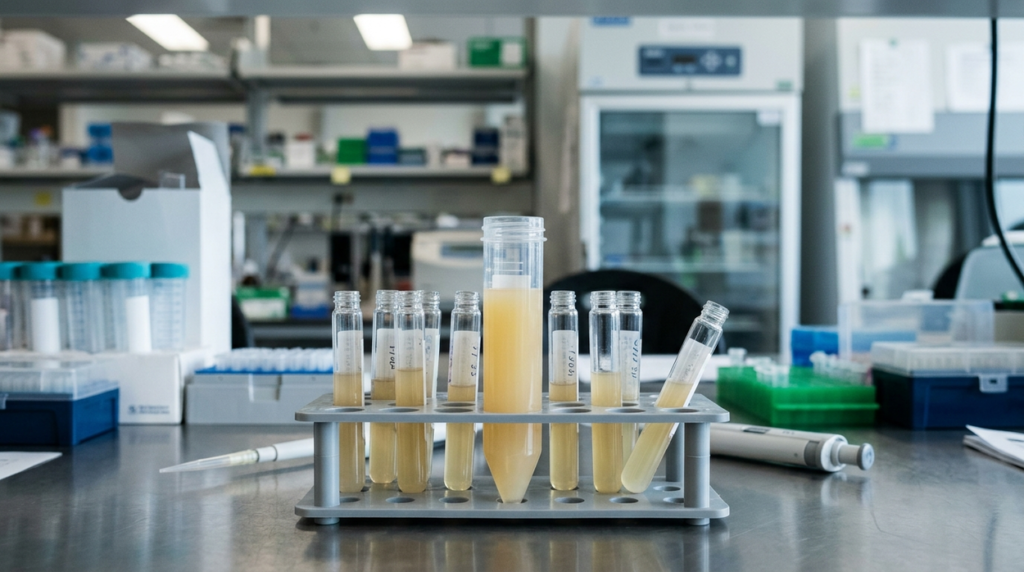
Centrifugation, filtration, washing and other fractionation steps can change the material ultimately entering the assay. For example, an aggressive processing step may remove or alter particles that another study intends to characterize.
Researchers should therefore document:
- Processing interval
- Centrifugation conditions
- Fractionation method
- Number of processing steps
- Sample volume used
- Storage conditions after processing
The WHO manual specifically emphasizes standardized examination and processing procedures to improve consistency and comparability across laboratories.
Storage, freezing and freeze-thaw considerations
Storage conditions can affect the integrity of biological specimens and should be treated as an important pre-analytical variable.
The appropriate storage protocol depends on whether the study is preserving intact spermatozoa, seminal plasma, nucleic acids, proteins, extracellular vesicles or another molecular fraction. Protocols developed for sperm cryopreservation should not automatically be assumed to be optimal for every molecular-analysis application.
Freeze-thaw exposure is another consideration. Repeated thawing and refreezing can introduce variability, particularly when researchers are measuring labile molecular components.
For longitudinal or multicentre studies, storage duration, temperature, freeze-thaw history and processing time should be systematically recorded.
Analytical Approaches Used to Study Human Semen
Conventional semen analysis
Conventional semen analysis provides foundational phenotypic measurements, including volume, concentration, motility, morphology and vitality.
These measurements remain important because they describe observable characteristics of the ejaculate and spermatozoa. However, they represent only one layer of biological information.
The WHO sixth edition provides standardized procedures covering routine, optional and research semen tests, with an emphasis on quality control and comparability.
For molecular studies, conventional parameters can also provide useful metadata. For example, researchers may investigate whether a molecular signature correlates with sperm concentration or motility while controlling for other participant characteristics.
Proteomics
Proteomics allows researchers to characterize proteins present in seminal plasma or associated with spermatozoa.
Mass-spectrometry-based workflows can support either broad discovery studies or targeted measurement of selected proteins. Seminal-plasma proteomic research has identified extensive protein profiles and explored their relationship with male reproductive biology.
The main challenge is not simply detecting proteins. Researchers must determine whether observed differences are biologically meaningful, technically reproducible and associated with a clearly defined phenotype.
Appropriate controls, sample randomization, technical replicates where applicable and independent validation can help address these issues.
Metabolomics and lipidomics
Metabolomics focuses on small molecules such as metabolites involved in cellular pathways and biochemical processes, while lipidomics provides more detailed characterization of lipid species.
These approaches can provide information about the biochemical environment surrounding spermatozoa and may identify molecular patterns associated with reproductive states.
However, metabolites can be particularly sensitive to pre-analytical conditions. Collection timing, storage, processing and analytical batch effects can all influence measurements.
🏢 Featured Research Institutes Directory Listing
Looking for verified and trusted research institutes partners related to this topic? Explore our comprehensive directory.
Explore Directory →Recent methodological work continues to examine molecular determinants in seminal plasma and spermatozoa using nontargeted metabolomics.
Genomics, transcriptomics and extracellular-vesicle analysis
RNA profiling and related molecular approaches have expanded the range of information that can potentially be obtained from semen.
Researchers have reported cell-free DNA and RNA, including microRNAs and long non-coding RNAs, in seminal plasma. Extracellular vesicles are also being investigated as carriers of molecular material and potential mediators of reproductive signaling.
These methods are valuable for discovery, but their clinical interpretation requires caution. Differences in RNA extraction, sequencing platforms, normalization procedures and sample processing can produce apparently different molecular profiles.
Standardized protocols and independent validation therefore remain essential.
Key Research Variables That Can Confound Semen Studies
Biological variability between participants
Human semen research involves substantial biological variability.
Relevant variables may include:
- Age
- Reproductive status
- Lifestyle and environmental exposures
- Medication or treatment history
- Disease and inflammatory status
- Time since previous ejaculation
- Demographic and geographic factors relevant to the research question
Not every study needs to collect every variable. The appropriate metadata should be determined by the hypothesis and potential confounders.
Variability within the same individual
A second challenge is intra-individual variability.
Two samples from the same participant may not have identical semen characteristics or molecular profiles. This means that a single specimen may not always represent an individual’s long-term biological state.
For studies investigating relatively subtle molecular differences, repeated sampling or appropriately designed statistical approaches may therefore be relevant.
Laboratory and analytical variability
Even when participant characteristics are controlled, laboratory factors can influence findings.
Potential sources include:
- Collection procedures
- Processing delays
- Centrifugation conditions
- Storage duration
- Freeze-thaw cycles
- Reagent lots
- Analytical platform
- Operator effects
- Batch effects
- Data-processing pipelines
This is one reason standardized methodology is so important. The WHO manual describes its procedures as intended to sustain quality and improve comparability between laboratories.
Designing Human Semen Studies for Reliable Results
Define the specimen and endpoint before collection
A well-designed study should establish the required biological material before participant collection begins.
The protocol should specify whether the primary endpoint requires:
- Whole semen
- Isolated spermatozoa
- Seminal plasma
- Sperm DNA
- Extracellular vesicles
- Cell-free RNA
- A defined molecular fraction
This decision affects collection, processing, storage and assay selection.
Changing the specimen definition after collection has begun can introduce unnecessary variability and make samples difficult to compare.
Build appropriate controls and metadata
Controls should reflect the scientific question rather than being added only after the study has started.
Researchers should define comparison groups, inclusion and exclusion criteria, relevant participant metadata and specimen-processing variables in advance.
For molecular studies, it is particularly important to distinguish biological variation from technical variation.
Standardization and quality control
Quality control should cover the entire workflow—from collection to final data analysis.
A robust protocol should document:
- Collection conditions
- Sample receipt and identification
- Processing time
- Fractionation procedures
- Storage conditions
- Analytical platform
- Quality-control criteria
- Protocol deviations
- Data-processing methods
When specialized laboratory or study-management services are outsourced, investigators should also assess the provider’s experience with the relevant specimen type and analytical endpoint. For broader guidance on evaluating external research partners, BioPharmaIndex’s practical checklist for choosing the right CRO for a clinical trial provides useful considerations around capabilities, quality systems and study requirements.
For multicentre studies, harmonized protocols become particularly important because differences between laboratories can otherwise become difficult to distinguish from biological differences.
Ethical and Biospecimen Considerations in Human Semen Research
Informed consent and participant privacy
Human semen is a sensitive reproductive biospecimen, so research protocols should address informed consent, privacy and appropriate handling of participant information.
Consent should clearly describe the intended research use where required by the applicable ethics framework, particularly if specimens may be stored or used for future studies.
Participant identifiers should be managed according to the study’s approved data-governance procedures, with access restricted to authorized personnel.
Biospecimen governance and secondary research use
Research teams should determine in advance whether samples may be retained for secondary research, linked to additional datasets or shared with external collaborators.
Requirements vary according to jurisdiction, institution, funding source and study design. Researchers should therefore verify the applicable institutional review board, ethics committee, privacy and biospecimen-governance requirements before beginning collection.
For studies subject to specific U.S. federal funding or institutional requirements, applicable NIH policies should be reviewed rather than assuming that a single biospecimen rule applies universally.
Biosafety and laboratory handling
Human-derived specimens should be handled under the laboratory’s approved biosafety framework.
🏢 Featured Research Institutes Directory Listing
Looking for verified and trusted research institutes partners related to this topic? Explore our comprehensive directory.
Explore Directory →Risk assessment, appropriate containment, personnel training, personal protective equipment, specimen identification and documented procedures should be established according to institutional requirements and the nature of the work.
The important research principle is to avoid treating semen as either automatically infectious or automatically risk-free. Biosafety procedures should be based on documented risk assessment and applicable laboratory policies.
Where Human Semen Research Is Heading
Multi-omics characterization
One of the most important research directions is the integration of multiple molecular layers.
Instead of examining only a single protein or metabolite, researchers can potentially combine proteomic, metabolomic, lipidomic and RNA measurements with conventional semen parameters.
Such approaches may help identify molecular signatures that are more informative than an isolated measurement. However, increasing the number of measured variables also increases the need for robust study design, appropriate statistical analysis and independent validation.
Seminal plasma as a source of candidate biomarkers
Seminal plasma continues to attract interest as a potential source of biomarkers for male reproductive conditions.
Its molecular complexity provides researchers with many potential targets, including proteins, metabolites, RNA species and extracellular-vesicle-associated components. Recent reviews describe a growing body of work investigating emerging seminal-plasma markers.
The major translational challenge is moving from discovery to validation.
A candidate biomarker may show an association in a discovery cohort but perform differently in another population. Clinical translation therefore requires reproducible analytical methods, appropriately powered validation studies and evidence that the biomarker provides meaningful information beyond existing clinical measurements.
More standardized and reproducible semen research
Standardization may be less visually exciting than new molecular technologies, but it is fundamental to reliable research.
If laboratories collect, process and analyze specimens differently, molecular signatures can be difficult to reproduce. Harmonized collection procedures, clear reporting standards, documented processing conditions and quality-control systems can improve comparability.
The continuing role of the WHO laboratory manual reflects this need. Its sixth edition was specifically developed to provide standardized, evidence-based procedures for semen examination and processing and to improve the comparability of laboratory results.
Conclusion
Human semen is a multidimensional biomedical specimen rather than simply a suspension of sperm cells. Its two major research components—spermatozoa and seminal plasma—provide different layers of biological information.
Sperm-focused studies can examine parameters such as motility, morphology, vitality, DNA integrity and cellular molecular characteristics. Seminal-plasma research, meanwhile, provides access to a complex mixture of proteins, metabolites, lipids, nucleic acids, signaling molecules and extracellular-vesicle-associated material.
The composition of the specimen ultimately determines which biological questions can be investigated. Just as importantly, collection conditions, processing, fractionation, storage and analytical methods can influence the results. Standardization and rigorous quality control are therefore essential for producing reproducible semen research.
Molecular technologies are expanding the research potential of semen, particularly through proteomics, metabolomics, RNA profiling and extracellular-vesicle analysis. Yet the transition from an interesting molecular signature to a clinically useful biomarker requires careful validation.
For biomedical researchers, the most useful perspective is therefore to treat human semen as a complex biospecimen whose scientific value depends not only on what it contains, but also on how carefully it is collected, processed, characterized and interpreted.
FAQs
1. What is the difference between semen, sperm and seminal plasma?
Semen is the complete ejaculate. Spermatozoa are the reproductive cells contained within it, while seminal plasma is the surrounding, largely non-cellular fluid produced through contributions from the reproductive tract and accessory glands. Researchers may study these components separately because each provides different biological information.
2. What are the major components of human seminal plasma?
Seminal plasma contains proteins, enzymes, peptides, cytokines, carbohydrates, lipids, ions, hormones and small-molecule metabolites. Research has also identified cell-free DNA and RNA species, including microRNAs and long non-coding RNAs, as well as extracellular-vesicle-associated molecular material.
3. Why is seminal plasma useful in biomedical research?
Seminal plasma provides a molecular view of the biochemical environment surrounding spermatozoa. Researchers investigate it for reproductive biology, male reproductive disorders, proteomics, metabolomics, RNA profiling and candidate biomarker discovery. However, research-stage biomarkers still require rigorous validation before clinical use.
4. How can semen sample handling affect research results?
Collection conditions, abstinence interval, completeness of the specimen, processing time, fractionation, storage temperature and freeze-thaw history can introduce variability. Standardized collection and processing procedures are therefore important for reliable and comparable results.
5. What research methods are used to analyze human semen?
Researchers use conventional semen analysis to measure parameters such as volume, concentration, motility, morphology and vitality. Molecular studies may additionally use proteomics, metabolomics, lipidomics, RNA profiling, nucleic-acid analysis and extracellular-vesicle characterization.