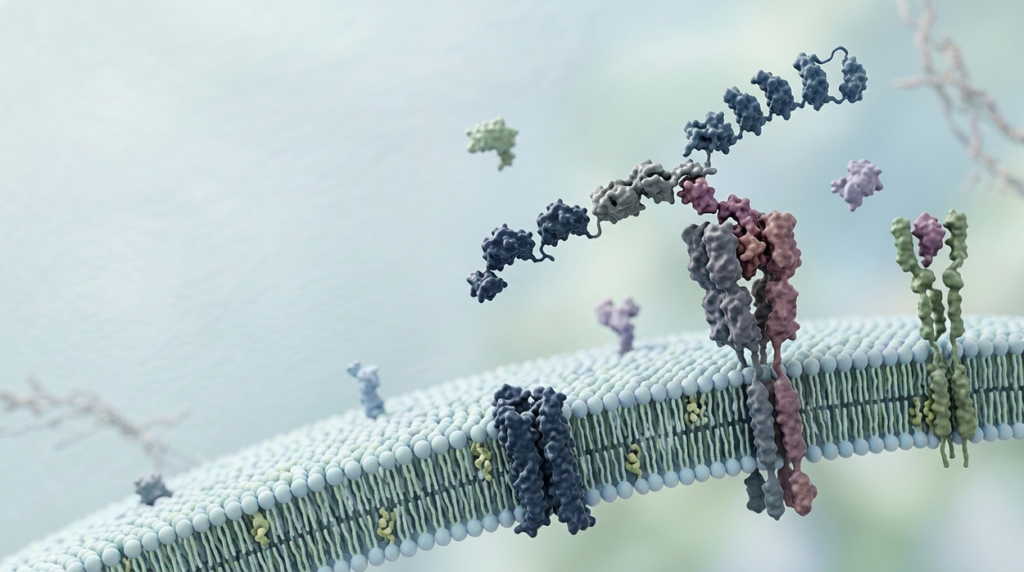
Human plasma is more than the liquid fraction of blood. It is a chemically and biologically complex matrix containing proteins, metabolites, electrolytes, hormones, lipids, nucleic acids, extracellular vesicles and numerous other circulating components. That complexity makes plasma valuable across biomedical research, pharmaceutical development, biomarker discovery and analytical science.
Pooled human plasma takes this complexity a step further by combining plasma obtained from multiple donors into a composite research material. Pooling can provide larger volumes and reduce the influence of some individual-donor differences, making the material useful for assay development, method optimization, analytical studies and other laboratory workflows. At the same time, pooling changes the biological meaning of the sample: a pool is a composite matrix, not a direct representation of any one person or necessarily of an entire population.
This distinction is important when selecting material for research. Pooled plasma intended for laboratory use should not automatically be treated as equivalent to regulated therapeutic pooled plasma products. The intended use, donor characteristics, anticoagulant, processing history, storage conditions and documentation all influence whether a particular pool is appropriate.
What Is Pooled Human Plasma?
Human plasma versus whole blood and serum
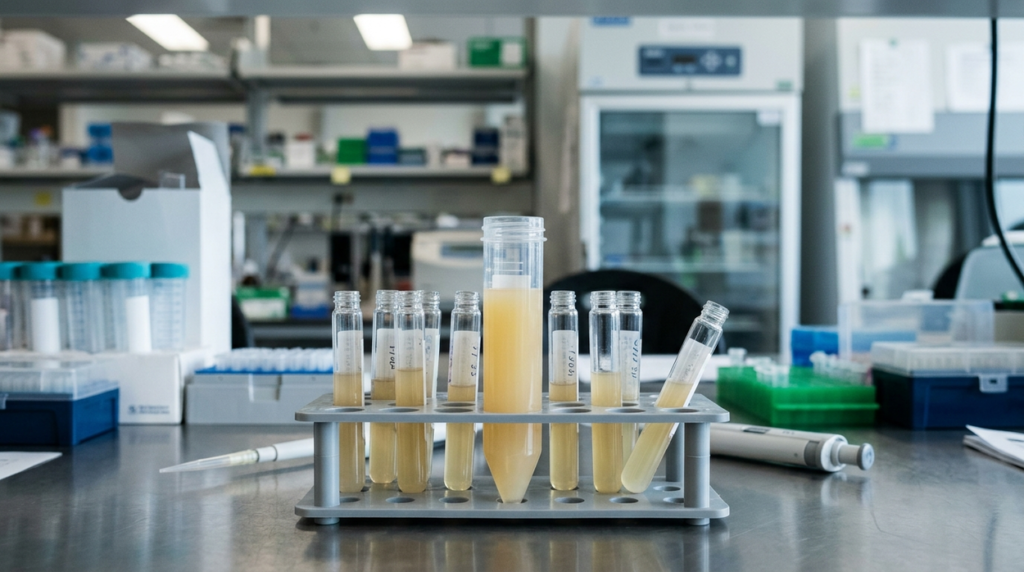
Plasma is the liquid portion of anticoagulated blood that remains after cellular components are separated, typically through centrifugation. It consists predominantly of water and contains proteins, electrolytes, nutrients, hormones, dissolved gases and metabolic waste products.
The distinction between plasma and serum is particularly important in research. Serum is obtained after blood has clotted, whereas plasma is collected using an anticoagulant and therefore retains fibrinogen and other coagulation-related components that may be reduced or consumed during clot formation.
For an assay developer or researcher, choosing between serum and plasma is therefore not simply a procurement preference. The matrix can influence analyte recovery, protein profiles, coagulation-related measurements and assay performance.
What makes plasma “pooled”?
Pooled plasma is created by combining plasma from multiple individual donors into a single preparation. Instead of preserving the biological profile of each donor separately, the resulting material represents the combined characteristics of the contributing specimens.
The number and characteristics of donors can affect the final pool. A pool made from a relatively small and narrowly defined donor group may have different characteristics from one created using a larger and more heterogeneous population.
Pooling can reduce the influence of an unusually high or low value from an individual donor, but it does not make the material biologically universal. The resulting composition still depends on who contributed to the pool and how the material was collected and processed.
Pooled plasma is not a single standardized biological composition
There is no single biological definition of “pooled human plasma” that makes every pool interchangeable.
Important variables can include:
- Number of contributing donors
- Donor eligibility and inclusion criteria
- Age and sex distribution, where documented
- Health status or disease characteristics
- Geographic or demographic composition
- Collection procedure
- Anticoagulant
- Time between collection and processing
- Centrifugation and separation procedures
- Storage conditions
- Freeze-thaw history
For that reason, laboratories should evaluate the actual product specification and lot documentation rather than assuming that two products carrying similar descriptions will perform identically.
What Does Human Plasma Contain?
The research value of plasma comes largely from the breadth of biological information carried in the matrix.
Plasma proteins
Proteins constitute one of the most extensively studied components of human plasma. Major groups include albumin, immunoglobulins, complement proteins, transport proteins, acute-phase proteins, coagulation and anticoagulation factors, proteases and protease inhibitors.
Albumin is particularly abundant and contributes to transport and maintenance of oncotic pressure. Immunoglobulins and complement components reflect important aspects of immune biology, while coagulation-related proteins make plasma especially relevant to hemostasis research.
The concentration range across plasma proteins is also highly uneven. Plasma proteomics is challenging partly because a relatively small group of abundant proteins accounts for most of the circulating protein mass, while many biologically interesting proteins occur at much lower concentrations.
This dynamic range is an important consideration for researchers using pooled plasma in mass-spectrometry or affinity-based workflows.
Small molecules and metabolites
Plasma also carries numerous small molecules, including:
- Sodium, potassium, calcium and other electrolytes
- Glucose and other carbohydrates
- Amino acids
- Lipids and lipid-associated molecules
- Hormones
- Vitamins and related compounds
- Metabolic waste products
- Drug molecules and metabolites when present
These components make plasma useful for metabolomics, pharmacokinetic and bioanalytical research, although the suitability of a particular pool depends strongly on the study design and analytical method.
Extracellular vesicles, nucleic acids and other circulating components
Plasma contains circulating cell-free nucleic acids as well as extracellular vesicles carrying proteins, lipids and nucleic-acid-associated material. Cell-free DNA and RNA can occur in different forms, including association with proteins or extracellular vesicles.
These components are relevant to biomarker research and liquid-biopsy investigations. However, their abundance and integrity can be particularly sensitive to collection and processing conditions, which makes pre-analytical control important.
How Is Pooled Human Plasma Prepared for Research?
There is no single preparation workflow used by every supplier or laboratory. Researchers should therefore distinguish general principles from product-specific procedures.
Donor selection and collection
A well-characterized pool begins with defined donor criteria. Depending on the intended application, researchers may need information about donor eligibility, demographics, health status and relevant screening procedures.
For regulated blood and plasma products, donor eligibility and infectious-disease testing are subject to applicable regulatory requirements. FDA materials, for example, describe requirements for testing donations intended for transfusion or further manufacturing and include recommendations concerning infectious-disease testing.
Research-use materials can have different specifications, so laboratories should review the supplier’s documentation rather than assuming that a research product follows the exact framework of a therapeutic plasma product.
Plasma separation and processing
Following collection, plasma is separated from cellular blood components. Processing conditions can influence the integrity and measured concentration of certain analytes.
Time to processing, temperature exposure, centrifugation conditions and subsequent handling can all contribute to pre-analytical variation. Laboratory-quality literature emphasizes the importance of controlling factors such as anticoagulant selection, transport, storage and sample handling.
For research involving low-abundance biomarkers or labile molecular species, these variables can become particularly important.
Combining individual donor samples
Individual plasma units are combined according to the pool design. Pool size matters because increasing the number of contributing donors can change how strongly individual biological differences influence the final material.
A supplier may define a pool according to particular donor criteria or a specified manufacturing process. The exact strategy should therefore be documented when reproducibility matters.
Pooling does not simply “remove variability.” Instead, it changes the form of variability from predominantly donor-specific variation to variation associated with the composition and preparation of the composite pool.
Aliquoting, storage and shipment
After preparation, pooled plasma may be divided into aliquots so researchers can use smaller quantities without repeatedly exposing a larger container to thawing and refreezing.
Storage temperature, thawing procedure and freeze-thaw history should be considered in relation to the intended assay. The appropriate conditions are product-specific and should follow the supplier’s validated instructions.
🏢 Featured Research Institutes Directory Listing
Looking for verified and trusted research institutes partners related to this topic? Explore our comprehensive directory.
Explore Directory →This is particularly important for long-running projects where samples from different lots or procurement dates may otherwise introduce an uncontrolled experimental variable.
Why Researchers Use Pooled Plasma Instead of Individual Donor Samples
The principal reason for pooling is not simply convenience. It is the creation of a composite biological matrix that can be used consistently for particular analytical purposes.
Reducing the influence of individual biological variation
Individual human samples naturally differ. Pooling can moderate the influence of unusually high or low measurements from individual donors.
For assay-development work, this can be useful when the objective is to establish whether a method works in a complex human matrix rather than to investigate differences between specific people.
It does not, however, eliminate biological variation from the underlying material.
Creating a consistent matrix for repeated experiments
A defined pool can provide a relatively consistent matrix for repeated experiments performed during method development, optimization or laboratory qualification.
This can be useful when a research team wants to compare assay conditions while minimizing changes in the biological background of the test material.
Obtaining larger volumes
Some analytical workflows require substantially more plasma than one donor specimen can reasonably provide. Pooling can provide the volume needed for repeated experiments, optimization studies or multiple analytical platforms.
The additional volume, however, should be considered alongside the pool’s donor composition and lot consistency.
Supporting method development and controls
Pooled plasma can be particularly useful during early-stage assay development. Researchers can optimize extraction, dilution, detection and analytical procedures before moving to a larger collection of individual donor specimens.
This creates a useful separation between method development and biological validation.
Research Applications of Pooled Human Plasma
Biomarker discovery and validation
Plasma is a major matrix for biomarker research because circulating molecules can reflect physiological and pathological processes.
Pooled samples may be useful during exploratory work, assay optimization and preliminary evaluation of candidate biomarkers. They can help researchers determine whether an analytical platform can detect a target in a complex human matrix.
However, pooled material should not automatically substitute for individual-donor cohorts when the objective is to establish relationships between a biomarker and disease status, treatment response or patient characteristics.
Plasma proteomics
Plasma proteomics uses technologies such as liquid chromatography-mass spectrometry and affinity-based protein measurement to characterize circulating proteins.
The plasma proteome presents a difficult analytical environment because of its broad concentration range and the dominance of highly abundant proteins. Reviews of plasma proteomics emphasize sample preparation, analytical depth, throughput and sample integrity as major considerations.
Pooled plasma can therefore serve as a useful matrix for method development, workflow optimization and certain comparative experiments. Depending on the research objective, investigators may also use depletion, enrichment, fractionation or targeted analytical strategies to improve detection of lower-abundance proteins.
Diagnostic assay and analytical method development
Diagnostic developers frequently need a biological matrix in which to evaluate assay performance.
Pooled plasma can be used for activities such as:
- Matrix-effect assessment
- Assay optimization
- Interference studies
- Dilution experiments
- Recovery experiments
- Preliminary precision assessments
- Reagent and method comparison
The exact plasma type matters. An assay developed with EDTA plasma, for example, should not automatically be assumed to perform identically with citrate or heparin plasma.
Immunoassay and antibody research
ELISA and other immunoassay formats operate within chemically complex biological matrices. Plasma proteins and other components can influence binding, background signal and analytical recovery.
Pooled plasma can provide a practical matrix for evaluating antibody specificity, assay compatibility and potential interference before testing larger sets of individual specimens.
For quantitative work, researchers should establish that the selected plasma matrix is compatible with the assay rather than assuming that all human plasma behaves identically.
Pharmacology and bioanalytical research
Plasma is widely used in pharmaceutical bioanalysis because drug substances and metabolites can circulate within the plasma compartment.
Pooled plasma may support analytical method development, extraction optimization, matrix-effect studies and other laboratory activities. It can be useful before a validated method is applied to study samples.
The distinction is important: a pooled research matrix can help establish analytical performance, but it does not provide the individual pharmacokinetic variability needed for interpreting patient- or subject-level exposure.
Coagulation and hemostasis research
Plasma is especially important in coagulation research because it retains many coagulation and anticoagulation proteins.
The anticoagulant used during collection is critical. Citrate, EDTA and heparin have different biochemical effects and are not interchangeable for every application. Studies of blood collection materials have shown that anticoagulants can influence measured analytes and assay performance.
For coagulation-related research, the collection and processing method should therefore be selected specifically for the intended assay.
Calibration, controls and laboratory quality studies
Characterized pooled plasma can also support laboratory controls, method qualification and other quality-oriented experiments.
For projects extending over months or years, lot characterization becomes particularly important. A change in pool lot can introduce a new biological background that may be mistaken for an analytical change unless the transition is appropriately qualified.
What Pooling Can Change About the Biological Signal
Pooling is useful precisely because it changes the sample’s statistical and biological profile. That same feature creates limitations.
Averaging can mask individual differences
Suppose one donor has a particularly high concentration of a protein and another has a low concentration. Combining their plasma can move the resulting concentration toward an intermediate value.
That may be helpful for analytical consistency, but it can also remove biologically informative extremes.
This matters especially for biomarkers with substantial inter-individual variability.
Pool composition depends on donor population
A pool is only as representative as its donor definition allows it to be.
Age, sex, geographic background, health status and other characteristics can influence circulating molecular profiles. If those variables are not documented, researchers may have limited ability to determine how closely a pool corresponds to the population of interest.
🏢 Featured Research Institutes Directory Listing
Looking for verified and trusted research institutes partners related to this topic? Explore our comprehensive directory.
Explore Directory →The phrase “normal pooled plasma” should therefore be interpreted as a product specification rather than a universal definition of normal human biology.
Pooling can complicate biomarker interpretation
Pooling is generally more useful for questions about analytical behavior than questions about individual-level biological associations.
A pooled sample may tell researchers whether an assay can detect a target in human plasma. It cannot, by itself, demonstrate how that target varies across patients, healthy controls, age groups or disease subtypes.
That distinction between analytical consistency and biological representativeness is central to responsible plasma research.
Quality Factors Researchers Should Evaluate Before Using a Plasma Pool
Donor and pool specifications
Before purchasing or qualifying pooled human plasma, researchers should review:
- Number of contributing donors
- Donor inclusion and exclusion criteria
- Available demographic information
- Whether the pool is normal, disease-associated or otherwise defined
- Collection source and method
- Pooling methodology
- Lot identification
The required level of detail depends on the intended application.
Anticoagulant and processing details
Researchers should identify whether plasma was collected using EDTA, citrate, heparin or another anticoagulant.
This is not a minor specification. Anticoagulants can alter biochemical measurements and affect assay performance. For example, EDTA chelates divalent cations, while citrate and heparin have different biochemical interactions with plasma components.
The selected plasma type should therefore match the analytical method.
Infectious-disease testing and biosafety information
Human-derived research materials require appropriate biosafety consideration.
Researchers should determine what donor screening and infectious-disease testing the supplier performed and what certificates or documentation are available. Regulatory requirements can differ according to intended use, jurisdiction and product classification.
FDA guidance for blood and blood components illustrates the importance of donor testing for relevant communicable diseases in regulated contexts.
Importantly, supplier screening does not eliminate the need for laboratories to follow their own institutional biosafety procedures.
Storage, stability and freeze-thaw history
Researchers should review:
- Storage temperature
- Shipping conditions
- Thawing instructions
- Recommended aliquot size
- Stability information
- Freeze-thaw history
These factors can affect the integrity of sensitive analytes and should be incorporated into study planning.
Lot-to-lot consistency
Different lots may contain different donor populations and therefore different biological backgrounds.
For a short exploratory experiment, this may have limited importance. For a long-term assay-development program, however, lot continuity and qualification can become critical.
A laboratory that expects to use the same pooled matrix repeatedly should consider establishing acceptance criteria before changing suppliers or lots. Where supplier qualification and documented quality systems are part of the broader procurement process, the principles discussed in BioPharmaIndex’s guide to supplier quality and documentation requirements can provide useful broader context, although research-use plasma itself should be evaluated according to its intended use and applicable requirements.
Pooled Research Plasma vs Therapeutic Pooled Plasma
The word “pooled” can create confusion because it describes materials with very different intended uses.
Research-use plasma
Research-use pooled plasma is intended for laboratory investigation, assay development, analytical work or other non-therapeutic applications.
Its relevant documentation may include donor characteristics, anticoagulant, processing method, storage conditions, infectious-disease screening information and lot specifications.
The exact documentation available varies by supplier and product.
Therapeutic pooled plasma products
Therapeutic pooled plasma is a different category. FDA, for example, lists pooled plasma products such as OCTAPLAS, a solvent/detergent-treated pooled human plasma product, among regulated plasma products. Its approved indications include replacement of multiple coagulation factors in specified clinical settings and plasma exchange for thrombotic thrombocytopenic purpura.
The product is manufactured under a defined regulatory framework, with requirements that are fundamentally different from simply providing a research-use plasma specimen.
Why researchers should not treat the two categories as interchangeable
The distinction involves:
- Intended use
- Manufacturing controls
- Regulatory status
- Donor requirements
- Processing
- Safety controls
- Product specifications
- Documentation
Consequently, procurement should begin with the intended research application rather than the generic phrase “pooled plasma.”
When Pooled Plasma Is Appropriate—and When Individual Samples Are More Informative
The right material depends on the scientific question.
Situations where pooled plasma can be useful
Pooled plasma may be appropriate for:
- Assay development
- Method optimization
- Matrix-effect studies
- Preliminary analytical experiments
- Laboratory controls
- Large-volume workflows
- Selected proteomics and biochemical experiments
- Reagent and platform comparisons
Situations where individual-donor plasma may be preferable
Individual samples are generally more informative when the research question depends on biological variation, such as:
- Patient-versus-control comparisons
- Population studies
- Biomarker association studies
- Precision medicine research
- Epidemiological investigations
- Treatment-response analyses
- Studies where donor-specific characteristics are central
A simple selection framework
Before ordering pooled human plasma, researchers can ask:
- Is the study testing an analytical method or a biological hypothesis?
- Does individual biological variation matter?
- Is a large, consistent matrix volume required?
- Which donor characteristics need to be represented?
- Which anticoagulant is compatible with the assay?
- How important is lot-to-lot continuity?
- What supplier documentation is necessary to support the study?
These questions often clarify whether pooled or individual-donor material is the better starting point.
Common Research Pitfalls With Pooled Human Plasma
Treating “normal pooled plasma” as universally representative
A normal pool is not automatically representative of every healthy population. Researchers should examine the donor definition and supplier specifications.
🏢 Featured Research Institutes Directory Listing
Looking for verified and trusted research institutes partners related to this topic? Explore our comprehensive directory.
Explore Directory →Ignoring pre-analytical variables
Collection, processing, transport, storage and thawing can all influence laboratory results. Plasma proteomics research in particular emphasizes sample integrity and metadata as important components of reliable interpretation.
Mixing incompatible plasma types
EDTA, citrate and heparin plasma should not be treated as interchangeable simply because all three are called plasma. Anticoagulant effects can influence analyte measurements and analytical performance.
Assuming pooling removes all variability
Pooling changes variability; it does not eliminate it. Different lots can still differ because the underlying donor populations and processing histories differ.
Using pooled plasma for questions requiring individual-level evidence
This is perhaps the most important conceptual mistake. A pooled sample can be highly useful for analytical development while being unsuitable for answering questions about individual biological variation.
Where Pooled Human Plasma Fits in Modern Biomedical Research
Growing importance of blood-based molecular profiling
Advances in mass spectrometry, multiplexed affinity technologies and other analytical platforms continue to expand the range of molecules that can be studied in plasma. Plasma proteomics is being applied across areas including disease biology, aging and hemostasis, while researchers continue working to improve analytical depth and sample throughput.
This makes well-characterized plasma matrices increasingly important to pharmaceutical and biotechnology research.
From exploratory research to assay development
Pooled plasma can occupy a useful position between early exploratory work and studies requiring large numbers of individual specimens.
For example, a research team may first use a pooled matrix to optimize extraction and detection, then move to individual samples to investigate biological variation, and eventually evaluate the method in a clinically relevant population.
The pool therefore becomes one component of a broader research workflow rather than a universal substitute for donor-level samples.
Why sample quality and metadata remain central
Advanced analytical instrumentation cannot fully compensate for poorly characterized biological material.
A sophisticated proteomics or biomarker platform still depends on knowing what sample was analyzed, how it was collected, which anticoagulant was used, how it was processed, how it was stored and whether the sample has undergone repeated freeze-thaw cycles.
For that reason, sample metadata is part of experimental quality, not merely administrative information.
Conclusion
Pooled human plasma provides researchers with a complex human biological matrix that can be used consistently across many laboratory workflows. By combining plasma from multiple donors, pooling can reduce the influence of some individual-specific variation, provide larger volumes and support repeatable assay-development and analytical experiments.
Its usefulness, however, depends on understanding what the pool actually represents.
Donor selection, pool size, anticoagulant, processing, storage, freeze-thaw history and lot characterization can all affect the resulting material. Plasma’s molecular complexity also means that the matrix itself can influence analytical performance, particularly in proteomics, immunoassays, biomarker research and coagulation studies.
Most importantly, consistency for analytical research does not automatically mean biological representativeness for individual-level research. A pooled sample may be an excellent tool for developing and optimizing a method while being inappropriate for answering questions about patient-to-patient variation.
For researchers and procurement teams, the most useful approach is therefore to start with the scientific question, define the required plasma characteristics, and then qualify the material against those requirements rather than selecting a product based solely on the label “pooled human plasma.”
FAQs
What is pooled human plasma?
Pooled human plasma is a composite preparation made by combining plasma obtained from multiple human donors. Unlike single-donor plasma, it represents the combined characteristics of the contributing specimens and is commonly used for research and analytical applications.
What is the difference between pooled plasma and serum?
Plasma is obtained from anticoagulated blood and retains fibrinogen and other coagulation-related components. Serum is obtained after blood has clotted and therefore lacks fibrinogen and some clotting factors consumed during coagulation.
Why do researchers use pooled human plasma?
Researchers may use pooled plasma to obtain larger sample volumes, reduce the influence of some individual-donor variation, create a relatively consistent biological matrix and support assay development, method optimization, controls and selected analytical studies.
What does pooled human plasma contain?
It contains water, albumin and other plasma proteins, immunoglobulins, complement and coagulation proteins, electrolytes, metabolites, lipids, hormones and other circulating molecules. Depending on collection and processing, plasma can also contain cell-free nucleic acids and extracellular vesicles.
Is pooled human plasma suitable for all research applications?
No. Suitability depends on the research question, donor characteristics, anticoagulant, processing method, storage conditions and analytical method. Pooled plasma can be useful for analytical development but may be inappropriate when individual-level biological variation is central to the study.