Human semen is often associated primarily with fertility testing, but its value as a biomedical research specimen is considerably broader. A semen sample contains spermatozoa, seminal plasma and other cellular and molecular components that can provide information about reproductive biology, sperm function, environmental exposures and molecular processes.
For researchers, however, the scientific value of a semen sample depends on much more than what can be measured after it reaches the laboratory. Collection conditions, ejaculatory abstinence, participant characteristics, processing time, analytical methods, storage history and quality-control procedures can all influence the resulting data.
The WHO Laboratory Manual for the Examination and Processing of Human Semen, sixth edition, describes standardized, evidence-based approaches for examining and processing human semen in both clinical and research settings. The manual also addresses research-oriented examinations, quality control, computer-assisted sperm analysis and cryopreservation.
It is important to distinguish clinical semen analysis from biomedical research. Clinical testing is performed to support patient evaluation, whereas research may use semen samples to investigate biological mechanisms, exposures, biomarkers, reproductive toxicology or new analytical technologies. The same specimen can therefore generate very different types of information depending on the research question.
This article examines how human semen samples are used in biomedical research, what researchers can measure, how specimens move from participant recruitment to laboratory analysis, why pre-analytical variables matter, and how emerging molecular and digital technologies are expanding the field.
What Makes Human Semen a Useful Biomedical Research Specimen?
The biological components of a semen sample
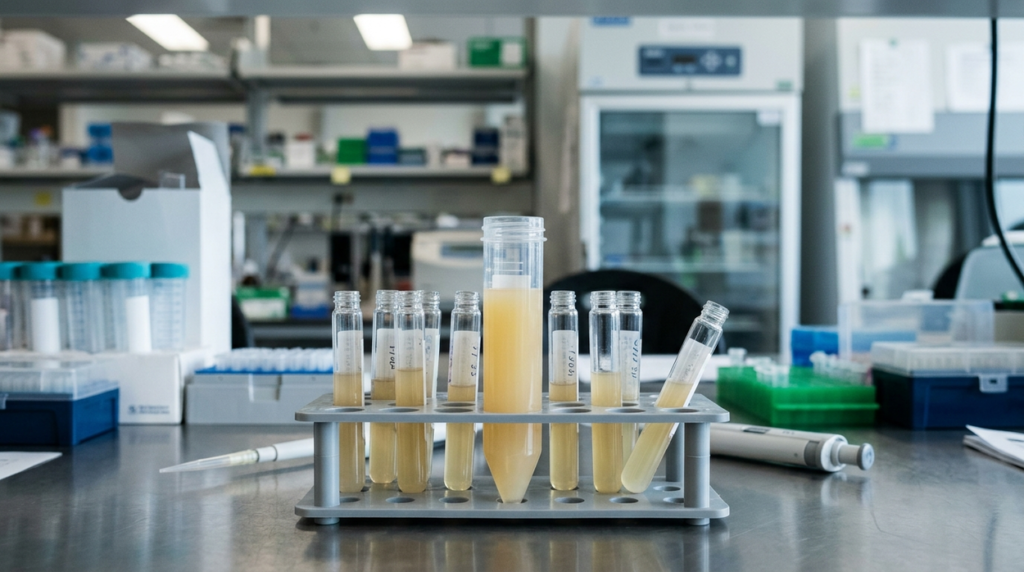
Semen is a complex biological fluid rather than a homogeneous substance. Its principal cellular component is the spermatozoon, while the surrounding seminal plasma contains secretions contributed by the male reproductive tract and accessory glands.
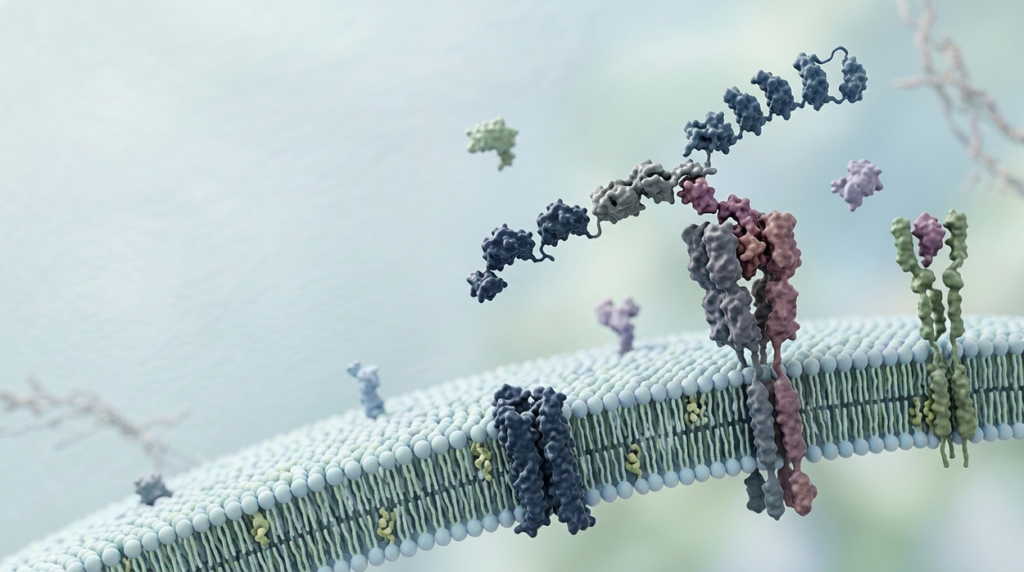
This distinction matters because researchers can investigate the sperm cells themselves or examine the biochemical environment in which those cells are transported and exposed. Seminal plasma contains proteins, metabolites, nucleic-acid-associated material, signaling molecules and other components that can be studied independently of spermatozoa.
Consequently, a single semen specimen can support several layers of investigation:
- Cellular research, including sperm concentration, morphology, motility and vitality.
- Functional research, examining how sperm cells behave under defined laboratory conditions.
- Biochemical research, including analysis of seminal-plasma proteins and metabolites.
- Molecular research, including genomic, epigenetic, transcriptomic and other omics approaches.
- Exposure research, where semen characteristics are examined in relation to environmental, occupational or pharmaceutical factors.
Research reviews have highlighted seminal plasma as a potentially informative biological fluid because of its diverse protein and molecular composition.
Semen as a window into male reproductive biology
Semen characteristics can provide indirect information about processes such as sperm production, maturation and function. Researchers may therefore use semen-derived measurements to investigate changes in reproductive biology over time or in response to an intervention.
However, semen parameters should not automatically be interpreted as direct measures of overall health or fertility. Human reproduction involves multiple biological systems, and semen characteristics can vary substantially both between individuals and within the same individual.
This is one reason repeated sampling can be particularly valuable in longitudinal studies. A research design involving multiple time points can help investigators distinguish persistent biological patterns from variation associated with a particular collection event.
The WHO manual emphasizes standardized examination and processing partly because consistency improves the comparability of results between laboratories and studies.
Major Biomedical Research Applications of Human Semen Samples
Male reproductive and fertility research
One of the most established uses of human semen research is the investigation of male reproductive biology. Researchers may study sperm concentration, total sperm number, motility, morphology and vitality to characterize reproductive function or investigate factors associated with altered semen characteristics.
These measurements can also be used in studies of spermatogenesis, reproductive interventions and assisted-reproduction research.
Importantly, research interpretation should remain tied to the study question. A change in one semen parameter does not necessarily establish a change in fertility, disease status or general health.
Sperm biology and cellular-function research
Sperm cells have highly specialized structures and functions, making them useful for cellular and molecular studies.
Research may investigate:
- Sperm movement and motility patterns
- Morphological characteristics
- Cellular viability
- Membrane and mitochondrial function
- Oxidative stress
- DNA integrity and chromatin characteristics
- Functional responses under experimental conditions
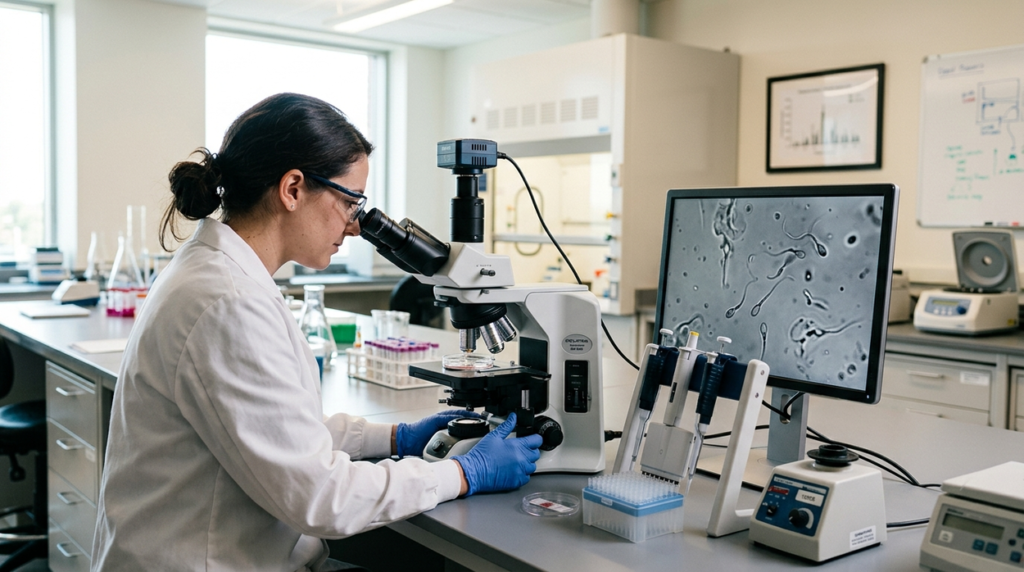
Computer-assisted sperm analysis can provide quantitative measurements of sperm movement and related characteristics. The WHO sixth edition includes expanded material concerning computer-aided sperm analysis and specialized semen examinations.
Advanced tests should nevertheless be selected according to the scientific question. A sophisticated assay is not automatically more informative if the endpoint is poorly connected to the underlying hypothesis or has not been adequately validated.
Reproductive toxicology and pharmaceutical research
Human semen samples can also contribute to research investigating potential reproductive effects of pharmaceuticals, environmental chemicals and occupational exposures.
Researchers may examine whether an exposure is associated with changes in:
- Sperm concentration or total number
- Motility
- Morphology
- Vitality
- DNA integrity
- Oxidative-stress-related measures
- Molecular characteristics of sperm or seminal plasma
Such studies are particularly valuable when semen measurements are integrated with exposure data and other biological endpoints.
A semen finding should not, however, be interpreted in isolation as proof of toxicity. Reproductive-toxicology studies require appropriate controls, exposure characterization, consideration of confounding factors and a study design capable of distinguishing association from causation.
Environmental and lifestyle research
Human semen research has also been used to investigate relationships between reproductive parameters and environmental or lifestyle factors.
Research areas can include exposure to pollutants, occupational conditions, heat, tobacco smoke, alcohol, diet and other factors. These studies may help identify associations that can subsequently be investigated through more targeted experimental or epidemiological research.
The distinction between association and causation is especially important here. If a population exposed to a particular environmental factor shows different semen characteristics, that observation does not by itself demonstrate that the exposure caused the difference. Age, health status, occupation, medication use, socioeconomic factors and other variables may contribute.
Biomarker and molecular research
One of the most active areas of human semen research involves molecular characterization.
Seminal plasma can be examined using techniques such as proteomics and metabolomics, while sperm-associated material can be investigated through genomic, epigenetic and transcriptomic approaches. Researchers are also studying extracellular vesicles and other molecular components.
A systematic review of semen-based fertility biomarkers identified research involving DNA structure and integrity, genomics, epigenomics, transcriptomics, metabolomics and proteomics.
These approaches are promising for understanding reproductive mechanisms and identifying candidate biomarkers. However, discovery is not the same as clinical validation. A molecular signal observed in one study requires analytical confirmation, replication in independent populations and assessment of clinical relevance before it can be considered a reliable diagnostic biomarker.
What Researchers Can Measure in Human Semen Samples
Conventional semen characteristics
Basic semen examination can generate several important research endpoints.
Semen volume provides information about the quantity of ejaculate collected and can be affected by collection conditions and other biological factors.
Sperm concentration describes the number of spermatozoa per unit volume, while total sperm number combines concentration with semen volume.
Motility describes sperm movement and can be further characterized using standardized or computer-assisted approaches.
Morphology evaluates sperm structure and appearance according to defined laboratory criteria.
Vitality distinguishes viable sperm cells from non-viable cells and can be particularly relevant when motility is reduced.
These measurements are useful research variables, but they should not be treated as universal or standalone definitions of fertility. The WHO describes laboratory reference information and standardized methods while also distinguishing laboratory assessment from broader clinical decision-making.
🏢 Featured Research Institutes Directory Listing
Looking for verified and trusted research institutes partners related to this topic? Explore our comprehensive directory.
Explore Directory →Advanced sperm-function assessments
Depending on the hypothesis, researchers may also examine sperm DNA integrity or fragmentation, oxidative-stress-related measures, mitochondrial function and other specialized endpoints.
Computer-assisted sperm analysis can provide detailed quantitative information about sperm movement. Specialized functional assays may also investigate cellular characteristics that are not captured by conventional semen analysis.
The main methodological issue is comparability. Different laboratories can use different instruments, preparation procedures, thresholds and analytical algorithms. Results from two studies should therefore not automatically be treated as interchangeable simply because they use the same broad terminology.
Seminal-plasma measurements
Seminal plasma provides another research layer beyond direct sperm analysis.
Researchers may investigate:
- Proteins and peptides
- Metabolites
- Hormonal and signaling molecules
- Inflammatory markers
- Oxidative-stress-related molecules
- Extracellular vesicles
- Cell-free nucleic acids and other molecular components
Proteomic and metabolomic research has been particularly active because these approaches can reveal molecular patterns that are not apparent from conventional semen characteristics alone.
The potential is significant, but reproducibility remains important. Differences in sample preparation, analytical platforms, participant populations and statistical methods can produce different molecular signatures. Biomarker research therefore benefits from independent validation rather than reliance on a single discovery dataset.
From Participant to Laboratory: The Human Semen Sample Workflow
Participant recruitment and study eligibility
A research-quality semen sample begins with a clearly defined study population.
Before collection, investigators should establish inclusion and exclusion criteria that match the research question. Relevant participant characteristics and potential confounders should also be identified in advance.
For example, a study examining environmental exposure may need detailed information about occupation, exposure history and relevant lifestyle factors. A pharmaceutical study may need to document medication use and treatment timing.
The goal is not to collect every conceivable piece of information, but to capture variables that could materially affect interpretation.
Pre-collection conditions researchers need to document
Collection conditions can influence semen measurements, making pre-collection documentation an important part of study design.
Depending on the protocol, researchers may need to document:
- Ejaculatory abstinence period
- Current medications or interventions
- Recent illness or fever
- Relevant lifestyle factors
- Occupational or environmental exposures
- Collection date and time
- Study-specific collection circumstances
Ejaculatory abstinence is particularly important. A systematic review of 28 publications found that longer abstinence was generally associated with increased semen volume and sperm count, while findings for motility, morphology and DNA fragmentation were more inconsistent.
The practical implication is not that one abstinence period is universally optimal for every research question. Rather, researchers should define the relevant criterion for their protocol and record it consistently.
Sample collection and identification
Human semen collection requires both scientific standardization and participant sensitivity.
Participants should receive clear, study-specific instructions, and specimen identification procedures should be established before collection begins. Accurate labeling and documentation are essential when samples will undergo multiple analyses or be stored for future research.
Privacy is equally important. The collection process involves sensitive reproductive information, so participant dignity and confidentiality should be incorporated into study operations rather than treated as administrative details.
Transport and time-to-analysis
Once collected, the sample enters a time-sensitive pre-analytical stage.
Researchers should document the interval between collection and laboratory processing and maintain environmental conditions specified by the validated study protocol. Delays or uncontrolled conditions can introduce variability, particularly for measurements that depend on sperm movement or other time-sensitive characteristics.
The WHO manual explicitly organizes semen examination around the timing of sample reception, initial handling and subsequent analytical steps, reflecting the importance of controlled laboratory workflow.
Laboratory processing and aliquoting
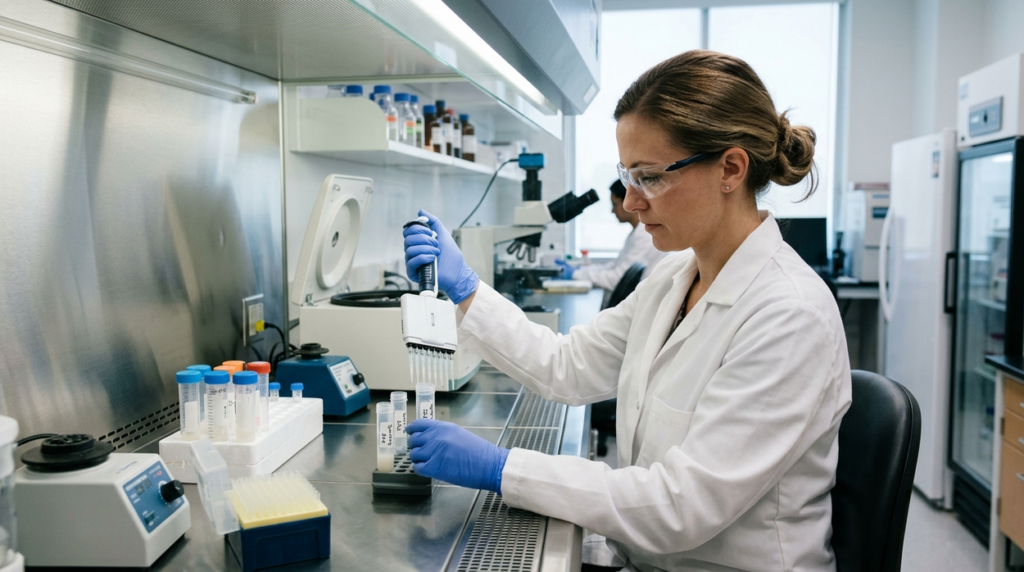
Processing should be matched to the planned assays.
A study involving conventional semen analysis, DNA-related measurements and seminal-plasma proteomics may require different processing streams. Establishing these requirements before recruitment begins helps avoid unnecessary handling and reduces the risk of inconsistent sample preparation.
Where multiple analyses are planned, aliquoting can help preserve defined portions for specific assays. For archived specimens, researchers should also record storage conditions and freeze-thaw history.
Organizations outsourcing specialized testing may need to assess laboratory expertise, analytical capabilities, quality systems and relevant biospecimen experience when selecting a research partner. A structured approach to selecting the right CRO for a clinical trial can also be useful when evaluating external research services.
Why Pre-Analytical Variables Can Change Research Results
Ejaculatory abstinence
Abstinence duration is one of the clearest examples of how a factor occurring before laboratory analysis can affect research data.
Longer abstinence has been associated with greater semen volume and sperm count, but the evidence is less consistent for other parameters. The systematic review by Hanson and colleagues found contradictory or inconclusive results for motility, morphology and DNA fragmentation, illustrating why semen research should avoid simplistic assumptions about the effect of abstinence.
A well-designed study therefore treats abstinence as a documented research variable rather than an incidental detail.
Time between collection and analysis
The interval between ejaculation and analysis can affect measurements, especially those involving sperm movement and other characteristics that can change after collection.
Exact collection and processing times should therefore be recorded. Multi-site studies should establish consistent timing requirements so that apparent differences between sites are not actually differences in sample handling.
Participant-level biological variability
Semen characteristics can vary because of differences in age, health status, medication use, lifestyle, environmental exposure and other biological factors.
Researchers need to distinguish biological variability from technical variability. Biological variability reflects genuine differences between participants or changes within an individual. Technical variability arises from collection, processing, instrumentation or analytical procedures.
Both need to be considered during study design and statistical analysis.
Repeated sampling and longitudinal studies
A single semen sample may not fully represent an individual’s reproductive biology.
Repeated sampling can provide a stronger basis for longitudinal research when the research question concerns changes over time, intervention effects or exposure-related variation. The value of repeated measurements depends on maintaining comparable collection, processing and analytical conditions at each time point.
Consistency is particularly important because otherwise a difference between two samples could reflect a procedural change rather than a biological change.
Standardization, Quality Control and Reproducibility
Why standardized methods matter
Semen research can become difficult to compare when laboratories use substantially different collection, preparation or analytical methods.
The WHO sixth edition was developed specifically to support standardized, evidence-based examination and processing and to improve comparability between laboratories. It includes basic, extended and advanced examinations as well as quality-control considerations.
For research teams, the broader lesson is straightforward: the protocol should be defined before sample collection begins, not reconstructed after results are generated.
Laboratory quality assurance
Quality systems should address the complete analytical workflow.
Important components can include:
- Written standard operating procedures
- Equipment calibration and maintenance
- Staff competency and training
- Internal quality-control procedures
- Appropriate quality-control materials or processes
- Method validation where required
- Documentation of deviations
- Consistent data recording
Quality control is especially important for specialized assays because technical differences can otherwise be mistaken for biological findings.
Inter-laboratory comparability
Multi-center studies face an additional challenge: samples may be collected at different sites and analyzed using different equipment or procedures.
A robust study can reduce this variability by harmonizing collection instructions, processing intervals and analytical methods. Researchers should document equipment, assay versions and meaningful methodological differences.
🏢 Featured Research Institutes Directory Listing
Looking for verified and trusted research institutes partners related to this topic? Explore our comprehensive directory.
Explore Directory →In some studies, centralized analysis may be appropriate; in others, distributed testing may be necessary for operational or scientific reasons. The correct choice depends on the research design.
Metadata are part of the research sample
A biological specimen without sufficient metadata can lose much of its scientific value.
Researchers should consider preserving information such as:
- Collection date and time
- Abstinence interval
- Time to processing
- Processing method
- Storage conditions
- Freeze-thaw history
- Relevant participant characteristics
- Relevant exposure information
- Analytical method and instrumentation
These data help investigators determine whether an observed result reflects biology, pre-analytical variation or laboratory methodology.
Preserving and Storing Human Semen Samples for Research
When fresh samples may be appropriate
Fresh samples can be appropriate when the research endpoint is time-sensitive or when preservation itself could influence the characteristic being studied.
Immediate analysis may therefore be preferable for certain functional measurements. The decision should be based on the assay and research question rather than convenience.
Cryopreservation and archived specimens
Cryopreservation can support longitudinal research and biobanking by allowing specimens or sperm preparations to be retained for later analysis.
The WHO manual includes dedicated material covering sperm preparation and cryopreservation, reflecting the importance of validated preservation procedures in semen laboratory workflows.
Archived research specimens require more than a freezer. Researchers need defined labeling systems, storage records, access controls, monitoring procedures and validated freezing and thawing methods appropriate to the intended research use.
Designing a semen biobank
A semen biobank should be designed around future scientific requirements.
Before collecting large numbers of specimens, researchers should define:
- Intended research uses
- Sample identifiers
- Required metadata
- Storage conditions
- Retention periods
- Access permissions
- Future-use rules
- Procedures for tracking and disposition
Participant identity should be separated from research identifiers wherever required by the study’s privacy and governance framework.
Ethical, Privacy and Biosafety Considerations
Informed consent for semen-based research
Semen research involves human biospecimens and sensitive reproductive information, so consent should be appropriate to the study design.
Participants should understand, as applicable:
- What specimen will be collected
- Why it is being collected
- What types of testing may be performed
- Whether the specimen will be stored
- Whether future research may be permitted
- How associated information will be handled
- Whether samples may be shared with other researchers
Consent requirements vary by jurisdiction and study design. In the United States, HHS/OHRP guidance explains that research involving coded biospecimens can fall under different regulatory categories depending on how the specimens and associated information are obtained, identified and used.
Privacy and sensitive reproductive information
Semen-related research data can reveal highly sensitive reproductive information. Access should therefore be limited to authorized personnel, and coding or pseudonymization should be used where appropriate.
Researchers should also avoid collecting or sharing identifying information that is not necessary for the research objective.
Institutional ethics and human-subject oversight
Human biospecimen research may require institutional ethics or human-subject review depending on jurisdiction, study design, consent arrangements and whether specimens are identifiable.
For example, U.S. requirements can differ between research involving newly collected specimens, coded specimens and secondary use of existing biospecimens. Institutions should therefore determine the applicable regulatory pathway rather than assuming that all semen research is subject to one uniform rule.
Biosafety and laboratory handling
Human-derived specimens should be handled under the applicable institutional biosafety procedures.
Laboratory teams should consider potential infectious risks, appropriate PPE, containment requirements, specimen transport, decontamination and biological-waste management. Staff training and documented procedures should be established according to the laboratory’s risk assessment and applicable regulations.
Common Research Challenges When Working With Human Semen
Participant recruitment and sample availability
Recruiting participants for semen studies can be challenging because specimen collection is intimate and may create privacy or logistical concerns.
Clear communication, respectful collection procedures and appropriate confidentiality protections can help reduce participation barriers.
Biological and analytical variability
Researchers must account for both biological variation and measurement variation.
Two samples from different individuals may differ for legitimate biological reasons, while two measurements of the same specimen may differ because of analytical conditions. Good study design attempts to separate these sources of variation.
Inconsistent collection conditions
Differences in abstinence duration, collection environment, sample transport and processing time can make datasets harder to compare.
This becomes especially important in multi-center studies, where apparently minor procedural differences can accumulate across sites.
Small or heterogeneous study populations
Small studies can be useful for exploratory research, but their findings may not generalize to broader populations.
Heterogeneous participant populations can also introduce confounding if important characteristics are not measured or controlled statistically. Transparent reporting of participant characteristics is therefore essential.
Overinterpreting semen parameters
A semen parameter should be interpreted according to the actual research endpoint.
For example, a difference in sperm concentration should not automatically be described as evidence of infertility, disease or improved general health. Clinical and biological interpretation requires consideration of the complete context.
Where Human Semen Research Is Expanding
Multi-omics and molecular profiling
Multi-omics approaches are expanding the ability to study sperm and seminal plasma at several molecular levels.
Proteomics can investigate protein patterns, metabolomics can characterize small-molecule profiles, and genomic or epigenetic approaches can investigate genetic and regulatory characteristics.
Reviews of semen biomarker research suggest that these approaches may help identify molecular patterns associated with reproductive conditions, but clinical translation still requires rigorous validation.
Seminal plasma as a source of reproductive biomarkers
Seminal plasma is attracting interest as a potential source of biomarkers because it contains a diverse molecular mixture associated with the reproductive tract.
Researchers have identified candidate proteins and other molecular signatures associated with reproductive conditions. However, different studies can produce heterogeneous results, and independent validation remains necessary before a candidate biomarker can be considered clinically established.
This distinction between biomarker discovery and biomarker validation is critical. A promising molecular signature may be useful for generating hypotheses without yet being suitable for routine clinical diagnosis.
🏢 Featured Research Institutes Directory Listing
Looking for verified and trusted research institutes partners related to this topic? Explore our comprehensive directory.
Explore Directory →Digital and automated semen analysis
Automation is another developing area.
Computer-assisted sperm analysis can quantify aspects of sperm movement and provide standardized digital measurements. Image-based approaches may also support more detailed characterization of sperm morphology and function.
The potential advantages include greater quantitative consistency and the ability to process large datasets. Limitations can include instrument-specific algorithms, sample preparation requirements, image quality and the need for appropriate validation.
The WHO sixth edition includes expanded consideration of computer-aided sperm analysis and specialized examination approaches.
Integration with broader reproductive-health research
The future of human semen research is unlikely to depend on semen analysis alone.
Semen-derived measurements can be integrated with reproductive toxicology, environmental-health studies, fertility science, molecular biology, exposure assessment and other fields.
This multidisciplinary approach can provide a more complete picture than relying on a single semen parameter. At the same time, more measurements do not automatically mean better science; each additional endpoint should have a clear rationale and appropriate analytical plan.
What Makes a High-Quality Semen Research Study?
Define the research question before selecting the assay
The biological question should determine the measurements.
Researchers should first establish what they are trying to understand and then select endpoints capable of addressing that hypothesis. Collecting large numbers of poorly justified measurements can increase analytical complexity without improving scientific interpretation.
Standardize collection and processing
Collection instructions, abstinence criteria, processing intervals and analytical methods should be defined before recruitment begins.
Any meaningful deviations should be documented rather than ignored.
Capture relevant metadata and confounders
Participant characteristics, exposure history, collection conditions, processing information and storage history can all influence interpretation.
The appropriate metadata depend on the research question, but the principle is consistent: researchers should identify important confounders before analyzing the results.
Build quality control into the study design
Quality control should be part of the research protocol rather than an afterthought.
SOPs, staff training, equipment maintenance, calibration, analytical validation and reproducibility checks can all contribute to more reliable data.
Plan ethical and data-governance requirements from the beginning
Consent, privacy, future sample use, data access and biosafety should be addressed during study planning.
This is particularly important for biobanks and longitudinal studies, where samples may remain available long after the original collection event.
FAQs
1. What are human semen samples used for in biomedical research?
Human semen samples can be used for research into male reproductive biology, sperm function, reproductive toxicology, environmental exposures and molecular biomarkers. Researchers may study both spermatozoa and seminal plasma, allowing cellular, biochemical and molecular investigations.
2. What can researchers measure in a human semen sample?
Common measurements include semen volume, sperm concentration, total sperm number, motility, morphology and vitality. Depending on the research question, investigators may also study DNA integrity, oxidative stress, mitochondrial function, molecular biomarkers, proteins, metabolites and other specialized endpoints.
3. Why is sample collection standardization important in semen research?
Semen characteristics can change according to factors such as abstinence duration, processing time, participant characteristics and laboratory methods. Standardized collection and processing reduce avoidable variability and make results easier to compare across participants, laboratories and study sites.
4. Can human semen samples be stored for future research?
Yes. Depending on the intended research application, sperm-containing specimens or prepared sperm samples can be cryopreserved and stored for future work. Proper identification, validated preservation procedures, storage monitoring, metadata and governance are essential for a research biobank.
5. What ethical considerations apply to human semen research?
Key considerations include informed consent, participant privacy, confidentiality of reproductive information, appropriate human-subject oversight, future use of stored specimens and biosafety. Exact requirements depend on the jurisdiction, study design and whether specimens are identifiable or coded.
Conclusion
Human semen samples can support far more than conventional fertility assessment. They provide researchers with access to spermatozoa and seminal plasma that can be studied at cellular, biochemical and molecular levels, making them useful for reproductive biology, sperm-function research, reproductive toxicology, environmental-health studies and biomarker discovery.
The scientific value of these specimens, however, depends heavily on how they are collected, processed, analyzed and interpreted. Abstinence duration, processing time, participant characteristics, laboratory methodology and storage history can all influence results. Standardization and quality control are therefore fundamental to reproducible semen research.
The field is also moving beyond conventional measurements. Proteomics, metabolomics, molecular profiling, automated analysis and other advanced approaches are creating new opportunities to investigate reproductive biology and identify candidate biomarkers. Yet promising research findings still require analytical validation, independent replication and appropriate clinical evaluation before they can be translated into routine applications.
Ultimately, high-quality human semen research is not defined simply by the sophistication of the assay. It depends on the entire research system: a well-defined question, appropriate participants, standardized specimen handling, reliable laboratory methods, meaningful metadata, rigorous quality control and responsible ethical governance.