
Across much of Asia, biologic medicines have become central to treating cancer, autoimmune disease, diabetes, and other complex conditions — but their price tags often put them out of reach for large parts of the population they could help. That gap between what biologics can do and who can actually access them is where biosimilars in Asia are starting to matter. Once a reference biologic’s exclusivity period ends and a market has the regulatory and manufacturing conditions to support competition, biosimilars can begin to reshape that picture: more treatment options, competitive pricing pressure, and, potentially, wider patient access.
Biosimilars, as defined by regulators including the World Health Organization and the U.S. FDA, are biologic products that are highly similar to an approved reference product, with no clinically meaningful differences in safety or effectiveness — not simple copies in the way a generic tablet copies a chemical drug. Rising biosimilar demand across Asia matters not only as a market story, but because of what it could mean for affordability, access, manufacturing, and healthcare-system sustainability. And Asia is not one uniform market: regulation, healthcare spending, reimbursement, and manufacturing capability differ widely from country to country.
What Is Driving Biosimilar Demand Across Asia?
The Growing Use of Biologic Medicines
Biologic therapies have moved from niche treatments to standard parts of care across oncology, rheumatology, diabetes management, and other chronic disease areas in many Asian healthcare systems. Monoclonal antibodies for cancer, TNF inhibitors for autoimmune conditions, and insulin analogues for diabetes are now routinely prescribed where a decade ago they were limited to a smaller group of patients. As biologic prescribing has grown, so has the financial strain on patients, insurers, and public health budgets — creating a natural opening for biosimilar competition once reference products lose market exclusivity.
Pressure to Control Healthcare Costs
Governments, hospital systems, and insurers across the region face sustained pressure to manage rising drug spending as biologic use expands. Biosimilars are one of several tools being explored to potentially increase competition and ease that pressure, alongside procurement reform and tiered pricing. It would be inaccurate to say every biosimilar delivers a fixed savings percentage — actual outcomes depend on local competition, how many biosimilar entrants a given molecule attracts, and how procurement is structured.
Expanding Healthcare Access
Where treatment costs have historically limited biologic access, biosimilars can potentially widen the pool of patients who are treated, or treated earlier in their disease course. But affordability alone doesn’t guarantee adoption. Health systems still need functioning reimbursement pathways, confident prescribers, and reliable supply before expanded access becomes a reality rather than a possibility.
Why Asia Is Not One Single Biosimilars Market
It’s tempting to talk about “the Asian biosimilars market” as a single entity, but the region’s regulatory and healthcare landscapes differ sharply by country.
Japan’s biosimilar market has grown gradually since the Pharmaceuticals and Medical Devices Agency (PMDA) approved its first biosimilar in 2009. Financial incentives built into hospital reimbursement have more recently encouraged higher biosimilar uptake in oncology, even though Japan does not have a formal interchangeability designation comparable to some Western markets.
China has approved biosimilars in significant numbers over roughly the past decade, with technical guidelines from its national regulator maturing alongside broader drug-review reforms. This activity is closely tied to the country’s expanding domestic biologics manufacturing base.
India’s framework rests on joint oversight between its drug regulator and biotechnology authorities, and it has been under active revision to move toward the more analytically focused approach used by regulators elsewhere. India’s biosimilar sector also draws on decades of generics manufacturing experience.
🏢 Verified Pharma Manufacturers Directory
Looking for verified and trusted biopharmaceutical manufacturing partners related to this topic? Explore our comprehensive directory.
Explore Directory →South Korea, by contrast, has built an export-oriented biosimilar industry, with domestic manufacturers now supplying biosimilars into Europe and the United States rather than developing primarily for the local market.
Southeast Asian markets generally rely more heavily on imported or regionally supplied biosimilars, with reimbursement systems and physician familiarity still developing in many countries.
How Biosimilars Could Change Biologic Medicine Access
Potentially Lower Treatment Costs
Additional competition from biosimilar entrants can create downward pressure on biologic prices, particularly once several biosimilars compete for the same reference product. The scale of any savings varies by market, by procurement structure, and by how many competitors actually enter — there is no single percentage that applies universally across products or countries.
More Treatment Options for Patients
Every additional approved biosimilar gives healthcare systems and physicians another option to weigh against clinical need, cost, and patient circumstances. This matters most in markets where a single high-cost reference biologic has effectively limited prescribing choices for years.
Greater Use of Biologic Therapies
Improved affordability and availability can, in principle, expand the number of patients who receive biologic treatment, or who receive it earlier in their disease course. Whether that potential is realized depends on reimbursement decisions, how confident physicians feel about prescribing biosimilars, patient acceptance, consistent supply, and the regulatory rules governing substitution. None of these factors moves automatically, and they can progress at very different speeds from one country to the next.
Asia’s Biosimilar Manufacturers Are Becoming More Important
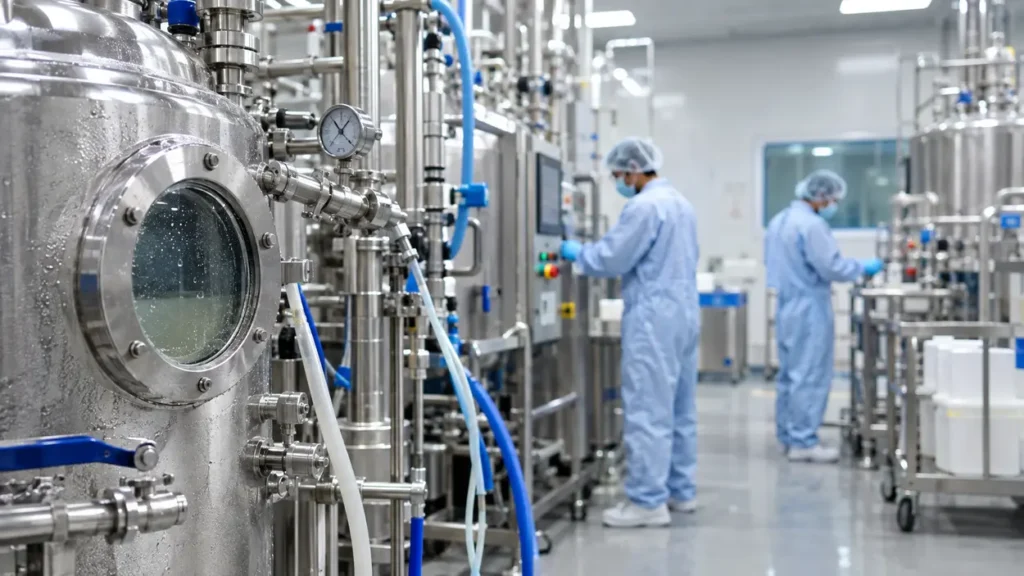
Asia’s growing role in biosimilars isn’t limited to prescribing and reimbursement policy — it also reflects a shift in where biologics are actually made. Manufacturers across the region have invested in bioprocessing capacity, cell-line development, and the analytical characterization work needed to demonstrate biosimilarity under increasingly rigorous international standards.
South Korea is a notable example: domestic biosimilar makers now hold meaningful shares of several biosimilar categories in Europe and the United States, built on sustained manufacturing investment. China has expanded its domestic biologics manufacturing base alongside its growing number of biosimilar approvals, while India continues to draw on established pharmaceutical manufacturing experience as it adapts to the more complex demands of biologics production, including the quality systems and audit standards that regulators increasingly expect from any facility supplying international markets.
This expanding base matters for the broader network of biopharmaceutical manufacturing companies serving the region: as quality systems mature and export approvals accumulate, Asian-made biosimilars are increasingly competing on the same regulatory footing as products from established markets.
What Could Still Slow Biosimilar Adoption?
Regulatory Differences
Biosimilar approval pathways differ across the region in scope and rigor. Some regulators have historically required more extensive comparative clinical data for certain oncology biosimilars than others, such as the European Medicines Agency (EMA), currently ask for, while other frameworks are still being revised to reduce reliance on animal testing in favor of analytical comparability. These differences complicate multi-country development and regional expansion strategies for manufacturers.
🏢 Verified Pharma Manufacturers Directory
Looking for verified and trusted biopharmaceutical manufacturing partners related to this topic? Explore our comprehensive directory.
Explore Directory →Physician and Patient Confidence
Even where biosimilars are approved and competitively priced, prescribing habits change slowly. Physicians need clear clinical evidence and practical experience before confidently switching patients from a familiar reference biologic, and patients may reasonably have questions about whether a biosimilar will work as well as the product they already know. This isn’t irrational skepticism — it reflects a genuine need for education, clear communication, and accumulated real-world evidence, especially in markets where biosimilars are still relatively new.
Pricing and Reimbursement
Regulatory approval is only the first step. Whether a biosimilar is actually prescribed and paid for depends on reimbursement policy, procurement systems, and the pricing incentives built into a given healthcare system. A biosimilar that is approved but poorly reimbursed, or one that offers hospitals and insurers little financial incentive to switch, may see limited real-world uptake regardless of its clinical profile.
Manufacturing and Supply Reliability
Biologics are inherently harder to manufacture consistently than small-molecule generics, given their sensitivity to production conditions. Maintaining robust quality systems, adequate capacity, and — where relevant — reliable cold-chain distribution is essential for biosimilar manufacturers building durable supply relationships with hospitals and health systems. A single supply disruption can undo years of physician and patient confidence-building.
What Rising Biosimilar Demand Means for the Pharmaceutical Industry
Rising biosimilar interest touches far more than biosimilar developers themselves. Biopharmaceutical manufacturers face growing pressure to think about pricing strategy and lifecycle management well before a reference product’s exclusivity expires. Contract manufacturing organizations are seeing increased demand for biologics-capable capacity, as companies without in-house manufacturing look for partners able to support complex bioprocessing at scale, as we explored in our earlier look at why biosimilars will dominate pharma’s next decade.
API and raw-material suppliers are affected too, since consistent biosimilar production depends on quality-assured inputs. Healthcare providers and distributors are adjusting procurement to accommodate multiple competing products rather than a single reference biologic, while reference-biologic manufacturers themselves are responding with strategies ranging from price adjustments to next-generation product development. None of this amounts to a single, uniform shift — the pace and shape of change differs by therapeutic area, by country, and by how consolidated the market for a given biologic already is.
What the Next Phase of Asia’s Biosimilar Market Could Look Like
The next several years are likely to bring more biosimilar approvals across the region, wider physician adoption as real-world evidence accumulates, and gradual expansion into therapeutic areas beyond the oncology and autoimmune categories where biosimilars have so far concentrated. Regional manufacturing capacity is expected to keep growing, and cross-border trade in Asian-made biosimilars — already visible in South Korea’s export performance — could extend to other manufacturing hubs as quality systems mature.
None of this will happen at the same pace everywhere. Japan, China, India, South Korea, and Southeast Asian markets are starting from different regulatory baselines, different levels of physician familiarity, and different reimbursement structures, and those starting points will keep shaping how quickly biosimilars move from approval to routine clinical use. Where market forecasts are cited, they’re best read as directional rather than precise — the underlying policy and clinical-adoption decisions that determine actual outcomes are still being made.
Frequently Asked Questions
Why is demand for biosimilars increasing in Asia? Rising use of biologic medicines, pressure on healthcare budgets, and a growing number of approved biosimilars are together increasing interest across Asian healthcare systems, even though the pace of adoption varies significantly by country.
🏢 Verified Pharma Manufacturers Directory
Looking for verified and trusted biopharmaceutical manufacturing partners related to this topic? Explore our comprehensive directory.
Explore Directory →Which Asian countries are active in biosimilars? Japan, China, India, and South Korea all have established biosimilar regulatory pathways along with meaningful development or manufacturing activity, though their roles differ — from South Korea’s export-focused manufacturing to India’s generics-based production base and China’s expanding domestic approvals.
Are biosimilars cheaper than biologic medicines? Biosimilars can increase competition and may lead to lower treatment costs, but the actual price difference depends on the market, the number of competing products, and local procurement and reimbursement policies — it’s not a fixed or guaranteed discount.
What challenges could limit biosimilar adoption? Differences in regulatory requirements between countries, the time needed to build physician and patient confidence, reimbursement and pricing structures, and the inherent complexity of manufacturing and supplying biologics reliably can all slow adoption even where a biosimilar is already approved.
Final Thoughts — Why Asia’s Biosimilar Growth Matters
Rising biosimilar demand across Asia is not simply a pharmaceutical market trend — it touches who gets access to biologic medicines, how healthcare budgets are managed, and where the next generation of biopharmaceutical manufacturing takes shape. The opportunity is real, but so are the conditions attached to it. Demand alone won’t determine how quickly biosimilars become an established part of Asian healthcare; regulatory policy, reimbursement decisions, physician and patient confidence, manufacturing quality, and reliable supply will all shape the pace of that shift, market by market.