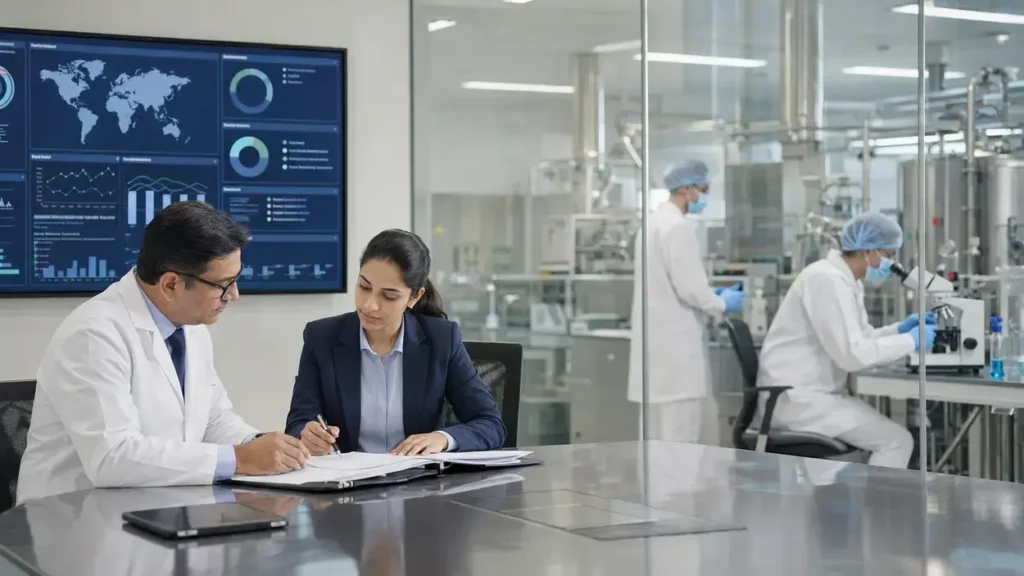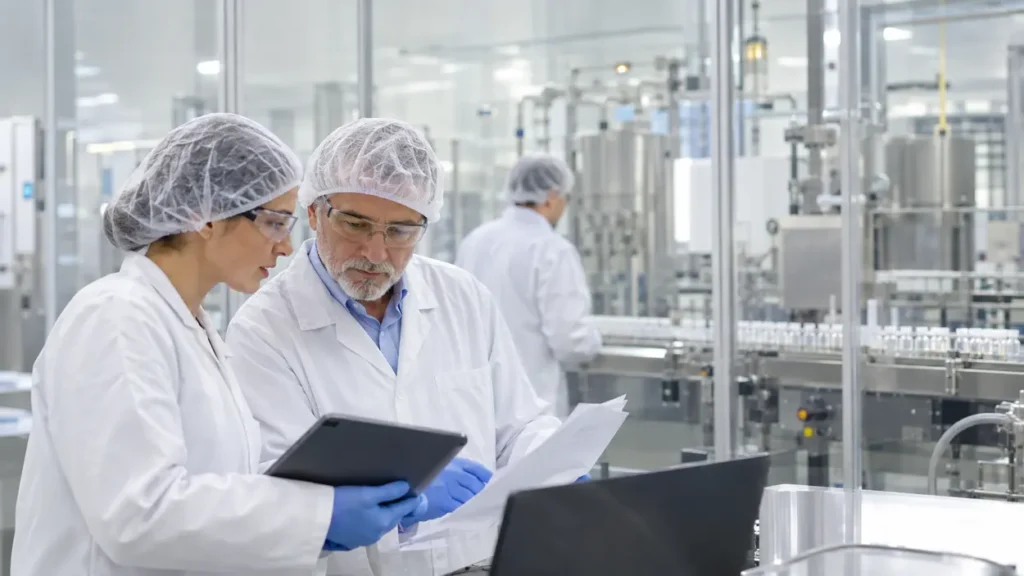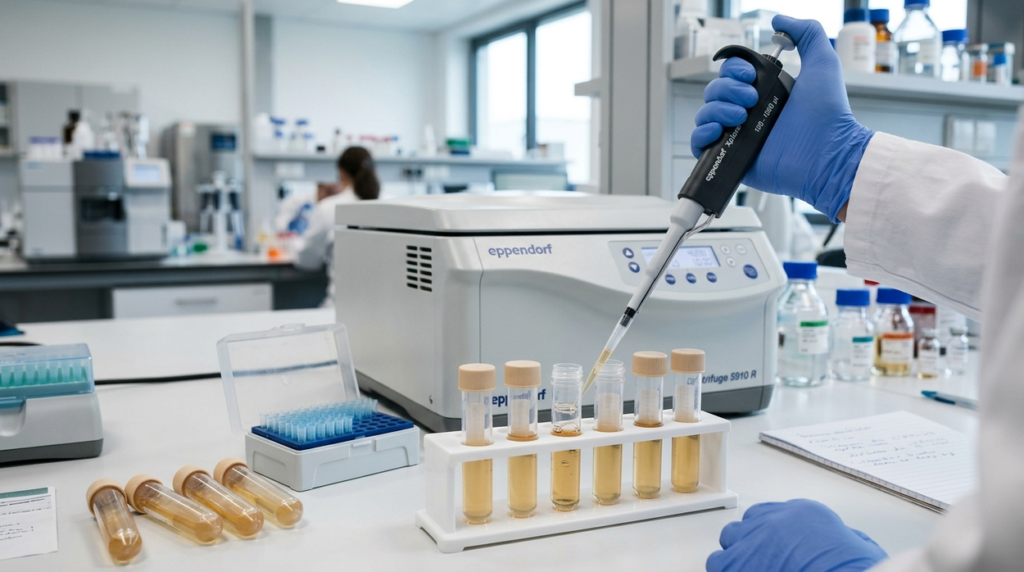
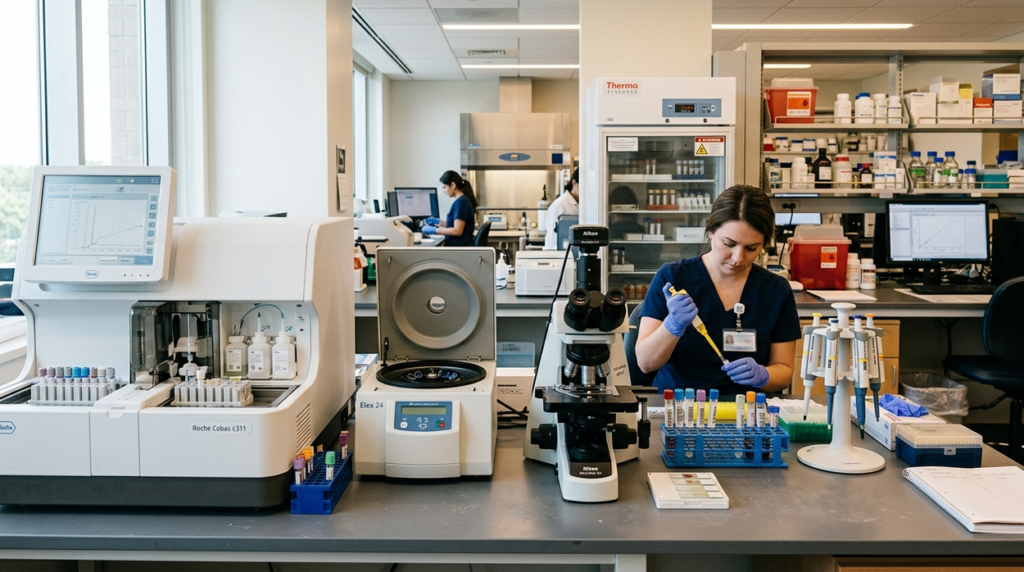
Medical laboratories rely on a combination of basic instruments, sample-processing equipment, analytical systems, diagnostic platforms and specialized technologies. A microscope, centrifuge or pipette may support routine work, while hematology analyzers, molecular platforms and automated chemistry systems can handle high-volume or specialized testing.
However, there is no universal list of equipment that every laboratory should purchase. Requirements depend on the tests being performed, sample types, workload, turnaround-time expectations, laboratory specialization, available infrastructure and staff capabilities.
Equipment selection is also more than a comparison of purchase prices. Installation, calibration, preventive maintenance, consumables, reagents, service support, training, downtime and eventual replacement can have a major effect on the real cost and usefulness of an instrument. WHO laboratory quality-management resources specifically treat equipment selection, installation, maintenance, calibration, documentation and retirement as interconnected parts of equipment management.
This guide explains common medical laboratory equipment names and their uses, shows which instruments are typically associated with different laboratory functions, and provides a practical framework for evaluating laboratory equipment before purchase.
What Is Medical Laboratory Equipment?
Medical laboratory equipment refers broadly to instruments, machines and systems used to prepare, process, analyze, measure, store or otherwise support laboratory specimens and testing workflows.
Depending on the laboratory, this can include everything from a basic microscope or micropipette to automated clinical analyzers, PCR systems, ultra-low-temperature freezers and specialized imaging equipment.
Medical laboratory equipment vs. laboratory supplies and consumables
The distinction between equipment and consumables is important when planning laboratory procurement.
Equipment is generally durable and used repeatedly over an extended period. Examples include:
- Microscopes
- Centrifuges
- Clinical chemistry analyzers
- Hematology analyzers
- PCR systems
- Incubators
- Autoclaves
- Laboratory refrigerators
- Freezers
- Biosafety cabinets
Consumables and supplies, by contrast, are items that are used up, discarded or replaced during laboratory operations. Examples include:
- Test tubes
- Pipette tips
- Microscope slides
- Reagent kits
- Sample containers
- Gloves
- Filters
- Culture media
A laboratory may therefore purchase a sophisticated analyzer but still be unable to operate it reliably if the required reagents, calibration materials, consumables or maintenance support are unavailable.
Why laboratory equipment matters to diagnostic testing
Laboratory equipment supports several stages of the testing process:
- Sample preparation — separating, mixing, diluting or preparing specimens.
- Measurement and analysis — determining concentrations, cell counts or other analytical parameters.
- Identification — examining microorganisms, cells, tissues or molecular targets.
- Molecular testing — extracting and amplifying nucleic acids.
- Storage — maintaining samples, reagents and reference materials under controlled conditions.
- Quality control — monitoring analytical performance and identifying problems.
- Documentation and reporting — transferring or recording test information.
Equipment management is consequently part of laboratory quality management rather than simply an engineering or procurement function. WHO describes proper equipment management as important for accurate, reliable and timely testing.
Equipment requirements vary by laboratory type
A clinical chemistry laboratory will not have exactly the same equipment profile as a microbiology or molecular diagnostics laboratory.
Common laboratory environments include:
- Clinical laboratories
- Hematology laboratories
- Clinical chemistry laboratories
- Microbiology laboratories
- Pathology and histology laboratories
- Molecular diagnostic laboratories
- Research laboratories
- Biotechnology and cell-culture laboratories
The correct procurement question is therefore not simply “What laboratory equipment is available?” but “What equipment is appropriate for the tests and workflow this laboratory needs to perform?”
Medical Laboratory Equipment Names and Their Uses
The following categories cover many of the instruments commonly encountered in medical, diagnostic, biotechnology and research laboratories.
Microscopes
Microscopes remain fundamental laboratory instruments for examining cells, tissues, microorganisms and other specimens.
Common microscope types
Compound microscope: Used for routine microscopic examination of prepared slides, including applications in hematology, microbiology and parasitology.
Binocular microscope: A compound microscope with two eyepieces, commonly preferred for routine laboratory work because it allows observation with both eyes.
Fluorescence microscope: Uses fluorescent signals to visualize specific structures, organisms or biomarkers. It can be important in specialized diagnostic and research workflows.
Digital microscope: Combines microscopy with digital imaging, allowing images to be captured, stored, reviewed or shared electronically.
When selecting a microscope, laboratories should consider optical quality, magnification, illumination, objective configuration, ergonomics and whether digital imaging is actually required. Purchasing the highest magnification available is not necessarily the best decision if it does not match the intended application.
Centrifuges
A centrifuge separates components of a sample by applying centrifugal force. It is one of the most widely used pieces of laboratory equipment.
Common types include:
- Benchtop centrifuges
- Microcentrifuges
- Refrigerated centrifuges
- High-speed centrifuges
- Clinical centrifuges
Centrifuges may be used to process blood, plasma, serum, urine and other specimens, as well as samples used in molecular biology and research.
Important selection factors include:
- Maximum speed
- Relative centrifugal force (RCF)
- Rotor type
- Tube compatibility
- Capacity
- Temperature control
- Acceleration and braking characteristics
- Safety features
A laboratory processing temperature-sensitive specimens may require refrigeration, while a molecular laboratory working with very small volumes may prioritize a microcentrifuge.
Laboratory Analyzers
Laboratory analyzers automate or standardize analytical measurements and are particularly important in laboratories processing large numbers of samples.
Clinical chemistry analyzers
Clinical chemistry analyzers measure substances in specimens such as serum, plasma or urine.
Depending on the platform, applications may include testing for:
- Glucose
- Enzymes
- Lipids
- Electrolytes
- Proteins
- Metabolites
- Other biochemical markers
Automated systems are generally suited to laboratories with sufficient testing volume to justify their capacity and operating requirements. Semi-automated systems may be more appropriate in smaller or lower-volume settings.
Hematology analyzers
Hematology analyzers automate cell counting and classification in blood samples.
A complete blood count workflow may involve parameters relating to:
- Red blood cells
- White blood cells
- Hemoglobin
- Platelets
- Cell indices
- White-cell differentials, depending on analyzer capability
When selecting a hematology analyzer, laboratories should assess expected sample volume, throughput, reagent requirements, maintenance needs and whether manual review remains necessary for particular samples.
Immunoassay analyzers
Immunoassay systems use antigen-antibody interactions to detect or quantify particular substances.
Applications can include measurement of:
- Hormones
- Antibodies
- Antigens
- Tumor-associated biomarkers
- Infectious-disease markers
- Other clinically relevant analytes
The appropriate system depends heavily on the test menu, required throughput, reagent availability and workflow.
Electrolyte analyzers
Electrolyte analyzers are designed to measure ions such as sodium, potassium and chloride, typically using ion-selective electrode technology.
They are commonly used in clinical settings where rapid electrolyte measurements are required.
Sample type, throughput, calibration procedures, consumables and integration with existing laboratory systems should all be considered during procurement.
Incubators
Laboratory incubators maintain controlled environmental conditions, most commonly temperature, for biological or microbiological processes.
Standard laboratory incubators
These can support microbiological culture and other applications requiring controlled temperature.
CO₂ incubators
CO₂ incubators are particularly important for cell culture. They control temperature and carbon dioxide concentration and may also provide humidity control.
Selection considerations include:
- Temperature stability
- CO₂ control
- Humidity
- Chamber capacity
- Contamination-control features
- Alarm systems
- Recovery time after door opening
A CO₂ incubator intended for sensitive cell culture work should not be evaluated using the same criteria as a simple microbiological incubator.
Autoclaves and Sterilization Equipment
Autoclaves use pressurized steam for sterilization and, depending on the application and validated cycle, may also be used for decontamination.
Laboratories may use autoclaves for appropriate:
- Glassware
- Instruments
- Media
- Laboratory materials
- Certain biological waste streams
The exact cycle depends on the load and intended application. Temperature, pressure, exposure time, chamber capacity, loading configuration and validation requirements should therefore be considered rather than assuming that every autoclave cycle is interchangeable.
WHO guidance notes that steam under pressure is widely used for sterilization and that manufacturer instructions should be followed for operation and cleaning.
🏢 Featured Biotech Industry Partner
Looking for verified and trusted biotechnology partners related to this topic? Explore our comprehensive directory.
Explore Directory →Laboratory Refrigerators and Freezers
Controlled-temperature storage is essential for many laboratory samples, reagents and biological materials.
Laboratory refrigerators
Often maintained around 2–8°C depending on the intended application and applicable requirements, laboratory refrigerators are used for temperature-sensitive reagents, specimens and other materials.
-20°C freezers
These are commonly used for materials that require frozen storage but do not need ultra-low temperatures.
-80°C ultra-low-temperature freezers
Ultra-low-temperature freezers are used for applications requiring substantially colder storage, including certain biological samples and research materials.
Important considerations include:
- Temperature uniformity
- Monitoring
- Alarms
- Data logging
- Door-opening frequency
- Storage capacity
- Backup power
- Emergency contingency plans
- Service support
A freezer’s stated temperature range alone does not determine whether it is suitable. The laboratory must consider what is being stored and the required storage conditions.
Pipettes and Liquid-Handling Equipment
Pipettes are essential for transferring measured liquid volumes.
Common types include:
- Single-channel micropipettes
- Multichannel pipettes
- Electronic pipettes
- Repeating pipettes
- Automated liquid handlers
Accuracy and precision are particularly important because small volume errors can affect downstream analytical results.
Selection should consider:
- Required volume range
- Accuracy and precision
- Ergonomics
- Tip compatibility
- Single- or multichannel requirements
- Calibration
- Maintenance
- User workload
Automated liquid handlers can improve consistency and throughput in suitable workflows, but their cost, programming requirements, maintenance and consumable dependencies need to be justified by the laboratory’s actual workload.
PCR and Molecular Laboratory Equipment
Molecular diagnostic laboratories require equipment designed around nucleic-acid extraction, amplification and detection.
Common equipment includes:
- Conventional PCR systems
- Real-time PCR/qPCR systems
- Thermal cyclers
- Nucleic-acid extraction systems
- Electrophoresis systems
- Gel documentation systems
- Supporting centrifuges and pipettes
PCR laboratories also require careful workflow design because contamination can produce misleading results. WHO guidance for molecular testing emphasizes separation of workflow areas and dedicated equipment where appropriate, as well as regular calibration and documented equipment management.
For buyers, the decision should therefore cover more than the PCR instrument itself. Extraction workflow, consumables, reagent availability, contamination control, software, data management and service support can be equally important.
Biosafety Cabinets and Containment Equipment
A biosafety cabinet (BSC) is designed to provide a controlled containment environment for specific laboratory procedures involving biological materials.
It should not be treated as simply a more sophisticated laboratory workstation.
The appropriate cabinet depends on the hazards associated with the work, the level of protection required and the laboratory’s risk assessment. The CDC’s 2026 sixth edition of Biosafety in Microbiological and Biomedical Laboratories emphasizes protocol-driven risk assessment rather than assuming that one containment approach applies to every laboratory activity.
Procurement considerations can include:
- Cabinet class and configuration
- Intended biological work
- Airflow characteristics
- Installation location
- Certification requirements
- Filter maintenance
- Decontamination procedures
- Service availability
Spectrophotometers and Related Analytical Instruments
A spectrophotometer measures how much light a sample absorbs at specified wavelengths.
UV-Vis spectrophotometers are widely used in research and analytical workflows for applications such as concentration estimation and characterization of substances that absorb light.
Important considerations include:
- Wavelength range
- Photometric accuracy
- Resolution
- Cuvette compatibility
- Sample volume
- Software
- Calibration requirements
The correct instrument depends on what the laboratory intends to measure rather than on the instrument’s maximum specification.
Water Purification Systems
Laboratory water quality can affect reagent preparation, analytical measurements and other laboratory processes.
Depending on the application, laboratories may use technologies such as:
- Reverse osmosis
- Deionization
- Distillation
- Ultrapure-water systems
- Combined purification systems
The required water quality should be defined by the laboratory application. Purchasing a high-specification purification system without identifying the actual water-quality requirement can create unnecessary operating and maintenance costs.
Filters, cartridges, membranes and other consumables should also be included in the procurement calculation.
Other Commonly Used Laboratory Equipment
A laboratory may also use a range of smaller or supporting instruments:
| Equipment | Primary use | Typical application |
| Vortex mixer | Rapid mixing | Sample and reagent preparation |
| Magnetic stirrer | Mixing solutions | Reagent preparation |
| Hot plate | Controlled heating | Laboratory preparation |
| Water bath | Uniform temperature control | Incubation and sample preparation |
| Shaker | Controlled agitation | Cell culture and sample processing |
| pH meter | Measuring acidity/alkalinity | Buffer and solution preparation |
| Analytical balance | Precise weighing | Reagent and analytical preparation |
| Drying oven | Controlled heating/drying | Glassware and laboratory materials |
| Hemocytometer | Manual cell counting | Cell culture and research |
| Automated cell counter | Cell counting | Research and biotechnology |
| Plate reader | Microplate measurement | ELISA and research assays |
| Plate washer | Automated washing | Microplate-based assays |
| Tube rotator | Gentle sample mixing | Sample preparation |
| Laboratory timer | Timing procedures | Routine laboratory workflows |
The list is not intended to represent a universal laboratory inventory. Equipment requirements should always be determined from the laboratory’s intended testing services.
Which Equipment Is Used in Different Types of Medical Laboratories?
Thinking in terms of laboratory function makes equipment selection considerably easier than starting with a generic laboratory equipment list.
Clinical Chemistry Laboratory Equipment
A clinical chemistry laboratory may require:
- Chemistry analyzers
- Electrolyte analyzers
- Centrifuges
- Micropipettes
- Refrigerators
- Freezers
- Water purification systems
- Balances
- pH meters
- Quality-control materials and supporting equipment
High-volume facilities may benefit from automation and sample-handling systems, while smaller laboratories may prioritize flexible or semi-automated equipment.
Hematology Laboratory Equipment
Typical equipment includes:
- Hematology analyzers
- Microscopes
- Centrifuges
- Micropipettes
- Sample mixers
- Refrigerated storage
- Supporting blood-sample handling equipment
The analyzer should be selected according to workload and test menu rather than simply choosing the highest-throughput model.
Microbiology Laboratory Equipment
Microbiology workflows can involve:
- Microscopes
- Incubators
- Biosafety cabinets
- Autoclaves
- Centrifuges
- Refrigerators
- Freezers
- Culture-related equipment
- Colony-counting or imaging systems
Biosafety requirements should be determined from the organisms and procedures involved, not from equipment purchasing preferences alone.
Molecular Diagnostics Laboratory Equipment
Molecular laboratories may use:
- Nucleic-acid extraction systems
- PCR instruments
- Real-time PCR systems
- Thermal cyclers
- Electrophoresis systems
- Dedicated pipettes
- Centrifuges
- Specialized workstations
- Cold-storage systems
Workflow separation is especially important in PCR environments because contamination can compromise results.
For readers interested in how diagnostic technologies are changing laboratory testing more broadly, BioPharmaIndex’s article on diagnostic testing and biotechnology innovation provides related context.
Pathology and Histology Laboratory Equipment
Histology and pathology workflows can require specialized equipment such as:
- Tissue processors
- Embedding stations
- Microtomes
- Cryostats where applicable
- Staining systems
- Slide dryers
- Microscopes
- Slide-labeling and imaging systems
These workflows have different equipment and infrastructure requirements from routine chemistry or hematology laboratories.
Research and Biotechnology Laboratories
Research laboratories often require a more diverse equipment portfolio because projects can change over time.
Depending on the research area, this may include:
- PCR systems
- Cell-culture equipment
- CO₂ incubators
- Biosafety cabinets
- Refrigerated centrifuges
- Imaging systems
- Spectrophotometers
- Plate readers
- Freezers
- Liquid-handling systems
- Specialized analytical instruments
Flexibility can therefore be more important in research settings than maximum throughput alone.
Basic vs. Advanced Medical Laboratory Equipment
Not every laboratory needs the most sophisticated instrument available.
Basic Equipment Commonly Required for Routine Laboratory Work
Depending on the testing menu, basic laboratory infrastructure may include:
- Microscope
- Centrifuge
- Micropipettes
- Refrigerator
- Freezer
- Incubator
- Water bath
- pH meter
- Analytical balance
- Basic sample-processing equipment
WHO resources on basic laboratory equipment emphasize matching equipment to laboratory needs, resources and operating conditions rather than assuming that one standard inventory applies everywhere.
Advanced Equipment for Automated and Specialized Testing
Advanced systems can include:
- Fully automated chemistry analyzers
- High-throughput hematology analyzers
- Automated immunoassay platforms
- Molecular diagnostic systems
- Automated extraction platforms
- High-end imaging systems
- Automated sample-management systems
These instruments can provide operational benefits, but their value depends on workload, staffing, test requirements and the laboratory’s ability to maintain them.
When Does Automation Make Sense?
Automation is most useful when it solves a real operational problem.
Relevant factors include:
- Sample volume
- Turnaround-time requirements
- Repetitive manual work
- Staffing levels
- Standardization requirements
- Error-control objectives
- Workflow integration
- Laboratory information system connectivity
- Total cost of ownership
A low-volume laboratory may find a high-capacity automated system difficult to justify, particularly if reagent contracts, maintenance and service costs are substantial.
How to Choose the Right Medical Laboratory Equipment
The procurement process should begin with laboratory requirements, not with a supplier’s product catalogue.
Start With the Laboratory’s Testing Requirements
Define:
- Which tests will be performed?
- What sample types will be used?
- How many samples are expected?
- What turnaround times are required?
- What analytical performance is needed?
- Is the testing menu likely to change?
This needs assessment establishes the minimum technical requirements against which different instruments can be compared.
Match Equipment Specifications to Actual Workflow
Key factors include:
- Throughput
- Capacity
- Accuracy
- Precision
- Measurement range
- Automation
- Sample compatibility
- Temperature control
- Physical footprint
- Software
- Connectivity
A specification is valuable only if it corresponds to a genuine laboratory requirement.
🏢 Featured Biotech Industry Partner
Looking for verified and trusted biotechnology partners related to this topic? Explore our comprehensive directory.
Explore Directory →Assess Infrastructure Before Purchase
A laboratory may have sufficient bench space but still be unable to install a particular instrument because of infrastructure limitations.
Check:
- Electrical supply
- Backup power
- Water supply
- Drainage
- Ventilation
- Temperature
- Humidity
- Network connectivity
- Floor loading where relevant
- Required clearances
- Biosafety requirements
WHO procurement guidance specifically includes laboratory infrastructure and environmental conditions among equipment-selection considerations.
Consider Staff Skills and Training
Equipment should match the capabilities of the people expected to operate and maintain it.
Evaluate:
- Existing staff competency
- Operator training
- Installation training
- Maintenance training
- Software training
- Troubleshooting capability
- Availability of technical support
A sophisticated system that staff cannot operate or maintain reliably may create more operational risk than a simpler system that fits the laboratory’s capabilities.
Evaluate Reagents, Consumables and Compatibility
This is especially important for analyzers and other dedicated systems.
Ask:
- Which reagents are required?
- Are they proprietary?
- Are they consistently available?
- What are their storage requirements?
- What is their shelf life?
- Are calibration materials required?
- How often are consumables replaced?
- Can the instrument operate with alternative approved supplies?
WHO procurement guidance highlights the availability of reagents, supplies and servicing as important factors in selecting laboratory equipment.
Compare Total Cost of Ownership, Not Just Purchase Price
The initial quotation is only one component of equipment cost.
A more complete calculation can include:
Total cost of ownership = purchase + installation + training + reagents + consumables + maintenance + calibration + service + energy + downtime + replacement
Not every laboratory will calculate these components in exactly the same way, but the principle is important.
WHO procurement guidance explicitly identifies system costs as including equipment, service, training, reagents and supplies.
What to Check Before Buying Laboratory Equipment
Performance and Technical Specifications
Ask whether the instrument:
- Supports the intended applications
- Handles the required sample types
- Has adequate capacity
- Meets required performance specifications
- Provides appropriate measurement ranges
- Has documented technical specifications
Avoid evaluating performance solely from a sales presentation. Technical documentation should be reviewed by laboratory users and, where necessary, technical or quality personnel.
Installation and Validation Requirements
Before ordering, establish:
- Site-preparation requirements
- Installation responsibility
- Acceptance testing
- Performance verification
- Calibration requirements
- Qualification or validation requirements
- Training requirements
- Documentation requirements
Equipment should not simply arrive at the laboratory and be placed on a bench without confirming that it is suitable and functioning correctly.
Supplier and Service Support
A technically suitable instrument can become an operational liability if service is unavailable.
Evaluate:
- Local service engineers
- Response times
- Spare-parts availability
- Preventive-maintenance services
- Warranty terms
- Service contracts
- Technical support
- Training
- Escalation procedures
WHO’s equipment-management guidance specifically recommends considering whether required maintenance and repair can be performed locally.
Documentation That Should Accompany Equipment
Depending on the instrument, documentation may include:
- User manual
- Installation records
- Technical specifications
- Calibration information
- Certificates
- Maintenance instructions
- Service records
- Warranty documents
- Serial-number information
- Software documentation
- SOPs or equipment-specific operating procedures
Good documentation makes it easier to demonstrate that equipment has been appropriately installed, maintained and managed.
Calibration, Maintenance and Equipment Management
Purchasing equipment is the beginning of its lifecycle, not the end.
Why Calibration Matters
Calibration helps establish whether an instrument’s measurements remain within defined expectations.
Depending on the equipment, calibration may help identify:
- Measurement drift
- Incorrect readings
- Performance deterioration
- Problems requiring service
The frequency and method should depend on the instrument, manufacturer requirements, laboratory procedures, risk and applicable standards. There is no single calibration interval that applies to every laboratory instrument.
Preventive Maintenance
Preventive maintenance can include:
- Routine cleaning
- Inspection
- Replacement of wear components
- Filter changes
- Lubrication where applicable
- Software updates
- Performance checks
- Scheduled servicing
WHO’s equipment-management materials recommend preventive-maintenance programmes and documented maintenance schedules.
Equipment Logs and Inventory Records
A laboratory equipment register can provide a central record of the instruments in use.
Useful fields include:
- Equipment name
- Manufacturer
- Model
- Serial number
- Unique equipment identification
- Location
- Purchase date
- Date placed into service
- Service provider
- Maintenance frequency
- Previous maintenance date
- Next scheduled maintenance
- Equipment condition
WHO’s Laboratory Quality Stepwise Implementation tool specifically recommends an equipment register containing identification, manufacturer, service-provider, location, condition and maintenance information.
What Happens When Equipment Fails?
Defective equipment should not simply remain available for routine use.
A sensible equipment-management process can involve:
- Identifying the failure.
- Removing the equipment from service where appropriate.
- Clearly labelling or otherwise identifying its status.
- Recording the problem.
- Arranging qualified repair or service.
- Performing required calibration, verification or validation after repair.
- Returning the instrument to service only after appropriate checks.
WHO’s quality-management implementation guidance specifically recommends taking defective equipment out of service and performing appropriate validation after repair.
Common Mistakes When Purchasing Medical Laboratory Equipment
Choosing Only on the Lowest Purchase Price
A low purchase price can be misleading if the instrument requires:
- Expensive proprietary reagents
- Frequent service
- Specialized technicians
- High energy consumption
- Costly replacement parts
- Extensive training
The relevant comparison is lifecycle cost, not simply the initial quotation.
Buying Equipment Without Checking Local Service Support
A breakdown can interrupt laboratory operations if qualified service personnel or spare parts are difficult to access.
This is particularly important for instruments that directly affect routine testing capacity.
Ignoring Reagent and Consumable Availability
An analyzer cannot provide a sustainable testing service if essential reagents or consumables repeatedly become unavailable.
Procurement should therefore consider supply continuity as part of the instrument decision.
Overbuying Capacity
A high-throughput analyzer may be inappropriate for a laboratory with modest sample volumes.
Excess capacity can result in unnecessary capital expenditure, higher operating costs and underutilization.
Failing to Plan Installation and Infrastructure
Some instruments require dedicated electrical circuits, environmental controls, water, drainage, ventilation, network connections or other site modifications.
Infrastructure should be assessed before the purchase order is finalized.
Neglecting Maintenance and Calibration
Even high-quality equipment can become unreliable if maintenance schedules are ignored.
Equipment management should therefore be built into the laboratory’s operating procedures and budget from the beginning.
Medical Laboratory Equipment Buying Checklist for 2026
Use the following framework when evaluating equipment for a new laboratory, replacement project or laboratory expansion.
🏢 Featured Biotech Industry Partner
Looking for verified and trusted biotechnology partners related to this topic? Explore our comprehensive directory.
Explore Directory →Application
- What tests will the instrument support?
- What sample types will be processed?
- Is the instrument appropriate for the intended clinical or research application?
Performance
- What throughput is required?
- What capacity is appropriate?
- What accuracy and precision are needed?
- Does the measurement range meet the laboratory’s requirements?
Infrastructure
- Is sufficient space available?
- What power supply is required?
- Is backup power necessary?
- Are water, drainage or ventilation required?
- Are temperature and humidity within acceptable limits?
- Is network connectivity required?
Operations
- Can existing staff operate the equipment?
- What training is needed?
- Is the workflow compatible with the laboratory’s current process?
- Can the system integrate with laboratory information systems where required?
Consumables
- Which reagents are required?
- Which consumables are proprietary?
- Are supplies reliably available?
- What storage conditions are required?
- What is the expected ongoing consumption?
Service
- Who provides technical support?
- Are service engineers available locally or regionally?
- What are the warranty terms?
- Are spare parts available?
- What preventive-maintenance schedule is required?
Quality
- What calibration is required?
- Is acceptance testing required?
- What performance verification is needed?
- What documentation must be retained?
- How will equipment records be maintained?
Financial
- What is the purchase price?
- What will installation cost?
- What training is included?
- What are reagent and consumable costs?
- What will maintenance cost?
- What is the expected energy requirement?
- What are the likely costs of downtime and replacement?
This checklist should be adapted to the laboratory’s application and risk profile rather than treated as a mandatory specification for every instrument.
Questions to Ask a Medical Laboratory Equipment Supplier
Before approving a purchase, laboratory managers and procurement teams can ask:
- What applications is this equipment specifically designed for?
- What sample types does it support?
- What throughput can it realistically handle under normal operating conditions?
- What infrastructure is required for installation?
- What training is included?
- Who provides technical service in the buyer’s region?
- What are the recommended maintenance intervals?
- What calibration or performance checks are required?
- Which reagents and consumables are required?
- Are consumables proprietary or broadly available?
- What is the expected availability of spare parts?
- What warranty is included?
- What service-contract options are available?
- What happens if the instrument experiences prolonged downtime?
- What documentation is supplied?
- Are installation and user training included?
- What are the estimated ongoing operating costs?
- Can the supplier provide references or documented experience with comparable laboratory applications?
WHO procurement guidance recommends evaluating performance, infrastructure, staff skills, training, maintenance, calibration, vendor support, safety and total system costs rather than focusing only on the equipment purchase itself.
Regulatory and Quality Considerations for Laboratory Equipment
Technical specifications alone do not determine whether a piece of laboratory equipment is suitable.
Equipment, Diagnostic Systems and IVD Products Are Not Always the Same Category
Laboratories may purchase several different types of products:
- General laboratory equipment
- Analytical instruments
- Diagnostic instruments
- IVD systems
- Reagents
- Consumables
Their regulatory treatment can differ according to the product, intended use and jurisdiction.
For example, the U.S. FDA defines IVD products broadly to include certain reagents, instruments and systems intended for examining specimens from the human body for diagnostic purposes. IVDs are subject to applicable regulatory controls, including premarket and postmarket requirements.
Consequently, a laboratory should not assume that every microscope, centrifuge, analyzer or reagent falls under exactly the same regulatory pathway.
Laboratory Quality Management
Equipment management connects directly with:
- Standard operating procedures
- Quality control
- Calibration
- Maintenance
- Equipment records
- Staff competency
- Performance verification
- Corrective actions
- Result reliability
WHO’s laboratory quality framework treats equipment management as one element within a broader laboratory quality system.
ISO 15189 and Laboratory Competence
ISO 15189:2022 specifies requirements for quality and competence in medical laboratories. It can be used by medical laboratories in developing management systems and by organizations involved in assessing laboratory competence.
It should not be interpreted as meaning that every individual laboratory instrument needs an “ISO 15189 certification.” Rather, laboratory equipment forms part of the wider system through which a medical laboratory demonstrates appropriate quality and competence.
For laboratories working toward accreditation or other quality frameworks, equipment records, maintenance, calibration, verification and documented responsibilities can therefore become important components of the laboratory’s quality system.
Where Laboratory Equipment Procurement Is Heading in 2026
Laboratory procurement is increasingly concerned with how equipment fits into the complete workflow rather than evaluating instruments as isolated machines.
Several considerations are becoming increasingly relevant.
Greater laboratory automation
Automation can reduce repetitive manual work and support standardized processing where sample volume and workflow justify it.
Instrument and information-system integration
Connectivity between analyzers, middleware and laboratory information systems can reduce manual data handling and improve workflow visibility.
Greater attention to uptime
For high-volume diagnostic laboratories, serviceability and recovery from equipment failure can be as important as headline specifications.
Remote monitoring
Some modern systems support remote status monitoring, alerts or service diagnostics. The usefulness of these capabilities depends on infrastructure, cybersecurity, vendor support and the laboratory’s operational requirements.
More structured equipment lifecycle management
Laboratories are increasingly treating equipment as a lifecycle:
Needs assessment → procurement → installation → acceptance → operation → maintenance → calibration → repair → replacement/disposal
This approach is consistent with WHO’s equipment-management framework.
Total-cost-of-ownership thinking
The instrument with the lowest purchase price is not necessarily the least expensive system to operate over several years.
Procurement teams are therefore better served by comparing the complete expected cost of ownership and operational requirements.
Training as part of technology adoption
As instruments become more automated and software-dependent, operator and maintenance training remain important. A laboratory should establish who is authorized to operate each instrument and who is responsible for its maintenance and documentation.
FAQs
1. What are the most common types of medical laboratory equipment?
Common categories include microscopes, centrifuges, pipettes, laboratory refrigerators and freezers, incubators, autoclaves, spectrophotometers, clinical chemistry analyzers, hematology analyzers, immunoassay systems, PCR instruments and biosafety cabinets. The exact equipment required depends on the laboratory’s testing menu and workflow.
2. What equipment is needed in a basic medical laboratory?
A basic laboratory may require equipment such as a microscope, centrifuge, pipettes, refrigerator, incubator, water bath, balance and pH meter, along with appropriate sample-processing and safety equipment. There is no universal basic-laboratory shopping list because requirements depend on the tests being performed.
3. How do I choose the right laboratory equipment?
Start by defining the tests, sample types, workload, turnaround-time requirements and analytical performance needed. Then evaluate infrastructure, staff skills, consumables, reagent availability, maintenance, supplier support, calibration and total cost of ownership before comparing specific instruments.
4. How often should laboratory equipment be calibrated and maintained?
There is no single interval that applies to every instrument. Calibration and maintenance frequency depends on the equipment type, manufacturer recommendations, laboratory procedures, risk and applicable quality requirements. Records should document completed maintenance and scheduled activities.
5. What should I check before buying laboratory equipment?
Check the instrument’s intended application, specifications, capacity, infrastructure requirements, installation, training, consumables, reagent supply, warranty, service support, spare parts, calibration, documentation and ongoing operating costs. Acceptance and performance checks should also be planned where appropriate.
Conclusion
The right medical laboratory equipment is not necessarily the newest, largest or most automated instrument available. It is the equipment that fits the laboratory’s actual testing requirements, workflow, quality objectives, infrastructure and long-term operating capabilities.
A microscope, centrifuge, pipette or refrigerator may be fundamental to one laboratory, while another may require automated chemistry, hematology, immunoassay or molecular diagnostic platforms. The appropriate equipment list therefore starts with the laboratory’s intended services rather than with a generic catalogue.
For 2026 procurement decisions, laboratories should look beyond purchase price and evaluate performance, workload, infrastructure, staff training, reagents, consumables, calibration, preventive maintenance, service availability and total cost of ownership. WHO procurement guidance similarly emphasizes performance, local needs, servicing, spare parts, reagents, consumables, training and system costs when selecting laboratory equipment.
Most importantly, equipment management continues after installation. Maintaining an equipment register, documenting maintenance, performing appropriate calibration and verification, and taking defective equipment out of service are all part of maintaining a reliable laboratory system.
The strongest purchasing decision is therefore a fit-for-purpose decision: select equipment that the laboratory can operate, maintain, support and use effectively throughout its expected lifecycle.