A process that runs cleanly at laboratory or pilot scale doesn’t always behave the same way once it moves into full manufacturing. Equipment changes, material volumes grow, process times shift, and more people become involved in running the operation. What looked predictable in a small vessel can turn into a very different conversation on the plant floor.
This is the core challenge behind every CDMO scale-up: it is not simply about making more of something. It’s about proving that a process can be manufactured consistently, safely, and reproducibly once the scale changes.
This article looks at the practical decisions, risks, and lessons that shape a scale-up at a mid-size CDMO. It focuses on process readiness, quality, communication, and operational execution in general terms, not on any single confidential project.
Why Scale-Up Is a Critical Stage for Mid-size CDMOs
Success at development scale and readiness at manufacturing scale are two different things. A process can produce excellent results in a two-liter reactor and still need real adjustment once it moves into a several-hundred-liter vessel. Scale-up is the point where scientific assumptions meet the physical limits of real equipment, facilities, and schedules.
Mid-size CDMOs feel this tension more directly than larger organizations with near-unlimited capacity. They are usually managing several client programs at once, each with its own timeline, while working within a fixed set of suites, utilities, and analytical resources. Equipment capability, facility capacity, process robustness, raw-material sourcing, and GMP expectations all have to line up at the same time for a scale-up to go smoothly.
This pressure is only growing. As biosimilar approvals expand and more originator products face competition, demand for reliable contract manufacturing capacity keeps increasing — a trend covered in more detail in our earlier look at why biosimilars will dominate pharma in the next decade. That growth means CDMOs are scaling more programs, more often, with less room for delay.
Planning for scale-up early — well before the first large batch is scheduled — is what tends to separate a smooth transition from an expensive, last-minute scramble.
Step 1 — Understanding the Process Before Scaling It
Before anyone talks about batch size, the scale-up team needs to understand what actually drives the process. That starts with the critical process parameters and critical quality attributes established during development — the variables that, if they shift even slightly, change the outcome.
It also means looking closely at material characteristics: particle size, viscosity, solubility, and how sensitive the process is to small variations in these properties. Some processes tolerate a wide operating range. Others are narrow enough that a minor deviation at small scale becomes a major one at large scale.
Existing development and laboratory data is the foundation for all of this. Yield trends, impurity profiles, and any edge cases observed during development give the team a realistic picture of where the process is forgiving and where it isn’t. Skipping this step and moving straight to “let’s make it bigger” is one of the more common ways scale-up problems get created rather than solved.
🏢 Featured CROs / CDMOs Directory Listing
Looking for verified and trusted cros / cdmos partners related to this topic? Explore our comprehensive directory.
Explore Directory →Step 2 — Translating the Process to Larger Equipment
Equipment Is Not Simply a Larger Version of the Lab Setup
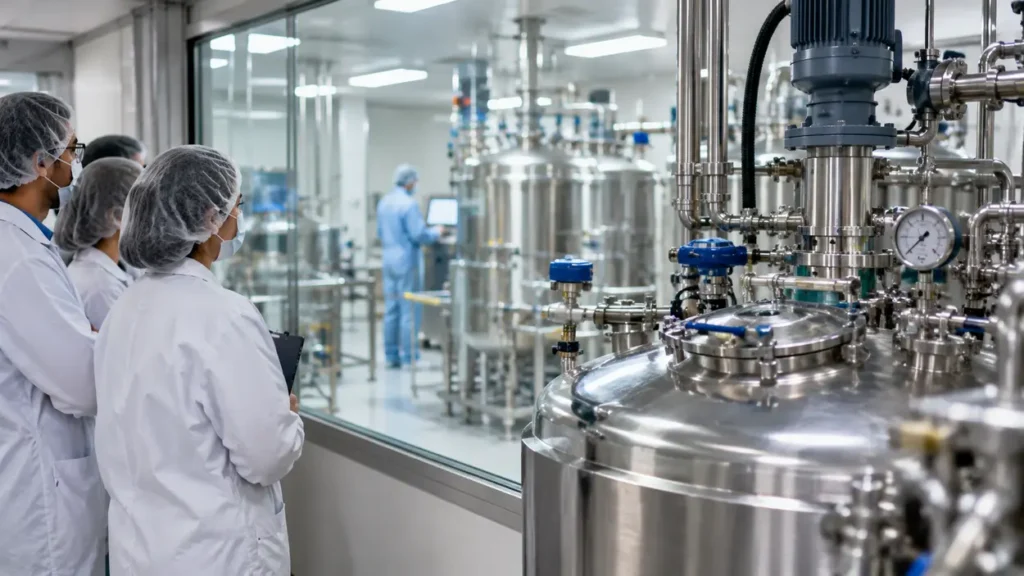
Bigger vessels don’t behave like bigger versions of small ones. Mixing efficiency changes with vessel geometry and impeller design. Heat transfer slows down as the surface-area-to-volume ratio drops, which can extend heating or cooling times well beyond what development data predicted. A reaction that reached temperature in minutes at bench scale might take considerably longer in a production-scale jacketed vessel, which can affect reaction time, impurity formation, or filtration behavior downstream.
Finding the Right Manufacturing Fit
Selecting equipment for scale-up isn’t only about whether a vessel is big enough. It involves facility constraints, cleaning validation requirements, utility capacity, and how the batch fits into an already-scheduled production calendar. The real question isn’t “can we make this batch bigger?” It’s whether the process can be run consistently, safely, and reproducibly, batch after batch, on the equipment the facility actually has available. That distinction shapes almost every other decision in the scale-up process, and it’s one reason equipment selection deserves early input from manufacturing and engineering teams, not just process development.
Step 3 — Managing Raw Materials and Supply-Chain Risk
Scale-up often exposes raw-material issues that stayed invisible during development, mainly because development work uses small quantities from a single, carefully selected lot. At manufacturing scale, the team needs larger volumes, tighter specifications, and dependable lead times — and any variability in supplier consistency becomes much harder to absorb.
Material characteristics that seemed stable at small scale, such as particle size distribution or moisture content, can vary lot to lot in ways that affect larger-scale processing. Qualifying alternative suppliers in advance, rather than scrambling after a shortage, gives a CDMO more flexibility when timelines are tight. This is especially relevant for active pharmaceutical ingredients and key starting materials, where sourcing rules and documentation requirements have continued to evolve — our earlier coverage of FDA API sourcing rules goes into more detail on that shifting landscape.
Ultimately, a scale-up plan is only as reliable as the materials feeding it. Building in supply-chain resilience early protects both the process and the client relationship.
Step 4 — Keeping Quality and GMP Requirements at the Center
Scale-up and quality can’t be separated — treating GMP as a final inspection step rather than part of the plan is how avoidable problems turn into real ones. Documentation and batch records need to reflect the process as it will actually run at the new scale, not a copy of small-scale paperwork with the numbers changed. Process controls, analytical testing plans, and acceptance criteria all need to be reviewed against the realities of larger-scale execution.
Deviations will happen, even in a well-planned scale-up. What matters is whether the investigation process is fast, thorough, and well documented, and whether change control is used properly whenever the process, equipment, or materials shift from what was originally qualified. Cleaning and contamination-control considerations also deserve fresh attention at scale, since larger equipment and longer campaigns change the contamination-control picture.
The FDA’s guidance on process validation frames this as a lifecycle — process design, process qualification, and continued verification — rather than a single event, which is a useful way to think about scale-up as well. On the technology-transfer side, ISPE’s guidance on documenting knowledge as it moves between teams is a good reference point for keeping records complete. For sites and supply chains operating across the EU, staying current with EU GMP expectations and audit practices is equally important during this stage.
What Can Go Wrong During a CDMO Scale-Up?
Not every scale-up goes according to plan, and that isn’t automatically a sign of poor manufacturing. Common frontline issues include process behavior that doesn’t match small-scale predictions, yields that come in lower than expected, or processing steps that simply take longer at larger scale.
Equipment limitations can surface too — a mixer that can’t reach the same shear rate, or a dryer that can’t handle the batch size within the planned cycle time. Raw-material variability, discussed earlier, is another frequent culprit. Analytical delays can slow decision-making at exactly the point when fast answers matter most, and documentation gaps discovered mid-batch can stall a process until they’re resolved.
🏢 Featured CROs / CDMOs Directory Listing
Looking for verified and trusted cros / cdmos partners related to this topic? Explore our comprehensive directory.
Explore Directory →Scheduling conflicts and capacity constraints are operational rather than technical, but they cause just as much disruption. So does poor communication between client and CDMO teams, where assumptions on one side don’t match reality on the other. What separates a manageable hiccup from a serious setback is usually the speed and rigor of the response: how quickly the issue is identified, investigated, documented, and resolved.
The Human Side of Scale-Up: Communication Across Teams
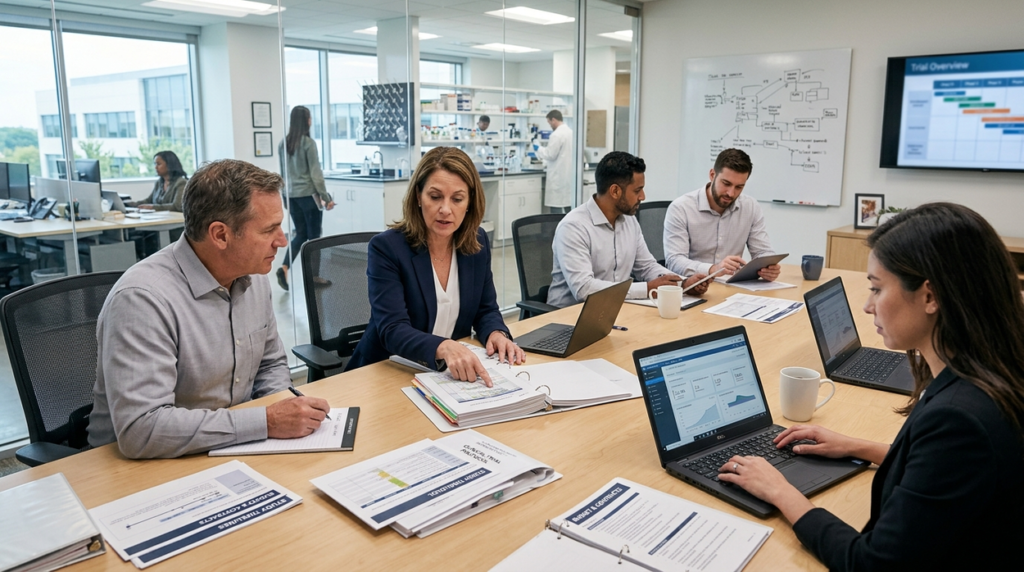
Scale-up touches process development, manufacturing, quality, analytical teams, engineering, supply chain, project management, and the client — often all within the same week. Technical knowledge gets lost surprisingly easily when these groups work in isolation, each holding a piece of information the others need but don’t have.
Clear ownership matters more than it sounds like it should. Who decides if a deviation pauses the batch? Who escalates a supplier delay, and to whom? Regular technical reviews, realistic timelines that account for investigation time rather than assuming everything goes right, and defined escalation paths prevent small technical questions from turning into schedule problems. This is less about team-building exercises and more about treating communication as part of the technical execution itself.
The Biggest Lessons from the Scale-Up Journey
Plan for Variability, Not Perfection
A robust process doesn’t assume ideal conditions every time. It’s designed to tolerate reasonable variation in raw materials, equipment performance, and operating conditions — because that variation will happen eventually, and the process needs to absorb it without failing.
Solve Problems With Data
When something unexpected happens, the answer comes from process data, analytical results, and documented investigation — not from assumptions about what probably went wrong. Teams that default to data over guesswork resolve issues faster and with more confidence in the fix.
Involve Manufacturing Early
Production operators, engineering, and quality specialists who see the process before it reaches commercial-scale execution catch practical issues that a purely scientific review might miss — things like material handling logistics or cleaning turnaround that only show up on the floor.
Treat Communication as Part of Technical Execution
A raw-material delay flagged early is a scheduling adjustment. The same delay discovered late is a crisis. Timely, structured communication is what keeps small technical issues from becoming supply or schedule problems.
What Successful Scale-Up Looks Like for a Mid-size CDMO
Success isn’t just producing one large batch that meets specification. It’s consistent product quality across repeated runs, a process that performs reliably rather than by coincidence, and documentation solid enough to support both the current program and future regulatory review.
It also means a qualified, resilient supply chain, an effective deviation and change-management system, and production timelines that hold up under real conditions. A genuinely successful scale-up leaves behind a manufacturing process that’s repeatable and controllable — not a one-time success that’s difficult to explain if it doesn’t happen the same way twice.
🏢 Featured CROs / CDMOs Directory Listing
Looking for verified and trusted cros / cdmos partners related to this topic? Explore our comprehensive directory.
Explore Directory →Frequently Asked Questions
What does scale-up mean in CDMO manufacturing?
Scale-up is the transition from development or smaller-scale production to full manufacturing volumes, while maintaining the same quality standards and process performance established earlier in development.
What are the biggest challenges during pharmaceutical scale-up?
Common challenges include equipment behaving differently at larger scale, unexpected process performance, raw-material variability, meeting quality and GMP requirements, and coordinating multiple teams under real timelines.
Why can a process behave differently at larger scale?
Physical conditions such as mixing efficiency, heat transfer, and mass transfer change with vessel size and geometry, even when the chemistry or formulation itself stays the same.
How can CDMOs reduce scale-up risk?
Early process understanding, appropriate equipment selection, data-driven decision-making, cross-functional collaboration, and strong quality systems all reduce the risk of surprises during scale-up.
Final Thoughts — Scale-Up Is a Test of the Whole Manufacturing System
A CDMO scale-up is never just a technical exercise. It tests how well process science, equipment, quality systems, supply chain, and people work together under real conditions. Every scale-up is different, shaped by the specific process, facility, and team involved — but the CDMOs that handle it well tend to share the same habits: they plan early, rely on data over assumptions, and keep communication as tight as their process controls.